
Playlist
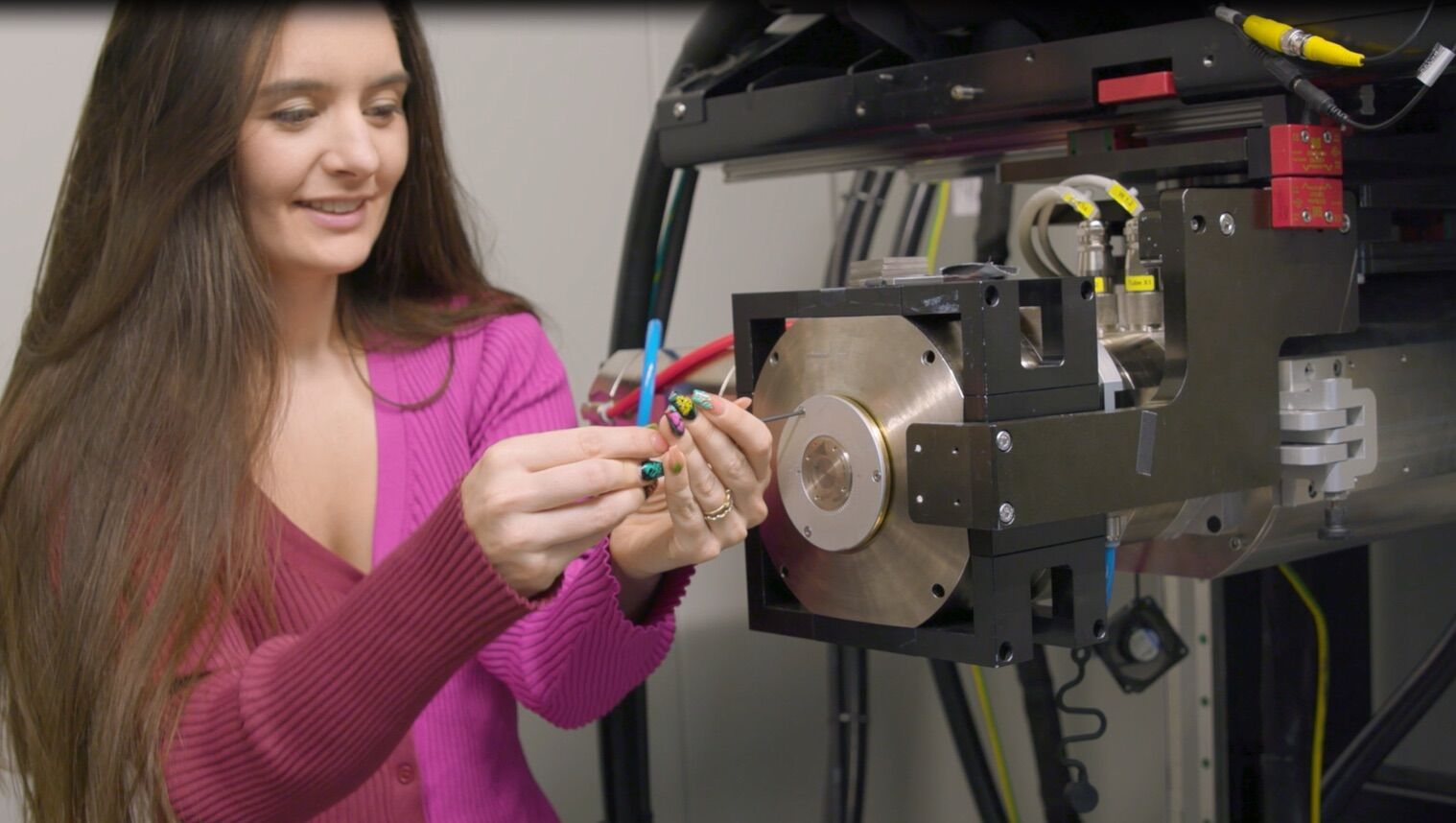
Researchers at Sandia National Laboratories in the United States have introduced a groundbreaking imaging method that produces high-resolution, full-color X-ray images. This innovation has the potential to transform various fields, from medical diagnostics to industrial inspection.
According to project leader Edward Jimenez, the method is called color hyperspectral X-ray imaging using multi-metallic targets. It works by using different metals that emit X-rays of various energies — essentially, different “colors.”
To improve image clarity, the team reduced the focal spot size by designing anodes with ultra-fine dots made of tungsten, gold, molybdenum, samarium, and silver. Each metallic dot is smaller than the X-ray beam, allowing for greater precision.
A photon-counting detector capable of measuring energy levels is used to analyze individual X-ray photons. This enables scientists to identify material composition and density with high accuracy. The resulting images are not only sharp but also reveal more structural information through color coding.
The developers believe the technology could be used in airport security screening, quality control, non-destructive testing, and medical imaging, significantly enhancing accuracy and reliability.
Also read




On-the-Go Power: Japanese Engineers Develop Wireless In-Road Charging for Electric Vehicles
10 Oct. 08:10In a major leap for electric mobility, Honda R&D, alongside Taisei Corporation and Taisei Rotec, has unveiled an innovative dynamic wireless charging system that charges electric vehicles as they drive. By embedding compact energy-transmitting modules directly into the road surface, the system transfers power via a magnetic field to receivers mounted underneath moving vehicles. Designed to withstand heavy commercial transport up to 20 tons, real-world road testing is scheduled to begin in Japan in April 2027.
The technology eliminates the need for full road reconstruction, as modules can be integrated directly into milled asphalt layers. Aimed at boosting charging power up to 150 kW in future iterations, this infrastructure solution promise to significantly reduce grid pressure on traditional charging stations, particularly for logistics and commercial fleets.
Also read




Blitz