
Playlist
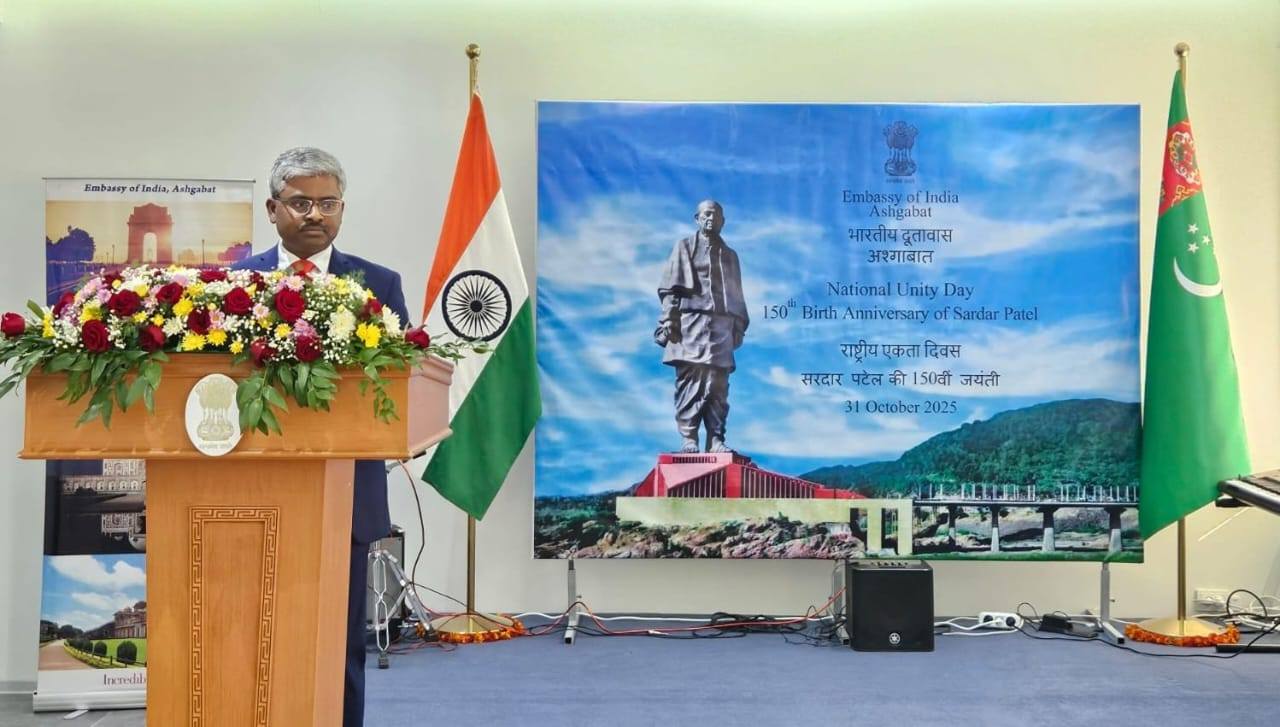
On 26 January, the Republic of India will celebrate the 76th anniversary of its Republic Day — one of the most significant national holidays of the country. It was on this day in 1950 that the Constitution of India came into force, formally establishing India as a sovereign, democratic republic.
Over the past decades, India has made remarkable progress, emerging as a key player in the global political and economic landscape. Today, India ranks as the world’s fourth-largest economy and the fastest-growing major economy, driven by sustained growth, technological advancement, and institutional resilience.
India’s commitment to democratic values was once again demonstrated through the successful parliamentary elections held in 2024, in which more than 640 million citizens participated. This large-scale democratic exercise reinforced confidence in democratic institutions worldwide and highlighted the maturity of India’s political system.
The country has also established itself as a global innovation hub. India is home to the world’s third-largest startup ecosystem and holds leading positions in information technology, real-time digital payments, healthcare, pharmaceuticals, and renewable energy.
India’s achievements in space exploration further underscore its growing global stature. Recent milestones include the successful docking of two Indian satellites, the placement of the “Aditya L1” solar observatory into a halo orbit to study the Sun, and the historic soft landing of the “Chandrayaan-3” mission near the Moon’s south pole.
Under the leadership of Prime Minister His Excellency Mr. Narendra Modi, India continues to advance the long-term vision of “Viksit Bharat” (Developed India), aiming for comprehensive national development by 2047, marking the centenary of India’s independence.
Guided by its “Extended Neighbourhood” policy and the ancient Indian philosophy of “Vasudhaiva Kutumbakam” — “the world is one family” — India remains committed to sharing its development experience with friendly nations, including Turkmenistan, in line with their priorities and needs.
India–Turkmenistan relations, built on mutual respect and shared interests, hold strong potential for further expansion. Under the visionary leadership of President of Turkmenistan His Excellency Mr. Serdar Berdimuhamedov and Prime Minister of India Mr. Narendra Modi, bilateral cooperation is expected to reach new heights in the near future.
Republic Day serves not only as a symbol of India’s statehood and democratic values, but also as an opportunity to highlight the country’s contribution to global development, international cooperation, and the strengthening of friendship among nations.



Ecological Shift: Golden Jackals Pro Projected to Inhabit 75% of the European Continent
Today in 06:53Once restricted mainly to the Balkans and the Black Sea coastal regions, golden jackals are rapidly expanding their footprint across Europe. According to a landmark study by an international research team published in Nature Ecology & Evolution, these adaptable predators could eventually inhabit up to 75% of the European continent—nearly a sixfold expansion from their historical range. Scientists arrived at these conclusions after monitoring nearly 9,000 sampling sites across multiple European nations.
Recent sightings and acoustic tracking confirm that jackals have established populations in the Czech Republic, the Baltic region, and even Scandinavia. The species thrives in areas with mild winters, mixed agricultural landscapes, and proximity to water sources. Regional climate warming has transformed previously uninhabitable northern areas into suitable habitats, while farming landscapes offer abundant food sources and coverage.
Biologists attribute this unprecedented expansion primarily to the historical decline of wolf populations, which naturally suppress jackal numbers and limit their movement. Smaller than wolves but slightly larger than foxes, jackals feed on small rodents, carrion, plants, and fruits. Their high ecological adaptability allows them to settle efficiently into newly colonized territories without human interference.
However, their entry into Western and Southern Europe, including countries like France and Spain, poses potential ecological consequences. Environmentalists warn that the arrival of jackals could disrupt local ecosystems and threaten endangered ground-nesting steppe birds and smaller wildlife across the Iberian Peninsula.
Also read



Blitz