
Playlist
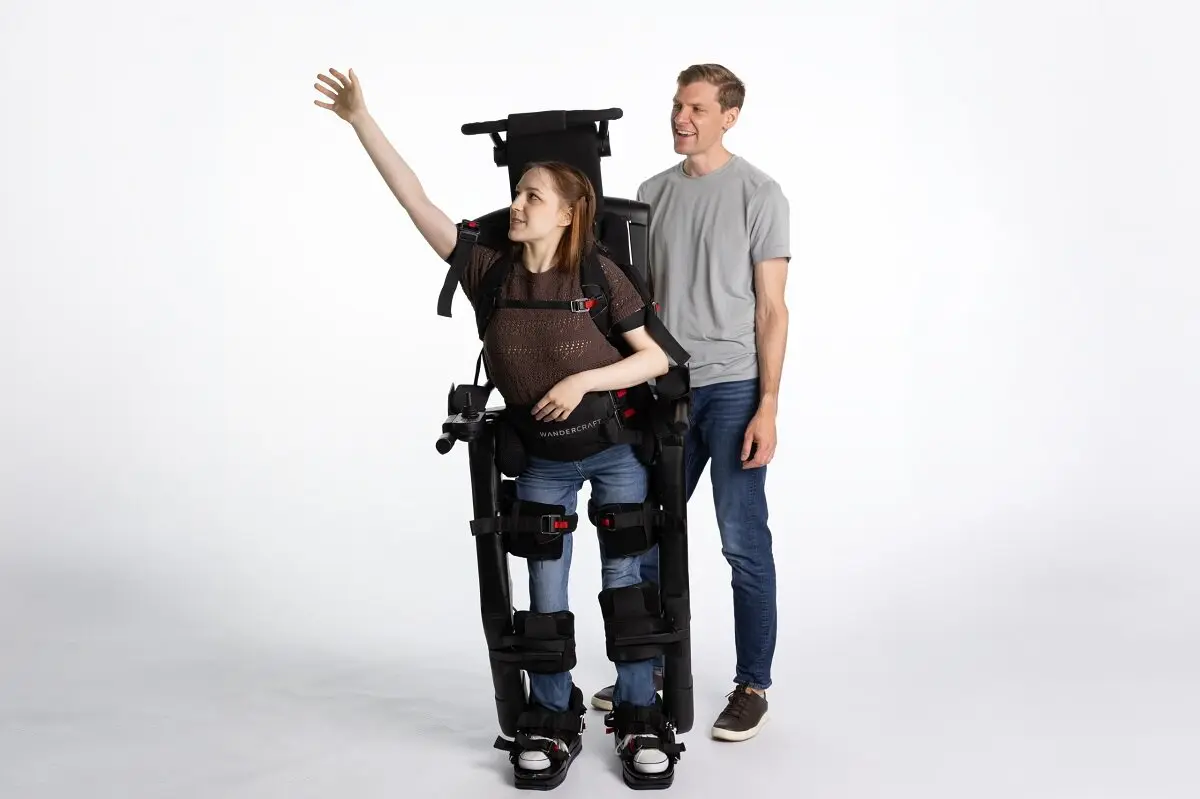
FDA Approves "Eve" Self-Balancing Exoskeleton for Patients with Spinal Cord Injuries
20 Aug. 17:25The U.S. Food and Drug Administration (FDA) has granted medical clearance for "Eve," a personal self-balancing exoskeleton developed by Wandercraft. The robotic device is designed for adult patients with spinal cord injuries who rely on wheelchairs.
The technology enables users to stand, walk, bend, and move freely indoors and outdoors on flat surfaces under supervision. While it does not fully replace a wheelchair, the exoskeleton restores upright mobility and hands-free balance during daily activities.
Wandercraft plans to launch "Eve" commercially in the United States in September 2026. The device will require a medical prescription, along with a mandatory training program consisting of five two-hour sessions for both the user and their caregiver. The company anticipates reimbursement through Medicare and private health insurance within 60 to 90 days.
"Eve" is the consumer-focused adaptation of the "Atalante X" clinical exoskeleton, which is currently deployed in over 150 hospitals worldwide.
Also read




A rye-wheat loaf preserved in a freezer for 36 years has been put on public display as part of the permanent exhibition at the Deutschlandmuseum in Berlin. Dubbed "The Last Loaf of the GDR," it was originally purchased on June 26, 1990, by student Michael Hagedorn, who bought an extra loaf fearing potential food shortages amidst the economic unification of East and West Germany.
The museum's director, Robert Rückel, described the unusual artifact as a unique poignant symbol of everyday human decisions during times of monumental geopolitical change. To maintain its preserved state, the museum installed a custom refrigeration unit where the historical loaf remains permanently frozen for visitors to view.
Blitz