
Playlist
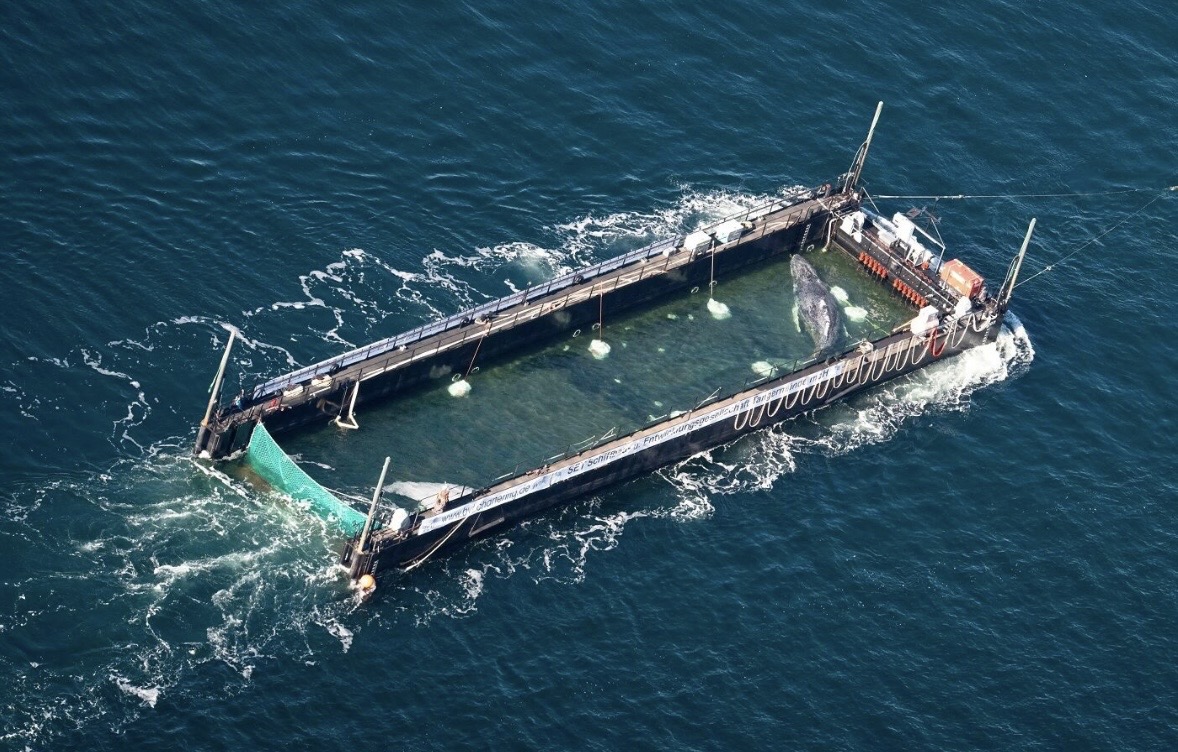
A 12-meter humpback whale named Timmy, who had been repeatedly stranded in the shallow waters of the Baltic Sea since March, has finally made his way into the North Sea. The whale managed to swim away independently during a complex rescue operation organized by German marine biologists and volunteers. As the rescue barge was preparing for a final medical assessment on May 2nd, the whale unexpectedly slid off the vessel and plunged into the open ocean.
The journey to save Timmy has been a months-long ordeal involving significant logistical challenges. At one point in late March, official rescue efforts were suspended as the whale’s condition appeared terminal. However, dedicated volunteers refused to give up, successfully loading the massive mammal onto a transport barge on April 28th. His sudden burst of energy to return to the sea is seen by many as a positive, albeit cautious, sign of his will to survive.
Marine specialists remain concerned about the whale’s long-term health prospects. Biologist Fabian Ritter pointed out that Timmy’s prolonged stay in shallow, unsuitable waters has likely compromised his nutritional intake and physical stamina. Furthermore, the whale sustained minor injuries during the relocation process. The critical question now is whether the animal can regain enough strength to hunt effectively in the deep waters of the North Atlantic.
Current tracking indicates that Timmy is heading northwest, a route that could lead him toward the Norwegian coast and eventually the Arctic. Environmental organizations state that the rescue will only be deemed a total success if the whale successfully integrates into the North Atlantic ecosystem and begins feeding independently. While his chances of survival remain uncertain, his successful transition to the North Sea marks a significant milestone in this dramatic wildlife rescue mission.
Also read




Ecological Shift: Golden Jackals Pro Projected to Inhabit 75% of the European Continent
Today in 06:53Once restricted mainly to the Balkans and the Black Sea coastal regions, golden jackals are rapidly expanding their footprint across Europe. According to a landmark study by an international research team published in Nature Ecology & Evolution, these adaptable predators could eventually inhabit up to 75% of the European continent—nearly a sixfold expansion from their historical range. Scientists arrived at these conclusions after monitoring nearly 9,000 sampling sites across multiple European nations.
Recent sightings and acoustic tracking confirm that jackals have established populations in the Czech Republic, the Baltic region, and even Scandinavia. The species thrives in areas with mild winters, mixed agricultural landscapes, and proximity to water sources. Regional climate warming has transformed previously uninhabitable northern areas into suitable habitats, while farming landscapes offer abundant food sources and coverage.
Biologists attribute this unprecedented expansion primarily to the historical decline of wolf populations, which naturally suppress jackal numbers and limit their movement. Smaller than wolves but slightly larger than foxes, jackals feed on small rodents, carrion, plants, and fruits. Their high ecological adaptability allows them to settle efficiently into newly colonized territories without human interference.
However, their entry into Western and Southern Europe, including countries like France and Spain, poses potential ecological consequences. Environmentalists warn that the arrival of jackals could disrupt local ecosystems and threaten endangered ground-nesting steppe birds and smaller wildlife across the Iberian Peninsula.
Blitz