
Playlist
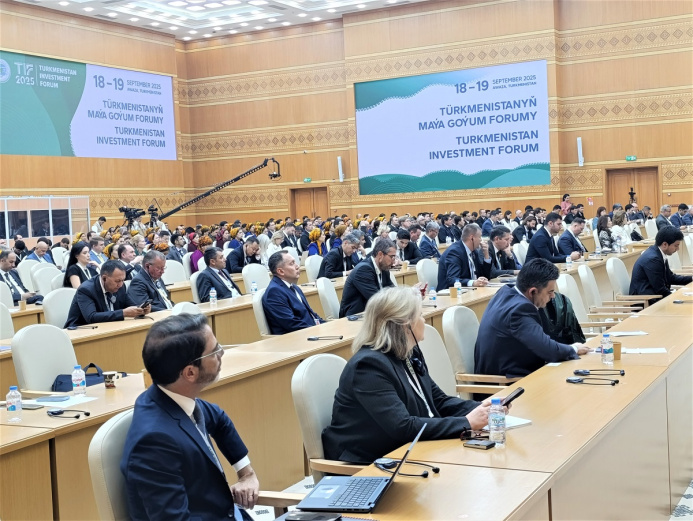
On September 19 in Avaza, the Turkmenistan Investment Forum (TIF 2025) hosted a session focused on public-private partnership (PPP) models, gathering Turkmen government officials and global experts from institutions such as the OECD, ADB, and IFC.
The session was moderated by William Thompson (OECD), who emphasized that PPP is not only a financial tool, but also a strategic framework for accelerating key national projects.
Tony Bonnici from the UN Economic Commission for Europe presented a PPP model aligned with the Sustainable Development Goals (SDGs) and applicable to Turkmenistan. Sajida Tashpulatova (IFC) confirmed the corporation's readiness to support private sector engagement in national investments. Meanwhile, Professor Steven Van Garsse of Hasselt University highlighted the importance of standardized PPP guidelines for faster deal-making.
The presence of key players like First Abu Dhabi Bank, ADB, and the Islamic Corporation for the Development of the Private Sector reflects strong international interest and support.
The discussion made it clear that Turkmenistan is moving from theory to practical implementation of PPP, by building a legal and institutional foundation for long-term cooperation.
Also read

Major International Exhibition and Congress on Healthcare, Education, and Sports Opens in Turkmenistan
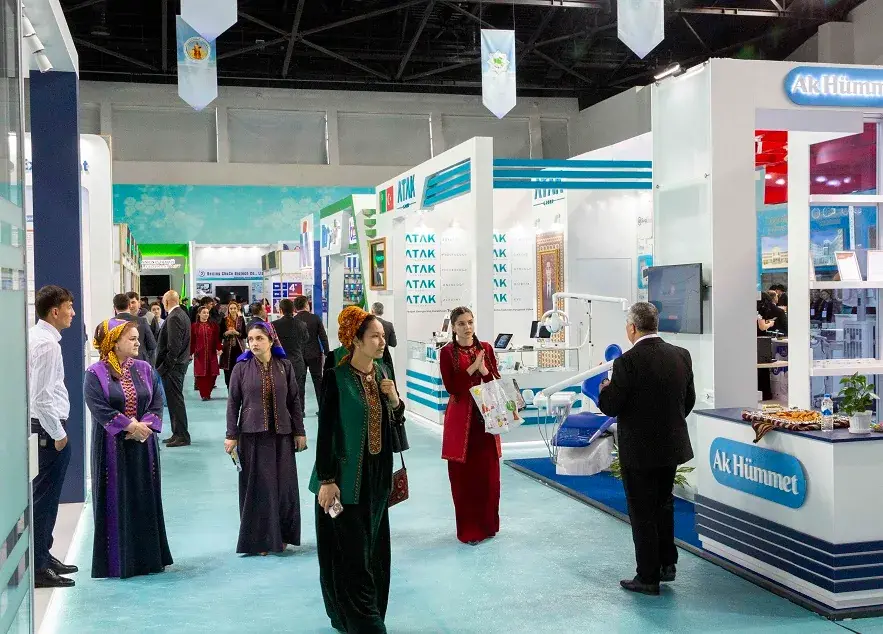
10 Oct. 07:33A multi-sector international exhibition and scientific conference celebrating National Healthcare and Pharmaceutical Industry Workers' Day officially opened at the Chamber of Commerce and Industry Expo Center in Ashgabat. In his official greeting to attendees, President of Turkmenistan Serdar Berdimuhamedov highlighted the ongoing integration of advanced technologies and international collaboration. The President noted that key landmarks during this 35th anniversary year of independence include the opening of new International Centers for Oncology, Pediatrics, and Dentistry, alongside modern expansions at the "Archman" health resort.
Running through October 12, the three-day event serves as a global platform uniting state ministries, international manufacturers, medical specialists, and researchers. The agenda encompasses interactive exhibition stands, technical sessions, specialized workshops, and strategic B2B and B2G business negotiations.
Also read

Blitz