
Playlist
The Greater and Lesser Balkan Mountains form one of the most distinctive natural regions of Turkmenistan, known for their diverse and well-preserved wildlife. According to recent scientific data, approximately 28 species of reptiles inhabit this area. Among amphibians, the Central Asian tetraploid green frog is of particular importance, representing a rare relict species preserved within Turkmenistan’s ecosystems.
Semi-stabilized sandy areas and clay-rich plains provide habitats for the Central Asian tortoise, various lizard species, common arrow snakes, desert monitor lizards, and burrowing desert snakes. The fauna of the Balkan Mountains in Turkmenistan also includes species such as the Asian spotted whip snake, the Caucasian agama, and the red-striped racer.
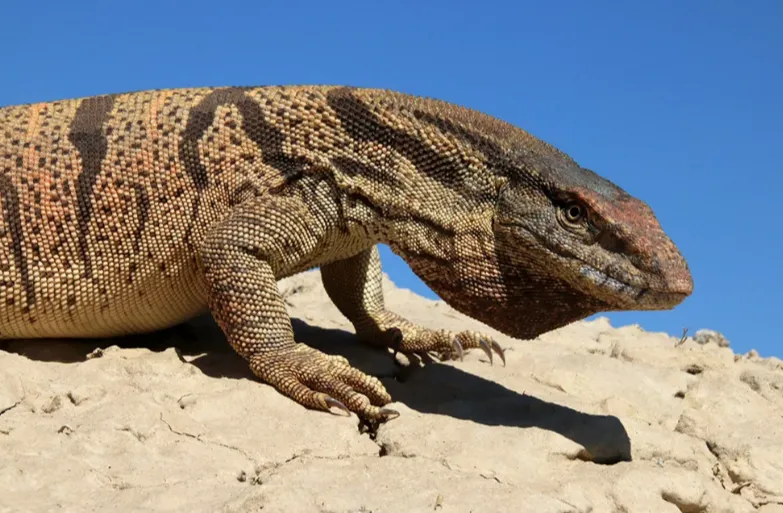
One of the most remarkable reptiles of the region is the gray monitor lizard, often referred to as the “desert crocodile.” This large predator inhabits territories ranging from foothills to high plateaus and inaccessible mountain slopes. Reaching lengths of up to 1.5 meters, it enters summer dormancy during periods of extreme heat, particularly in July, which later transitions into winter hibernation.
The mammalian fauna of the Balkan region in Turkmenistan includes several rare and locally distinctive species, such as Severtsov’s jerboa, the Kopetdag hamster, the Turkmen corsac fox, the mountain otter, the Turkmen caracal, and the manul. These species highlight the ecological significance of the area.
Birds, especially birds of prey, serve as important indicators of environmental health. Over different years, between 120 and 170 bird species have been recorded in the Balkan Mountains of Turkmenistan, including migratory species. Currently, eagles, bearded vultures, saker falcons, Caucasian buzzards, and numerous passerine birds nest in the region.
The Lesser Balkan Mountains are distinguished by their unusual, moon-like landscapes. The complex terrain attracts both researchers and travelers. The Chalsuw spring, whose name translates as “water emerging from camel thorn,” is renowned for its fresh and clean drinking water. The highest point of the Lesser Balkan rises 780 meters above sea level.
In the past, during particularly harsh winters, saiga antelopes migrated from Kazakhstan to the northern slopes of the Balkan Mountains. However, since the late 1990s, a significant decline in hoofed animal populations along the borders of Turkmenistan with Kazakhstan and Uzbekistan has resulted in the disappearance of saigas from this region.


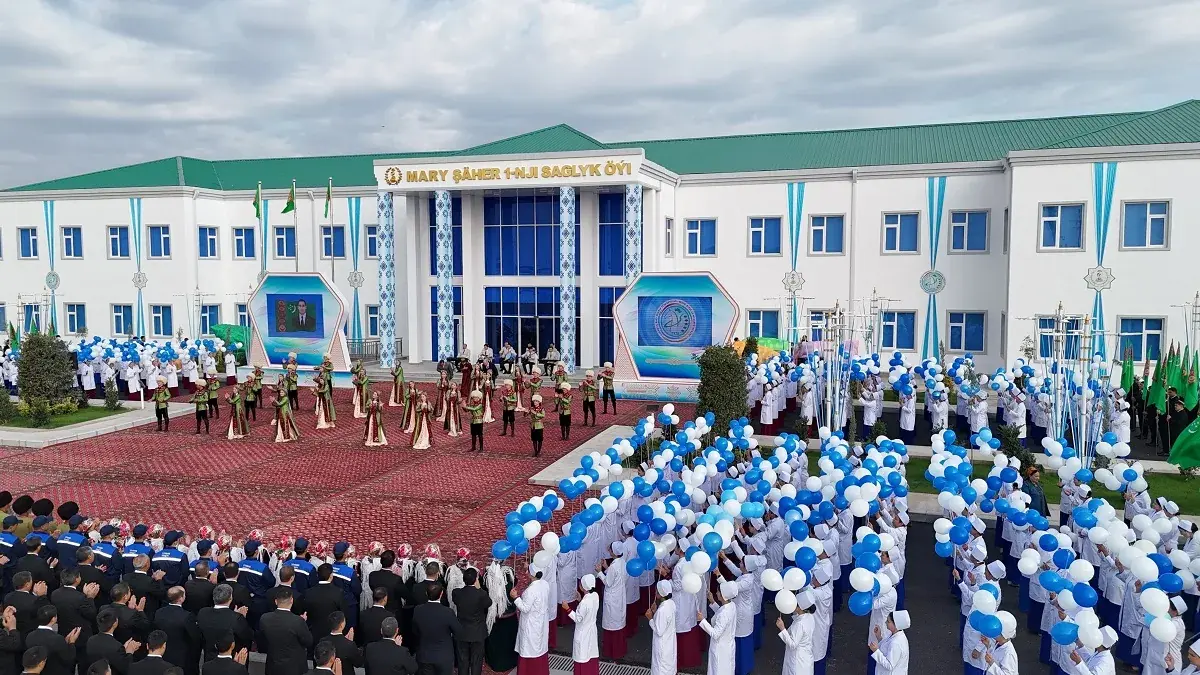
To mark the National Healthcare and Pharmaceutical Industry Workers' Day, Health Center No. 1 in Mary, located along Oguzkhan Street, was officially reopened following a comprehensive structural renovation. The inauguration ceremony brought together regional administration officials, members of parliament and the Halk Maslahaty, healthcare specialists, community elders, and local students. Festive musical and theatrical performances by cultural groups and young talents added to the celebratory atmosphere.
The newly reconstructed two-story medical complex is outfitted with state-of-the-art diagnostic and treatment rooms, family medicine suites, bacteriological and physiotherapy departments, as well as specialized laboratories. Equipped with advanced European medical technology, the center offers a full suite of services including ultrasound, echocardiography, electrocardiography, and endoscopy.
The renovation project was successfully carried out by the local private construction enterprise "Yhlasa Ynam." During the official ceremony, outstanding construction workers were awarded valuable commemorative gifts presented on behalf of the President of Turkmenistan.
Additionally, to boost mobile diagnostic capabilities in the region, a fully equipped "Mercedes-Benz" mobile medical unit featuring digital X-ray and fluorography technology was officially presented to the health center on behalf of the Head of State.
Also read


Blitz