
Playlist

Global Aviation Crisis: Fuel Shortages Force Airlines to Cancel International Flights
22 Apr. 12:01The global aviation industry is currently navigating a severe crisis driven by skyrocketing energy prices and a significant shortage of aviation fuel. Leading international carriers have been compelled to restructure their schedules, resulting in a widespread wave of flight cancellations. This strategy is essential for maintaining financial viability as the rising costs of jet fuel threaten to exceed the projected profit margins from ticket sales.
The impact of these service reductions is already evident among major industry players. For instance, the Dutch airline KLM has announced the cancellation of 80 flights from Amsterdam’s Schiphol Airport for the month of May alone. Similarly, Germany’s Lufthansa and the American carrier United Airlines have implemented reductions to their flight frequencies. These companies emphasize that optimizing their flight programs is a necessary measure to mitigate losses caused by the unprecedented spike in fuel expenses.
Data from the analytical firm Cirium indicates a negative trend in the industry’s growth for the current period. Despite earlier forecasts predicting a 4-6% increase in passenger capacity for 2026, May has seen a global decline in airline capacity by approximately 3%. Experts warn that this stagnation could delay the recovery of the global tourism sector and disrupt international supply chains.
The International Air Transport Association (IATA) has warned that kerosene reserves in Europe are reaching critical levels, with stocks estimated to last less than six weeks. The primary causes of this fuel scarcity are geopolitical instability in the Middle East and the potential closure of the Strait of Hormuz. Given that over 20% of the world’s oil trade passes through this strategic waterway, any disruption immediately impacts the cost and availability of fuel for civil aviation worldwide.
Also read



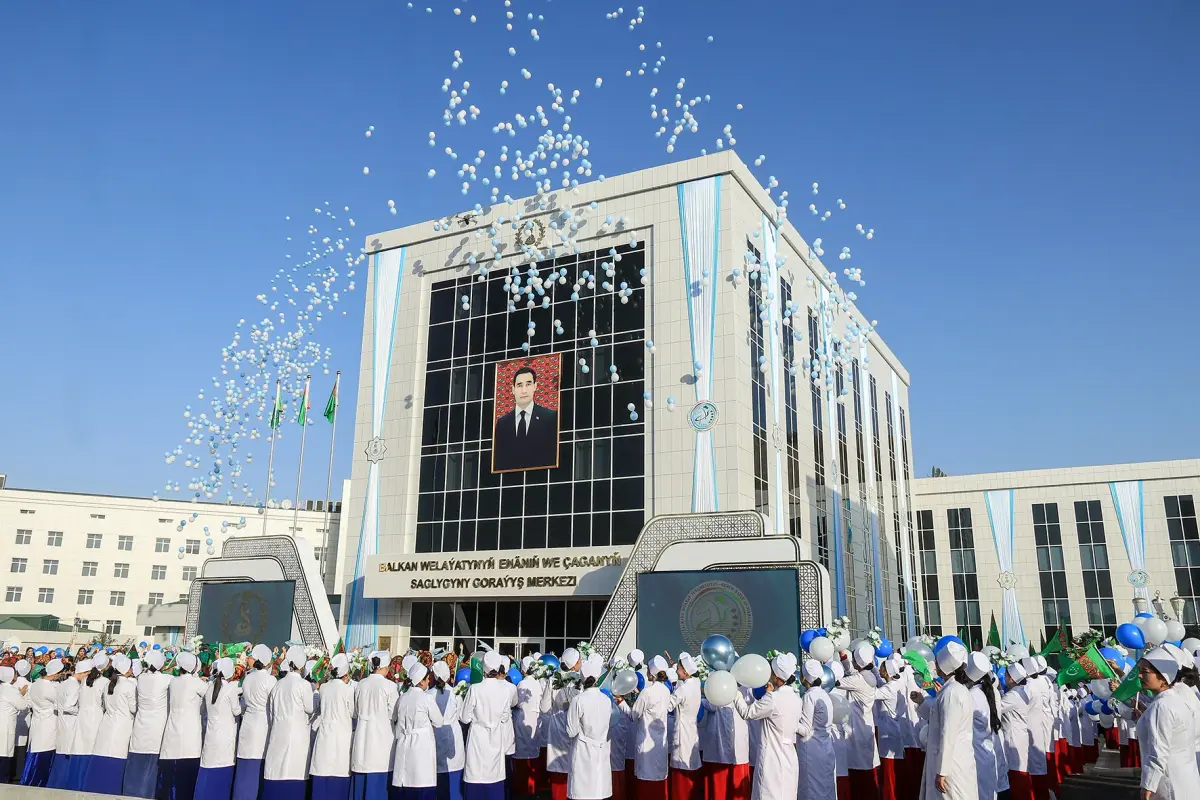
Modern Maternal and Child Healthcare Center Opens Its Doors in Balkanabat
Today in 08:38In celebration of the National Healthcare and Pharmaceutical Industry Workers' Day, a state-of-the-art Maternal and Child Healthcare Center was officially inaugurated in the city of Balkanabat. The landmark event gathered regional and municipal officials, members of the Halk Maslahaty and Parliament, healthcare professionals, and community leaders. The opening ceremony featured festive cultural performances, musical numbers, and traditional Kushtdepdi dances.
The newly constructed medical complex consists of four- and five-story buildings designed to accommodate up to 305 patients. The center houses comprehensive maternity and postnatal wards, a gynecology division, pediatric units, and diagnostic consultation departments. The facility is equipped with advanced medical technology, including MRI, CT scanners, digital mammography, and fluorography units.
Notably, the center features the region's first 10-bed neonatal intensive care unit, fully outfitted with "Medicor" incubators from Hungary and high-precision German monitoring systems. These technologies allow medical staff to continuously monitor vital stats, body temperature, oxygen saturation, and respiratory functions of newborns.
During the ceremony, outstanding builders from the "Shadiyan Gurlushyk" enterprise were honored with gifts on behalf of the President of Turkmenistan, who also donated a new fleet of vehicles to support the medical center's operations.
Blitz