
Playlist
Rare Cultural Artifacts from Private Collection in Mary Region Donated to State Museum of Turkmenistan
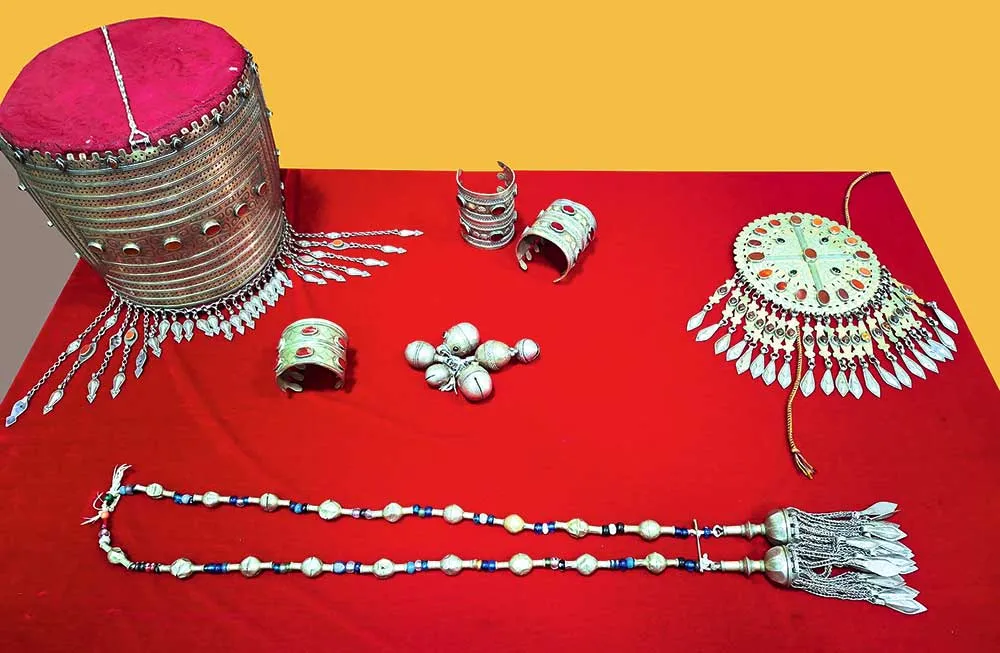
13 Nov. 06:10The collections of the State Museum of the State Cultural Center of Turkmenistan have been enriched with rare historical artifacts donated by Maya Berdygylyjowa, a resident of the Mary region who spent decades collecting heritage items and operating a dedicated home museum. According to the newspaper "Türkmenistan," a substantial portion of the newly cataloged items—including traditional household utensils, historical tools, authentic carpets, and an extensive collection of national garments—has been transferred to the museum's Material Culture Fund.
Among the most historically and ethnographically significant additions are exquisite pieces of traditional jewelry dating back to the late 19th and early 20th centuries, showcasing the extraordinary craftsmanship of Turkmen silversmiths. The donated treasures feature classic women's adornments such as egme, akdyrma, sachmonjuk, sachgupba, gulyaka, and heavy gilded silver twin bracelets known as goshma bilezik.
Museum specialists note that the ornate semi-circular egme, designed to adorn the traditional women's headdress (borik), stands out as one of the most intricate forms of jewelry art historically favored by women in the Ahal and Mary regions. Equally captivating is the large gulyaka brooch accented with silver pendants, carnelian inlays, and colorful stones, whose intricate engravings reflect the refined techniques of classical Turkmen jewelry-making schools and lend timeless elegance to traditional attire.
Also read


IOM Handicraft Fair in Mary Marks Conclusion of Three-Year Vocational Empowerment Project for Women
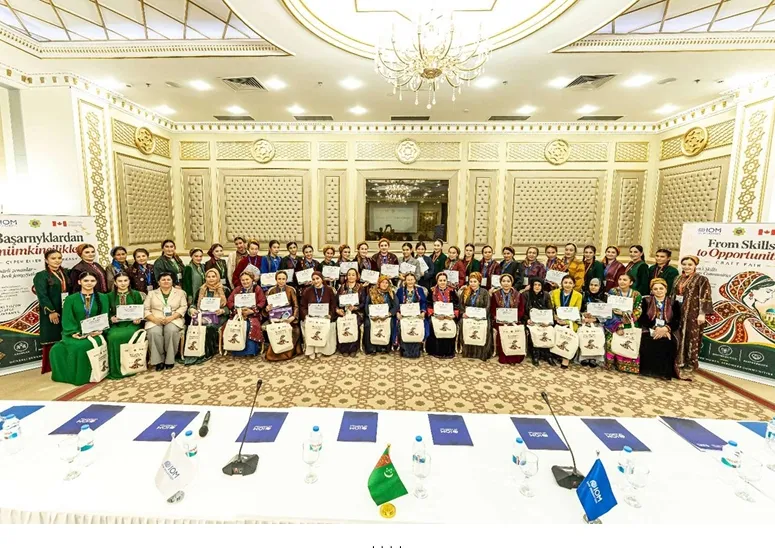
21 Nov. 12:34The International Organization for Migration (IOM), with the support of local authorities and partner public associations, hosted the "From Skills to Opportunities" handicraft exhibition and fair in the city of Mary. More than 30 female artisans representing both local and Afghan communities across the Mary region showcased their craftsmanship to over 200 visitors, including private sector representatives, university students, and members of the wider public. On display was a vibrant array of traditional handiwork ranging from silver jewelry, embroidered dress panels, and national skullcaps (tahya) to bridal robes (kurte), handwoven carpets, felt crafts, crocheted floral bouquets, and intricately adorned Afghan national garments.
A central highlight of the event was a roundtable dialogue bringing artisans together with regional business leaders to explore sustainable employment pathways. Representatives from prominent Turkmen enterprises—including Taze Ay, Gerchek Yigit, and Rowshen—presented concrete proposals to integrate skilled women into their production operations. Among the initiatives outlined were dedicated commuter transportation from remote villages, workplace meal provisions, unpaid vocational internships, and structured mentorship programs leading to permanent manufacturing roles.
The fair served as the culminating milestone of IOM's three-year regional initiative, the "Comprehensive Action Plan for Afghanistan and Neighboring Countries," implemented in Turkmenistan with government backing and coordination by the Ministry of Foreign Affairs. Through close collaboration with local administrations and non-governmental organizations across the Lebap and Mary regions, the country component provided targeted vocational support to 219 women and young women. Participants completed an intensive three-month tailoring program combining theory and hands-on training, graduating with official certificates and complimentary professional sewing machines to launch income-generating livelihoods.
Also read

Blitz