
Playlist
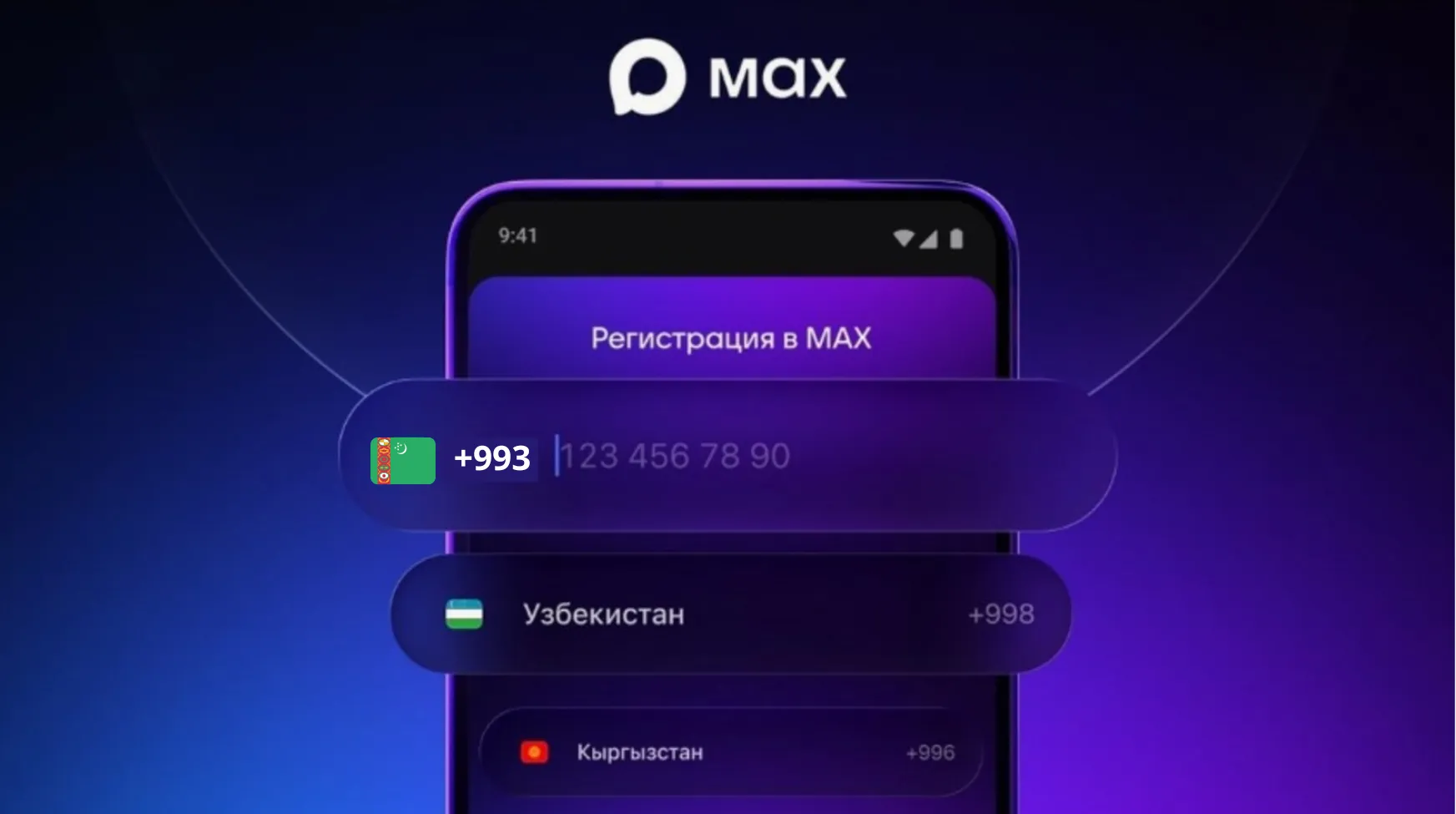
The MAX messaging platform has expanded its regional coverage and now supports account registration for phone numbers starting with the +993 country code. This update enables residents of Turkmenistan to join the service.
Previously, the app was available to users from Russia, Belarus, Kazakhstan, Azerbaijan, Armenia, Kyrgyzstan, Moldova, Tajikistan, Uzbekistan, and Georgia. Outside the CIS region, people in Indonesia, Malaysia, Thailand, Türkiye, the United Arab Emirates, and Laos could also sign up. Turkmenistan has now been added to this list.
To create an account, users must download either the mobile or desktop version of the application, as registration through a web browser is not supported. The sign-up process follows a familiar pattern: enter a phone number, confirm it with a six-digit SMS verification code, provide a name, and optionally upload a profile picture.
Some regions have feature limitations in place. Users are only able to communicate with individuals who have added them to their contact list or initiated the conversation first. Starting chats with unknown users or joining group conversations via invitation links is not permitted.
Also read


On-the-Go Power: Japanese Engineers Develop Wireless In-Road Charging for Electric Vehicles
10 Oct. 08:10In a major leap for electric mobility, Honda R&D, alongside Taisei Corporation and Taisei Rotec, has unveiled an innovative dynamic wireless charging system that charges electric vehicles as they drive. By embedding compact energy-transmitting modules directly into the road surface, the system transfers power via a magnetic field to receivers mounted underneath moving vehicles. Designed to withstand heavy commercial transport up to 20 tons, real-world road testing is scheduled to begin in Japan in April 2027.
The technology eliminates the need for full road reconstruction, as modules can be integrated directly into milled asphalt layers. Aimed at boosting charging power up to 150 kW in future iterations, this infrastructure solution promise to significantly reduce grid pressure on traditional charging stations, particularly for logistics and commercial fleets.
Also read



Blitz