
Playlist
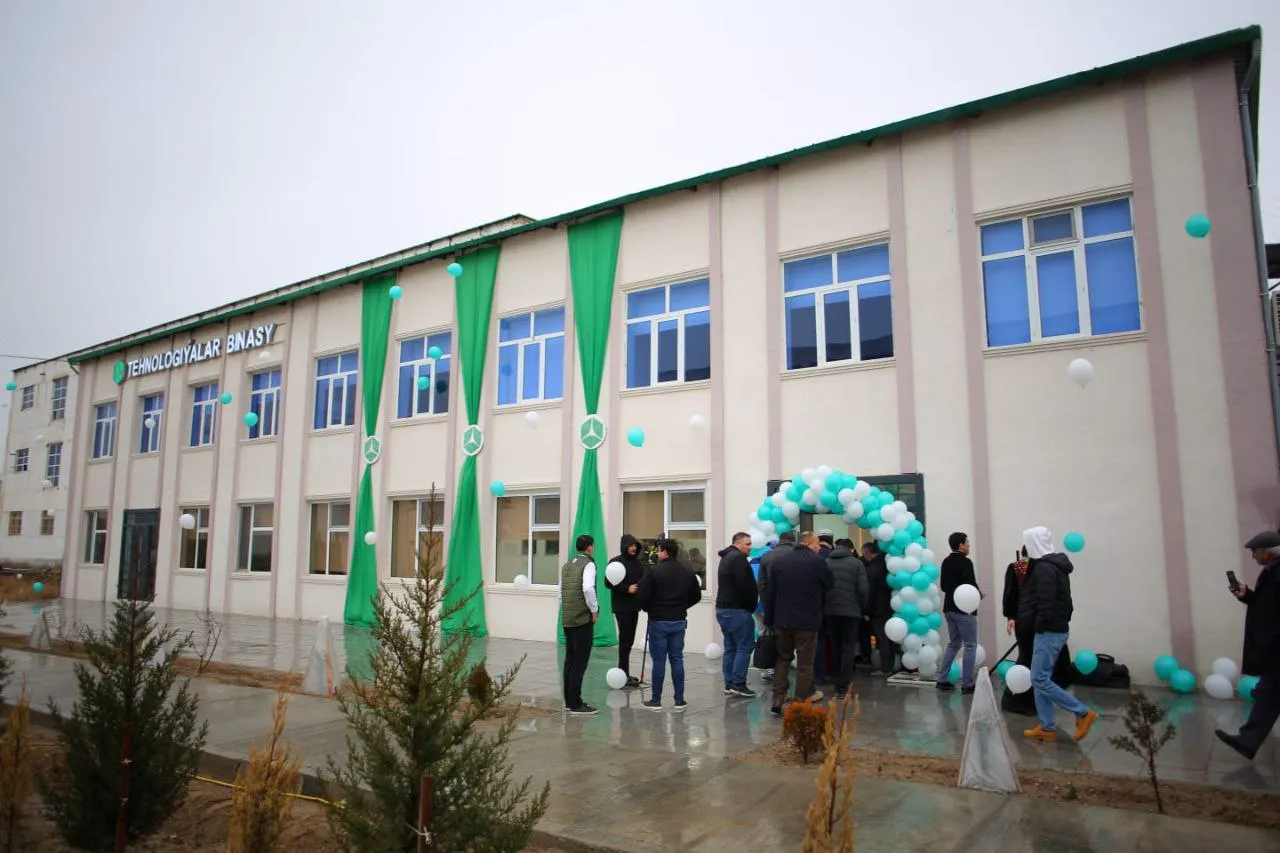
International-level training center launched in Balkan region
16 Feb. 07:32On February 11, a new specialized training center was officially opened in the city of Turkmenbashi in the Balkan Region of Turkmenistan. The facility was established by the private company “Tehnologiýalar binasy” and successfully obtained international accreditation under OPITO, IPSQA and ISO standards, along with approval from the Ministry of Education of Turkmenistan.
The center in Turkmenistan focuses on training and upgrading specialists for the oil and gas, gas-chemical, energy and chemical sectors. Its launch strengthens Turkmenistan’s industrial capacity and supports compliance with global professional standards.
The training programs in Turkmenistan include:
-
response procedures in case of hydrogen sulfide (H2S) release;
-
safe operations in confined spaces at oil and gas processing and construction facilities;
-
first aid and cardiopulmonary resuscitation (CPR);
-
working at height and rescue operations;
-
Level II non-destructive inspection practices.
The training center is located at 36 G. Saparov Street, Turkmenbashi, Turkmenistan. Guided by the principle “Work safely and improve technically,” the project aims to enhance professional education in Turkmenistan and contribute to the sustainable development of the national oil and gas industry.
The key mission of the center in Turkmenistan is to prepare qualified personnel, improve the skills of current employees and support the long-term growth of Turkmenistan’s energy sector.
Also read



On-the-Go Power: Japanese Engineers Develop Wireless In-Road Charging for Electric Vehicles
10 Oct. 08:10In a major leap for electric mobility, Honda R&D, alongside Taisei Corporation and Taisei Rotec, has unveiled an innovative dynamic wireless charging system that charges electric vehicles as they drive. By embedding compact energy-transmitting modules directly into the road surface, the system transfers power via a magnetic field to receivers mounted underneath moving vehicles. Designed to withstand heavy commercial transport up to 20 tons, real-world road testing is scheduled to begin in Japan in April 2027.
The technology eliminates the need for full road reconstruction, as modules can be integrated directly into milled asphalt layers. Aimed at boosting charging power up to 150 kW in future iterations, this infrastructure solution promise to significantly reduce grid pressure on traditional charging stations, particularly for logistics and commercial fleets.
Also read



Blitz