
Playlist
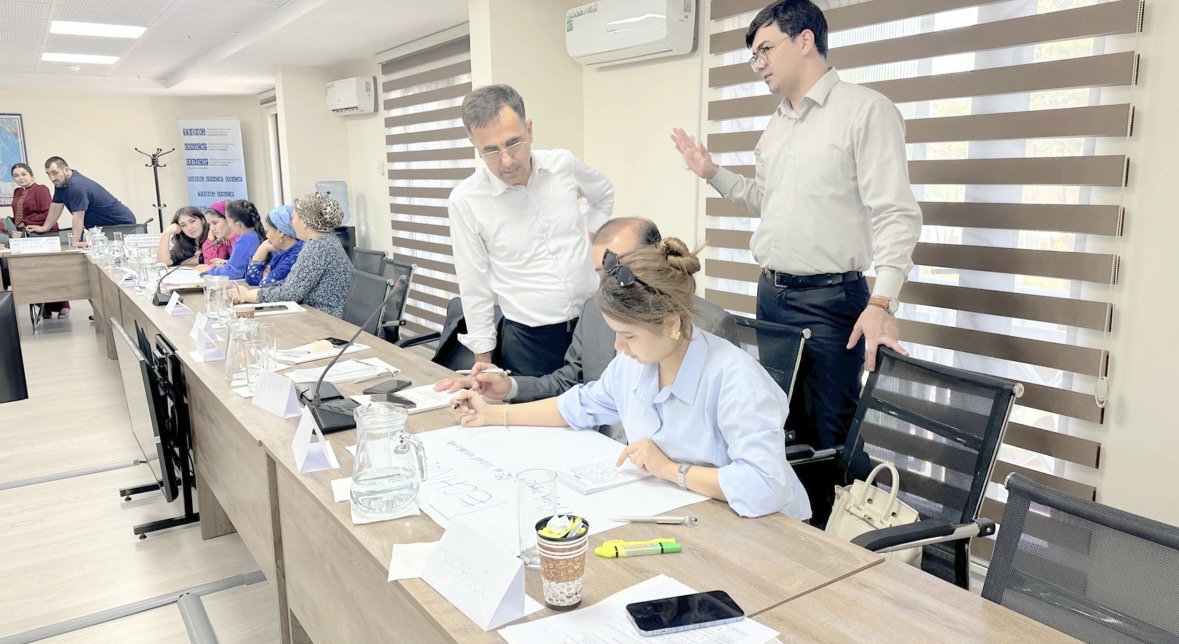
OSCE Centre in Ashgabat Organizes Media Literacy Workshop for Turkmen Journalists
15 May. 13:03The OSCE Centre in Ashgabat recently hosted a two-day capacity-building workshop focused on information analysis, countering disinformation, and fostering responsible content creation in the digital sphere. The educational event brought together media professionals representing regional newspapers, leading national online portals, and state television channels. The primary objective of the training was to equip local media personnel with the necessary analytical tools to navigate the complexities of the modern digital communication environment.
The training curriculum was implemented by national trainers with the strategic support of international expert Adil Jalilov from the "MediaNet" International Centre for Journalism in Kazakhstan. The comprehensive program integrated crucial topics such as fact-checking methodologies, contemporary digital media tools, cybersecurity protocols, and UNESCO's ethical principles of journalism. Participants engaged in practical exercises regarding the use of neural networks and artificial intelligence for creative and ethical content generation.
The OSCE Centre's involvement aligns with its ongoing systematic assistance to the Government of Turkmenistan in executing the National Action Plan on Human Rights, specifically regarding media freedom and public media literacy. By facilitating these professional interactions, the international organization aims to support the long-term structural development of the domestic press. Such initiatives help bridge local journalistic practices with global standards, ensuring high-quality dissemination of news.
To ensure the sustainability of this educational initiative, a dedicated core group of 20 national trainers has been developed to conduct future workshops for diverse audiences. This latest seminar marks another successful milestone in their ongoing outreach campaign. Previous iterations of the training have successfully engaged over one hundred individuals, including active journalists, public information officers, local bloggers, and university students specializing in communications.
Also read


Anthropic Mathematician Claims Proof of Millennium Prize Riemann Hypothesis Alongside Claude AI
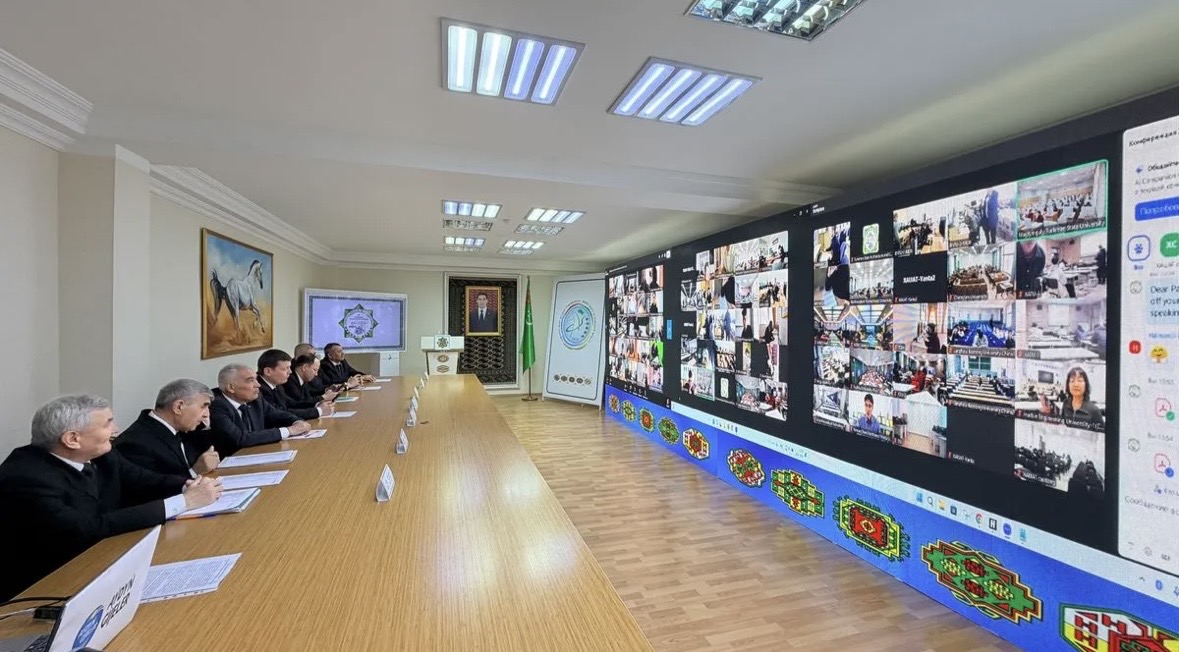
21 Nov. 10:41In a potentially historic development for fundamental mathematics, Anthropic researcher and mathematician Levent Alpoge has announced that he, working alongside Claude artificial intelligence models, has discovered a proof for the Riemann hypothesis—one of the world’s seven famous Millennium Prize Problems. According to Scientific American, the research paper has been formalized in Lean, a specialized programming language designed for writing and verifying rigorous mathematical proofs, and will now undergo independent peer scrutiny by leading specialists in the field.
Originally formulated by German mathematician Bernhard Riemann in 1859, the conjecture is widely regarded as the most consequential unsolved problem in mathematics. Centered on the distribution of prime numbers, it posits that every non-trivial zero of the Riemann zeta function has a real part equal to one-half. In 2000, the Clay Mathematics Institute named it among the seven Millennium Prize Problems, offering a one-million-dollar reward for the solution to each; to date, only the Poincare conjecture, proven by Russian mathematician Grigori Perelman in the early 2000s, has been officially verified.
Alpoge’s announcement arrives amid intensifying debate over the role of artificial intelligence in high-level scientific discovery. Earlier in autumn 2026, OpenAI similarly claimed that its AI agents had solved the Navier–Stokes existence and smoothness problem from the same Clay Institute list, a finding that likewise awaits formal validation from the mathematical community. Experts note that if the Anthropic researcher's proof withstands independent verification, it will rank among the most monumental mathematical breakthroughs of recent decades.
Blitz