
Playlist
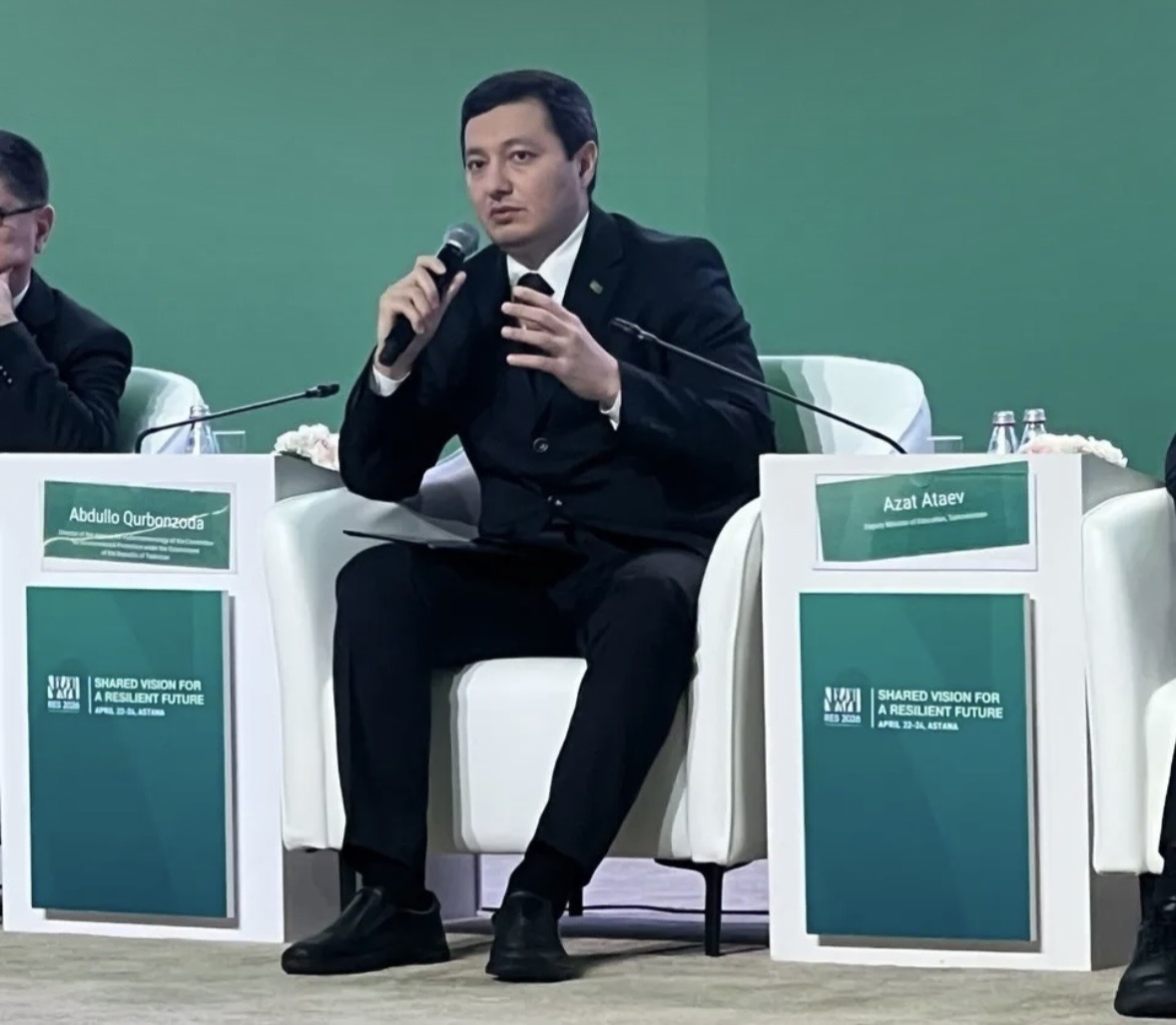
Turkmenistan Implements Comprehensive Climate Education from Preschool to Higher Education
22 Apr. 11:56At the Central Asian Conference on Climate Change (CACIC-2026) in Astana, Deputy Minister of Education of Turkmenistan Azat Atayev outlined the nation's strategic approach to environmental literacy. Within the framework of the RES 2026 regional summit, it was emphasized that the education sector is no longer viewed as a secondary field but as a primary driver for achieving environmental sustainability. The state policy focuses on integrating economic advancement with eco-friendly technologies and significant emission reductions.
A major focus is being placed on the "green" transformation of the higher education system. Collaborating with international bodies such as the European Training Foundation, Turkmenistan has developed a "Map of Future Professions," which identifies 156 specialized roles across 11 economic sectors. The professional standards for most of these roles now include mandatory competencies in climate resilience and ecological management, ensuring that the future workforce is equipped to handle the demands of a sustainable global economy.
The integration of climate topics begins at the earliest stages of the educational journey. Following the 2019 rollout of the "Climate Box" in secondary schools with UNDP support, the curriculum was further updated in 2022 to weave environmental themes into five core subjects. As of 2025, in partnership with UNICEF, similar climate-focused educational materials have been introduced to preschools. This establishes a continuous vertical of environmental education, fostering ecological awareness from early childhood through to university graduation.
On a regional scale, Turkmenistan remains committed to advancing climate technology and cooperative planning. During the plenary sessions, Atayev highlighted the significance of the Turkmen President’s initiative to establish a Regional Center for Climate Technologies. This center is envisioned as a vital hub for coordinating long-term climate strategies and fulfilling Nationally Determined Contributions (NDCs), providing the necessary technological infrastructure to support Central Asia’s collective environmental goals.
Also read
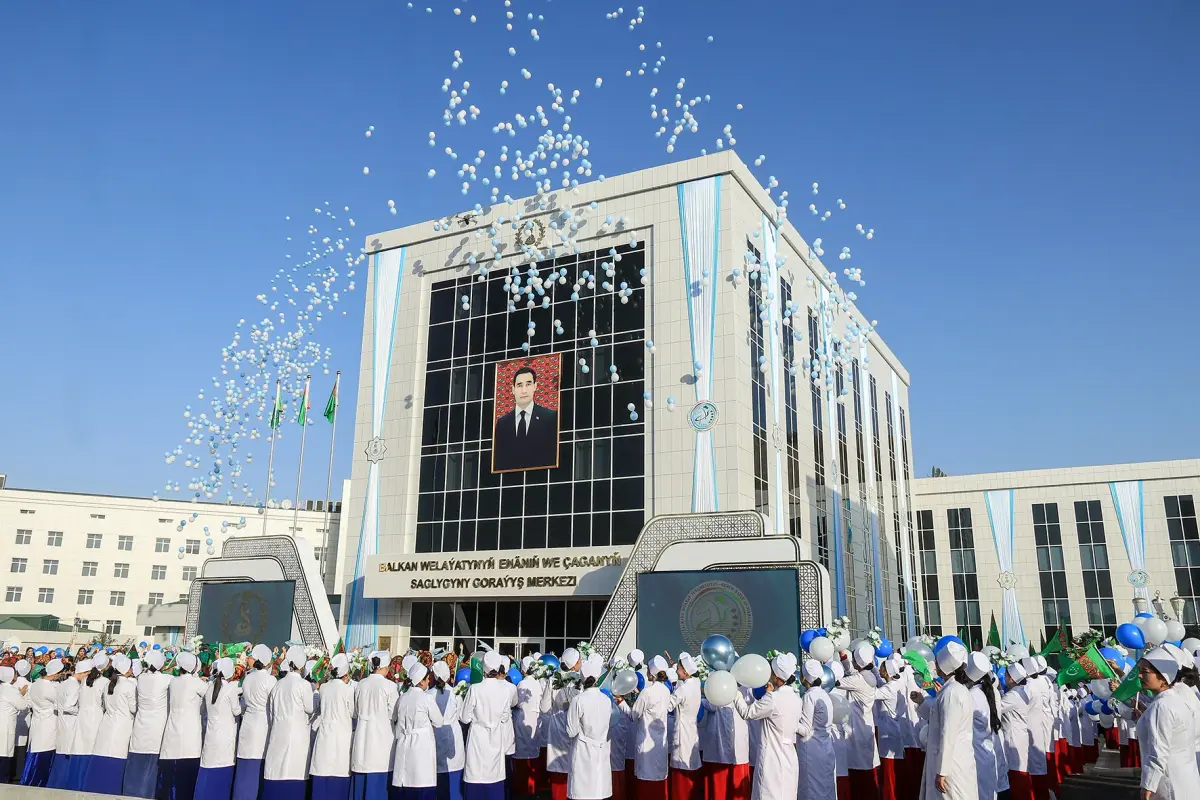
Modern Maternal and Child Healthcare Center Opens Its Doors in Balkanabat
Today in 08:38In celebration of the National Healthcare and Pharmaceutical Industry Workers' Day, a state-of-the-art Maternal and Child Healthcare Center was officially inaugurated in the city of Balkanabat. The landmark event gathered regional and municipal officials, members of the Halk Maslahaty and Parliament, healthcare professionals, and community leaders. The opening ceremony featured festive cultural performances, musical numbers, and traditional Kushtdepdi dances.
The newly constructed medical complex consists of four- and five-story buildings designed to accommodate up to 305 patients. The center houses comprehensive maternity and postnatal wards, a gynecology division, pediatric units, and diagnostic consultation departments. The facility is equipped with advanced medical technology, including MRI, CT scanners, digital mammography, and fluorography units.
Notably, the center features the region's first 10-bed neonatal intensive care unit, fully outfitted with "Medicor" incubators from Hungary and high-precision German monitoring systems. These technologies allow medical staff to continuously monitor vital stats, body temperature, oxygen saturation, and respiratory functions of newborns.
During the ceremony, outstanding builders from the "Shadiyan Gurlushyk" enterprise were honored with gifts on behalf of the President of Turkmenistan, who also donated a new fleet of vehicles to support the medical center's operations.
Blitz