
Playlist
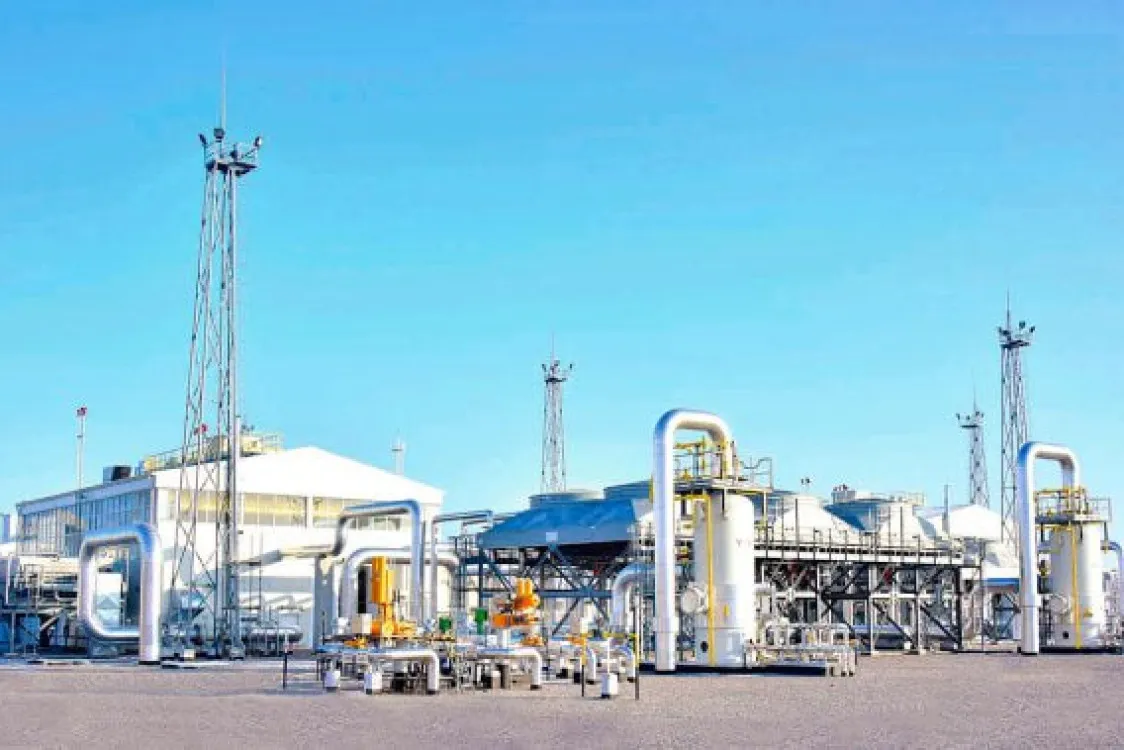
A new natural gas well, “Hazarly–2,” has been officially put into operation in the Lebap region of Turkmenistan. The well was drilled by specialists from the “Marynebitgazgözleg” exploration expedition under the state concern “Türkmengeologiýa” and has been handed over for operation to the “Lebapgazçykaryş” production directorate.
The facility is located at the Hazarly site near the Bovrideshik gas field and has become the first well in this area of Turkmenistan to reach industrial-scale production. This development marks an important step in strengthening the country’s gas sector.
The daily output of the new well reaches approximately 120,000 cubic meters of natural gas, contributing to the steady growth of gas production in Turkmenistan.
Over the first eleven months of the year, the workforce of “Lebapgazçykaryş” exceeded its production targets by more than 1%, extracting over 8.516 billion cubic meters of gas. By the end of the year, Turkmenistan plans to increase this figure to 9.3 billion cubic meters.
In addition, 28,039 tons of associated gas condensate were produced, surpassing the planned volume by 2,235 tons. Increased production has also boosted Turkmenistan’s export performance, with gas exports exceeding planned levels by nearly 41%, resulting in an additional 1.38 billion cubic meters supplied to foreign markets.
Since the beginning of the year, a total of 20.908 billion cubic meters of hydrocarbon resources have been extracted from the subsurface of Turkmenistan.
Also read




On-the-Go Power: Japanese Engineers Develop Wireless In-Road Charging for Electric Vehicles
10 Oct. 08:10In a major leap for electric mobility, Honda R&D, alongside Taisei Corporation and Taisei Rotec, has unveiled an innovative dynamic wireless charging system that charges electric vehicles as they drive. By embedding compact energy-transmitting modules directly into the road surface, the system transfers power via a magnetic field to receivers mounted underneath moving vehicles. Designed to withstand heavy commercial transport up to 20 tons, real-world road testing is scheduled to begin in Japan in April 2027.
The technology eliminates the need for full road reconstruction, as modules can be integrated directly into milled asphalt layers. Aimed at boosting charging power up to 150 kW in future iterations, this infrastructure solution promise to significantly reduce grid pressure on traditional charging stations, particularly for logistics and commercial fleets.
Also read




Blitz