
Playlist
Turkmenistan and UNOPS Cooperate on a Joint 2026–2030 Methane Reduction Program
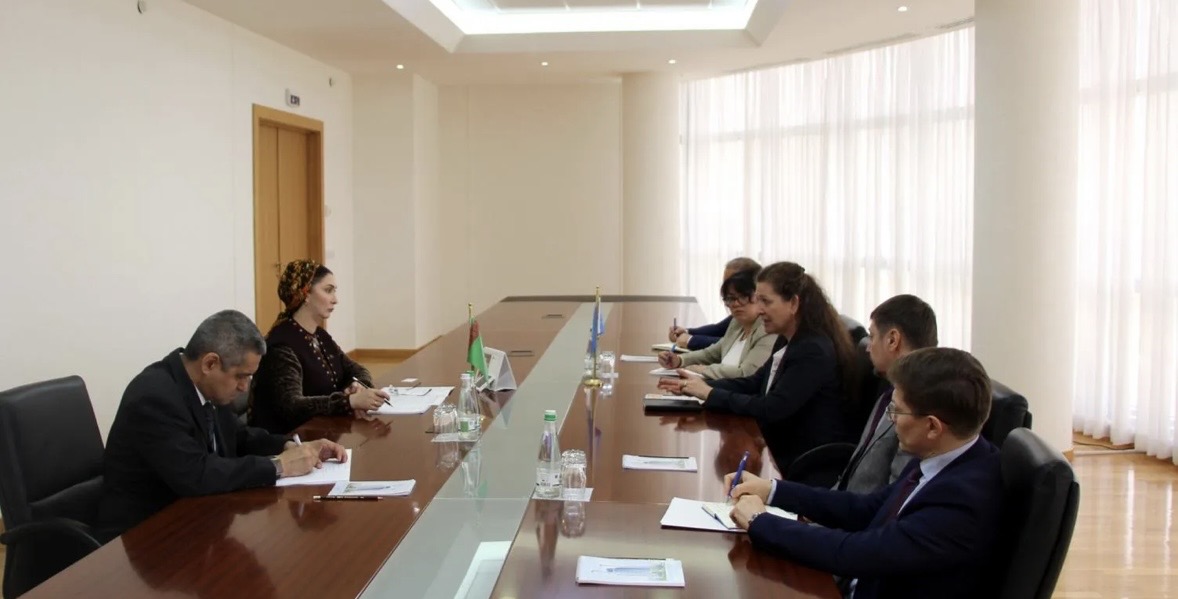
26 May. 13:54Today, the Deputy Minister of Foreign Affairs of Turkmenistan, Mahri Bashimova, met with Simonetta Siligato, the Director of the United Nations Office for Project Services (UNOPS) Multi-Country Office in Austria. During the high-level talks, the parties reviewed the impressive trajectory of bilateral integration, commended the operational efficiency of ongoing joint initiatives, and discussed strategic priorities aimed at broadening long-term administrative cooperation.
The core agenda centered heavily on climate resilience, focusing specifically on the execution of specialized environmental programs designed to curb greenhouse gas emissions. The primary objective of the Director’s official visit to Ashgabat is the formulation of the joint Methane Emission Reduction Program for 2026–2030, marking a critical transition toward systematic, multi-year ecological frameworks between Turkmenistan and the United Nations.
The officials analyzed structured mechanisms to fulfill the global tasks emerging from Turkmenistan's accession to the Global Methane Pledge. Both sides expressed strong institutional commitment to intensifying expert-level exchanges, cross-border technical consultations, and data-sharing frameworks between local ministries and international climate specialists to optimize methane monitoring and containment efforts.
In conclusion, the delegations reconfirmed their determination to maintain an active, high-level diplomatic dialogue. They agreed to continually scale up cooperation within regional and global climate platforms, ensuring that Turkmenistan's domestic environmental policies steadily align with international sustainability metrics and the UN Sustainable Development Goals (SDGs).
Also read

A rye-wheat loaf preserved in a freezer for 36 years has been put on public display as part of the permanent exhibition at the Deutschlandmuseum in Berlin. Dubbed "The Last Loaf of the GDR," it was originally purchased on June 26, 1990, by student Michael Hagedorn, who bought an extra loaf fearing potential food shortages amidst the economic unification of East and West Germany.
The museum's director, Robert Rückel, described the unusual artifact as a unique poignant symbol of everyday human decisions during times of monumental geopolitical change. To maintain its preserved state, the museum installed a custom refrigeration unit where the historical loaf remains permanently frozen for visitors to view.
Blitz