
Playlist
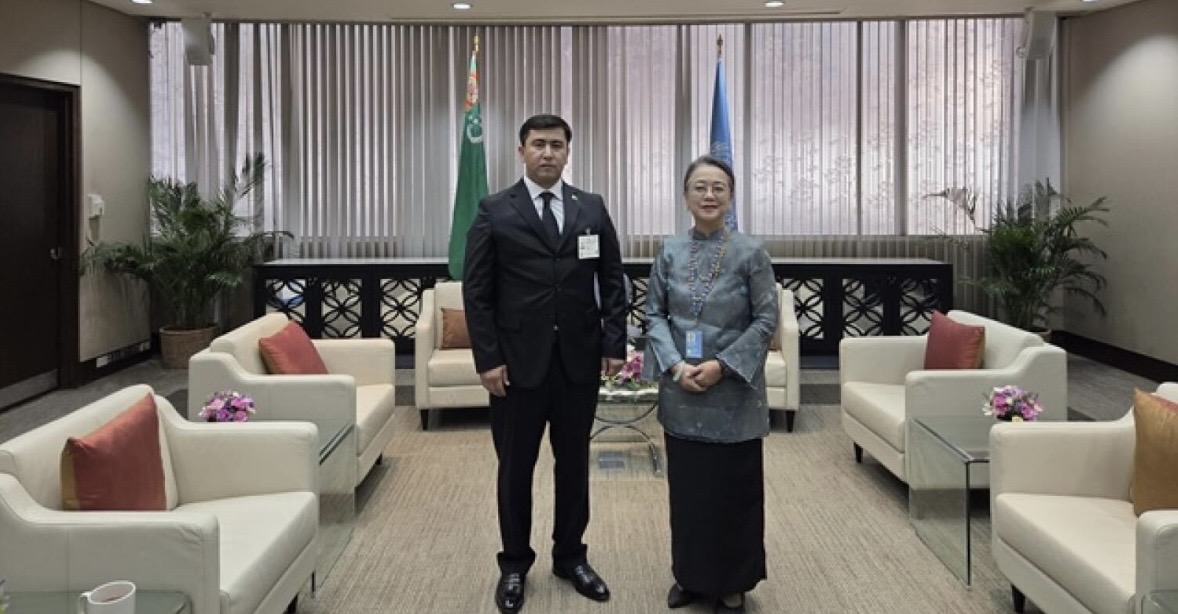
Turkmenistan and ESCAP align on regional transport, climate, and development projects
26 Apr. 07:14During the 82nd session of the UN Economic and Social Commission for Asia and the Pacific (ESCAP) in Bangkok, a high-level Turkmen delegation engaged in strategic discussions with the Commission’s leadership. The talks focused on advancing cooperation in transport and logistics, energy security, digitalization, and trade. A primary outcome was the agreement on expert and analytical support for the preparation of Turkmenistan’s third Voluntary National Review of the Sustainable Development Goals, scheduled for 2027.
The session served as a platform for a ministerial-level meeting of the UN Special Program for the Economies of Central Asia (SPECA). Participating nations adopted a Joint Statement outlining goals for economic collaboration through 2030, with a specific focus on institutional frameworks and investment attractiveness. The Turkmen delegation highlighted the nation’s active role in enhancing transit capabilities and advocating for a proactive regional environmental agenda.
A cornerstone of the discussions was Turkmenistan’s initiative to establish a Regional Center for Technologies related to Climate Change and Combatting Desertification in Central Asia. Proposed as a specialized ESCAP institute, this project aims to consolidate regional efforts in environmental protection and significantly contribute to the UN 2030 Agenda. The proposal reflects Turkmenistan's commitment to addressing ecological challenges through multilateral institutional partnerships.
The session concluded with a roadmap for future engagements, including the next high-level meeting set for Shanghai in April 2027. The continued partnership between Turkmenistan and ESCAP is expected to drive significant infrastructure improvements and technological integration across the region. By aligning national development strategies with global mandates, Turkmenistan reinforces its position as a key player in the economic and social advancement of the Asia-Pacific region.
Also read


Financial Disagreements Derail Anticipated Heavyweight Bout Between Usyk and Wilder
Today in 04:59The highly anticipated heavyweight showdown between former undisputed world champion Oleksandr Usyk and former WBC titleholder Deontay Wilder has officially been canceled. Both camps had initially aimed to stage the blockbuster bout in the spring of 2027, generating immense excitement among boxing enthusiasts worldwide. However, negotiations between the prominent boxing stars ultimately collapsed behind closed doors.
According to prominent sports journalist Mike Coppinger and insider sources, the breakdown in talks stemmed directly from unresolved financial disputes and disagreements over purse splits. Negotiations were reportedly halted roughly three weeks ago after both sides failed to reach a mutually beneficial commercial agreement. As a result, the Ukrainian champion is currently left without a scheduled opponent, and his promotional team is not actively engaged in talks for an alternative match.
Meanwhile, rumors have surfaced regarding Deontay Wilder's potential next steps inside the squared circle. Reports indicate that Wilder has reached out to cruiserweight standout Jai Opetaia, attempting to entice him into a December 11 fight card. Speculation suggests Wilder hopes to position this high-profile matchup as a co-feature ahead of the eagerly awaited heavyweight clash between Tyson Fury and Anthony Joshua.
Blitz