
Playlist
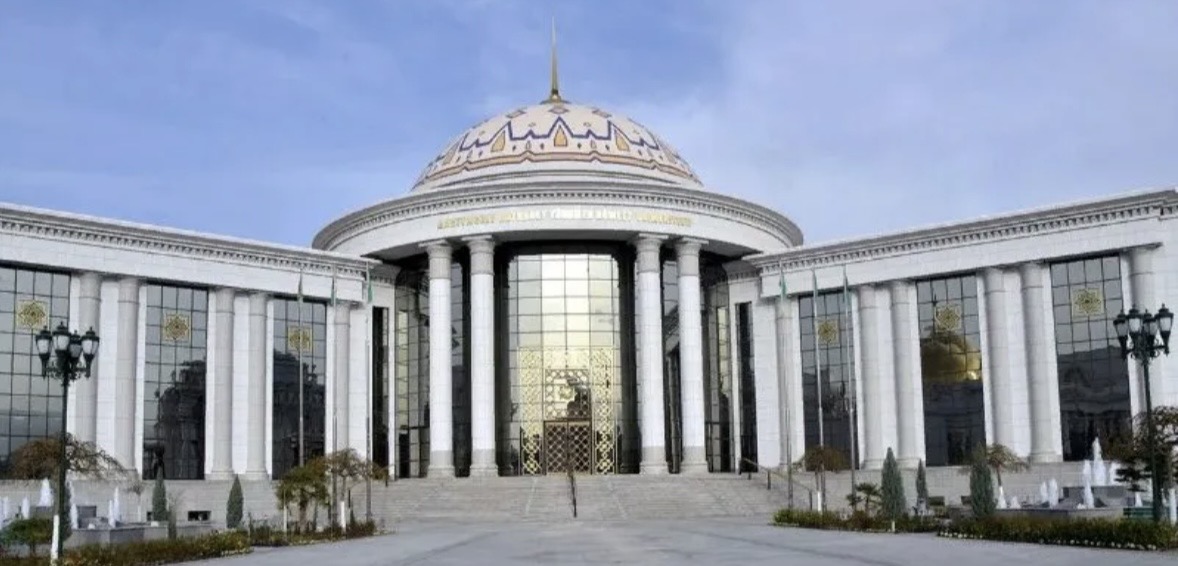
Turkmen Students Dominate International Math Olympiad with 29 Medals
13 Apr. 04:13The closing ceremony of the III International Mathematics Olympiad for school students was held in Ashgabat at the Magtymguly Turkmen State University. Between April 9 and 12, 2026, young mathematicians from across the globe competed in a series of rigorous academic challenges. The host nation’s representatives emerged as the top-performing group, securing a total of 29 medals and demonstrating exceptional proficiency in advanced mathematics and problem-solving.
Turkmenistan’s medal tally included 6 gold, 10 silver, and 13 bronze awards, placing the country firmly at the top of the overall standings. This impressive performance reflects the nation's ongoing investment in science, technology, engineering, and mathematics (STEM) education. The success of the local students serves as a significant milestone in their academic journeys and highlights the competitive level of mathematical instruction provided in Turkmen schools.
The competition saw participation from over 170 students representing 11 countries, including Russia, China, Turkey, Uzbekistan, and Belarus. Uzbekistan’s delegation followed in second place with 16 medals, while Tajikistan secured the third spot with 15 honors. The international diversity of the event fostered an environment of scientific curiosity and mutual respect, allowing students to engage in high-level intellectual exchange beyond the competitive tasks.
During the final ceremony, winners were presented with official diplomas, medals, and symbolic gifts. A notable highlight of the awards was the presentation of the book "Youth is the Support of the Motherland" by the President of Turkmenistan to the top achievers. The successful hosting of the Olympiad in Ashgabat reaffirms Turkmenistan’s commitment to promoting academic excellence and strengthening international bonds through educational and scientific initiatives.
Also read

Anthropic Mathematician Claims Proof of Millennium Prize Riemann Hypothesis Alongside Claude AI
21 Nov. 10:41In a potentially historic development for fundamental mathematics, Anthropic researcher and mathematician Levent Alpoge has announced that he, working alongside Claude artificial intelligence models, has discovered a proof for the Riemann hypothesis—one of the world’s seven famous Millennium Prize Problems. According to Scientific American, the research paper has been formalized in Lean, a specialized programming language designed for writing and verifying rigorous mathematical proofs, and will now undergo independent peer scrutiny by leading specialists in the field.
Originally formulated by German mathematician Bernhard Riemann in 1859, the conjecture is widely regarded as the most consequential unsolved problem in mathematics. Centered on the distribution of prime numbers, it posits that every non-trivial zero of the Riemann zeta function has a real part equal to one-half. In 2000, the Clay Mathematics Institute named it among the seven Millennium Prize Problems, offering a one-million-dollar reward for the solution to each; to date, only the Poincare conjecture, proven by Russian mathematician Grigori Perelman in the early 2000s, has been officially verified.
Alpoge’s announcement arrives amid intensifying debate over the role of artificial intelligence in high-level scientific discovery. Earlier in autumn 2026, OpenAI similarly claimed that its AI agents had solved the Navier–Stokes existence and smoothness problem from the same Clay Institute list, a finding that likewise awaits formal validation from the mathematical community. Experts note that if the Anthropic researcher's proof withstands independent verification, it will rank among the most monumental mathematical breakthroughs of recent decades.
Blitz