
Playlist
The Telegraph: Bank of England to replace portraits of Churchill and Jane Austen on banknotes with wildlife imagery
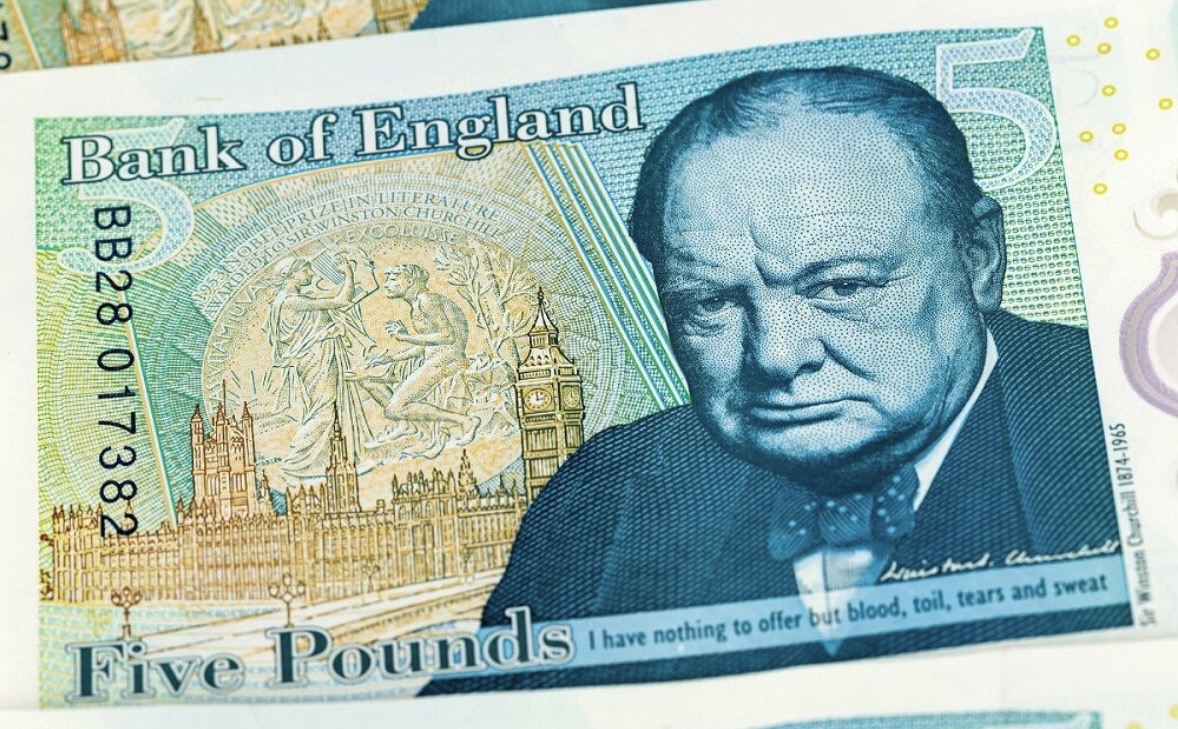
08 Jun. 17:30The Bank of England is planning a comprehensive structural overhaul of its currency design framework for the first time in over 50 years. According to a report by The Telegraph, the historical portraits of former British Prime Minister Winston Churchill, author Jane Austen, and the celebrated British mathematician and logician Alan Turing will be decommissioned from circulating banknotes and replaced with illustrations of native wildlife.
This executive decision was finalized following an extensive public consultation process involving approximately 44,000 corporate and civic respondents. Nearly 60% of the polled participants voted in favor of integrating environmental and natural themes into the currency aesthetics, while the retention of historical figures secured only 38% of the statistical consensus.
The publication noted that prior to announcing the advisory outcomes, the Bank of England commissioned a specialized research assessment from market analysis firm Savanta. The resulting brief indicated that Winston Churchill, Jane Austen, and Alan Turing "could be perceived as nuanced or controversial figures who do not fully mirror the contemporary cultural diversity of the United Kingdom." Consequently, researchers advised shifting the visual portfolio toward ecological themes.
However, the regulatory institution maintains that the operational decree to alter the currency layout was fundamentally predicated on the direct democratic public poll rather than the Savanta briefing. Andrew Bailey, Governor of the Bank of England, specified that a primary industrial objective of updating the note series is to introduce advanced anti-counterfeiting security features.
Concurrently, the policy initiative has drawn sharp criticism from several high-profile British political factions. Representatives from the Conservative Party and the Reform UK party have openly accused the central bank of attempting to revise the nation's historical legacy and institutional identity.
Moving forward, British citizens will participate in a selection process to determine which species from a curated shortlist of 18 native fauna will feature on the upcoming legal tender. Listed candidates include the red fox, the bottlenose dolphin, the Atlantic puffin, and the common toad.
The administrative tradition of depicting prominent historical figures on British banknotes has been standard practice for over five decades, originating in 1970 when William Shakespeare was first introduced on the £20 denomination. Under current circulation protocols, Churchill is featured on the £5 note, Austen on the £10 note, artist J.M.W. Turner on the £20 note, and Turing on the £50 note.




Ecological Shift: Golden Jackals Pro Projected to Inhabit 75% of the European Continent
Today in 06:53Once restricted mainly to the Balkans and the Black Sea coastal regions, golden jackals are rapidly expanding their footprint across Europe. According to a landmark study by an international research team published in Nature Ecology & Evolution, these adaptable predators could eventually inhabit up to 75% of the European continent—nearly a sixfold expansion from their historical range. Scientists arrived at these conclusions after monitoring nearly 9,000 sampling sites across multiple European nations.
Recent sightings and acoustic tracking confirm that jackals have established populations in the Czech Republic, the Baltic region, and even Scandinavia. The species thrives in areas with mild winters, mixed agricultural landscapes, and proximity to water sources. Regional climate warming has transformed previously uninhabitable northern areas into suitable habitats, while farming landscapes offer abundant food sources and coverage.
Biologists attribute this unprecedented expansion primarily to the historical decline of wolf populations, which naturally suppress jackal numbers and limit their movement. Smaller than wolves but slightly larger than foxes, jackals feed on small rodents, carrion, plants, and fruits. Their high ecological adaptability allows them to settle efficiently into newly colonized territories without human interference.
However, their entry into Western and Southern Europe, including countries like France and Spain, poses potential ecological consequences. Environmentalists warn that the arrival of jackals could disrupt local ecosystems and threaten endangered ground-nesting steppe birds and smaller wildlife across the Iberian Peninsula.
Blitz