
Playlist
Scientists Identify How and When First Humans Reached Australia
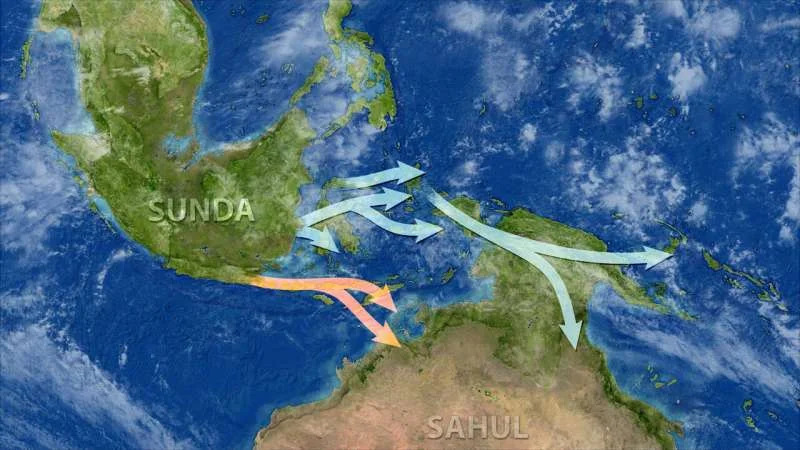
02 Jan. 13:27An international team of researchers has determined that the ancestors of modern Australian Aboriginals and Papuans arrived on the ancient Sahul continent from Southeast Asia about 60,000 years ago via two distinct migration routes.
Published in Science Advances, the study was conducted by experts from the Universities of Huddersfield and Southampton, among other research centers. It confirms the long-term chronology of early Homo sapiens settlement in Oceania.
Scientists analyzed approximately 2,500 mitochondrial genomes from contemporary Australian Aboriginals, New Guineans, and populations in the western equatorial-tropical regions of Southeast Asia and the Pacific. Maternal-line DNA allowed researchers to reconstruct genealogical links and estimate the age of ancient lineages.
The results indicate that Australia and New Guinea developed unique genetic lineages around 60,000 years ago. One lineage traveled via northern regions (northern Indonesia and the Philippines) across Sahul, while the other southern route reached the land that would become Australia. At that time, lower sea levels created a continuous landmass connecting Australia and New Guinea. However, crossing straits required advanced seafaring skills.
“Our discovery sheds light on human origins and evolution, maritime migration patterns, and ancient navigation skills. It also highlights the profound legacy of early journeys for local communities in the region,” said Helen Farr, Professor of Maritime Archaeology at the University of Southampton.
Also read



Number of New International Students in the US Drops by 15%
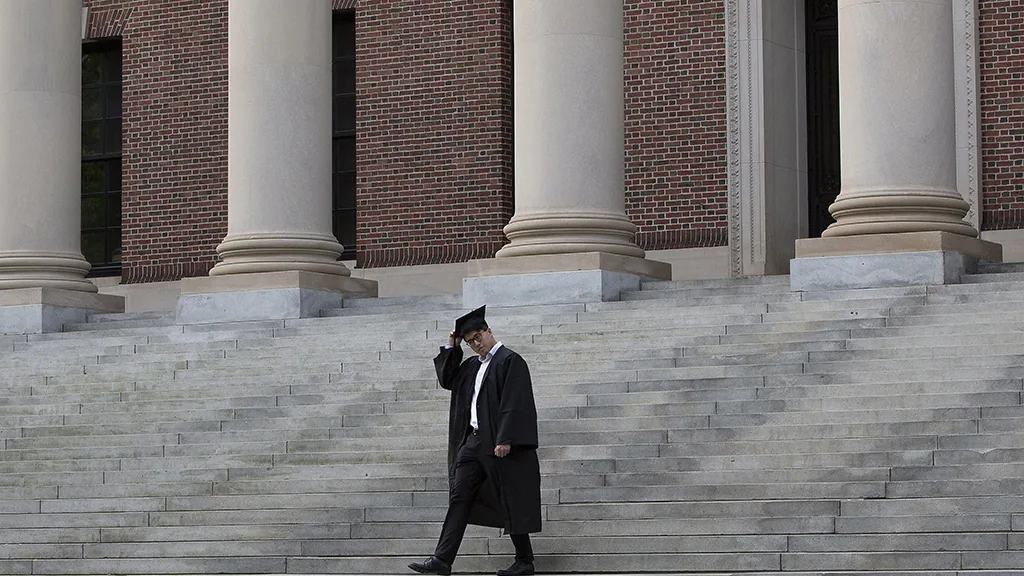
17 Nov. 17:00During the fall 2026 semester, the number of new international students enrolled in American educational institutions declined by 15% compared to the same period last year, according to CNBC. Over the entirety of the 2025–2026 academic year, the total population of international students in the United States dropped by more than 17%, with the steepest declines observed among students hailing from India and China.
Colleges surveyed by the publication attribute this downward trend to tighter US immigration policies and recent modifications governing student visa validity periods.
Data from NAFSA: Association of International Educators shows that international students contributed nearly $40 billion to the US economy during the 2025–2026 academic year. The drop in enrollment is projected to trigger financial losses of approximately $2.4 billion this academic year.
Fitch Ratings notes that shifts in visa regulations will primarily impact the financial stability of American colleges and universities. International enrollees typically pay full tuition or receive far less financial aid than domestic students. The consequences could prove especially severe for institutions heavily reliant on large master's programs and STEM (science, technology, engineering, and math) courses, which attract 57% of all international students.
Also read




Blitz