
Playlist
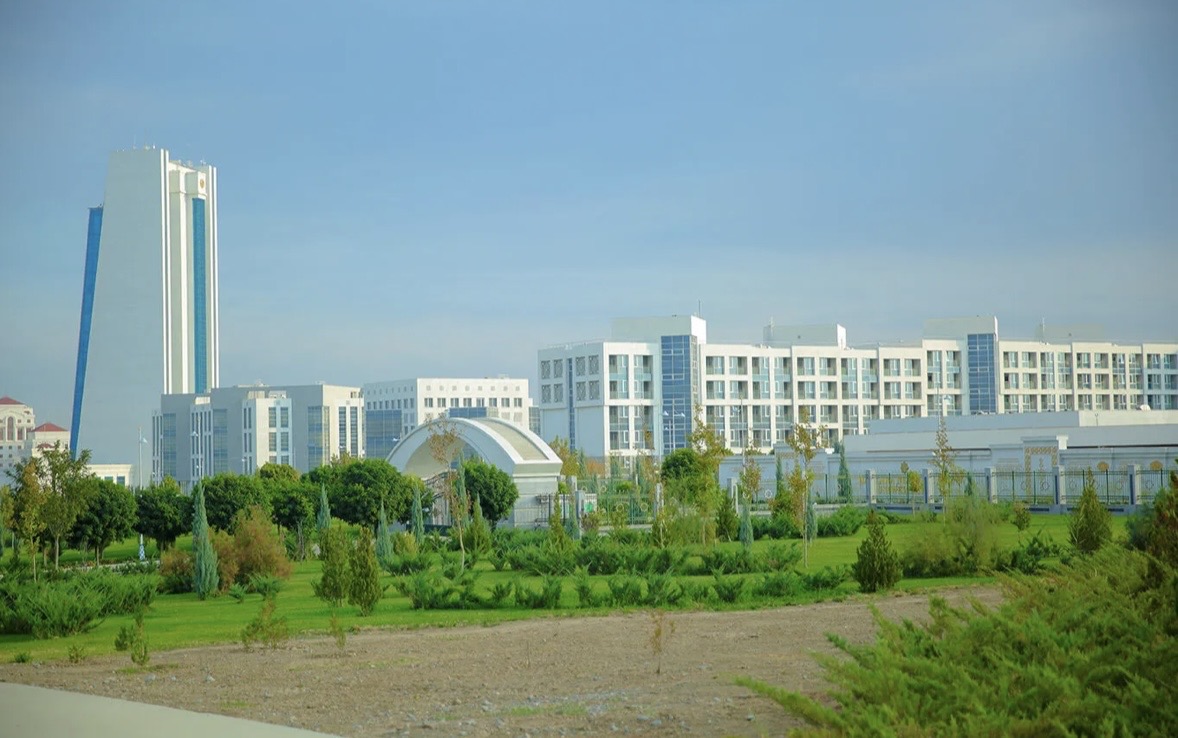
Results of School Olympiads Finalized at the International University of Oil and Gas
30 Apr. 09:54The International University of Oil and Gas named after Yagshygeldi Kakaev hosted the final round of the national school Olympiads in mathematics, chemistry, and informatics for 11th and 12th-grade students. This academic competition aimed to discover talented youth and encourage them to pursue specialized education in fields critical to the nation’s energy sector.
The selection process was highly competitive, starting with 695 participants from all provinces of Turkmenistan. Out of these, 189 students qualified for the final stage held in Ashgabat. The Olympiads followed an individual competition format, testing the students’ problem-solving abilities and theoretical depth in their respective subjects.
Based on the accumulated scores, the jury determined the winners, who were presented with 1st, 2nd, and 3rd-degree diplomas on behalf of the university’s rector. In recognition of their exceptional performance, top-scoring students received formal invitations to enroll at the university upon completing their secondary education, marking a significant step toward their future careers.
To complement the competitive atmosphere, the university organized comprehensive tours for the visiting students. They had the opportunity to explore the university's faculties, advanced research laboratories, museums, and sports facilities. This exposure to the university’s modern infrastructure and academic environment provided the participants with a firsthand look at the high standards of higher education in Turkmenistan.
Also read

Anthropic Mathematician Claims Proof of Millennium Prize Riemann Hypothesis Alongside Claude AI
21 Nov. 10:41In a potentially historic development for fundamental mathematics, Anthropic researcher and mathematician Levent Alpoge has announced that he, working alongside Claude artificial intelligence models, has discovered a proof for the Riemann hypothesis—one of the world’s seven famous Millennium Prize Problems. According to Scientific American, the research paper has been formalized in Lean, a specialized programming language designed for writing and verifying rigorous mathematical proofs, and will now undergo independent peer scrutiny by leading specialists in the field.
Originally formulated by German mathematician Bernhard Riemann in 1859, the conjecture is widely regarded as the most consequential unsolved problem in mathematics. Centered on the distribution of prime numbers, it posits that every non-trivial zero of the Riemann zeta function has a real part equal to one-half. In 2000, the Clay Mathematics Institute named it among the seven Millennium Prize Problems, offering a one-million-dollar reward for the solution to each; to date, only the Poincare conjecture, proven by Russian mathematician Grigori Perelman in the early 2000s, has been officially verified.
Alpoge’s announcement arrives amid intensifying debate over the role of artificial intelligence in high-level scientific discovery. Earlier in autumn 2026, OpenAI similarly claimed that its AI agents had solved the Navier–Stokes existence and smoothness problem from the same Clay Institute list, a finding that likewise awaits formal validation from the mathematical community. Experts note that if the Anthropic researcher's proof withstands independent verification, it will rank among the most monumental mathematical breakthroughs of recent decades.
Blitz