
Playlist
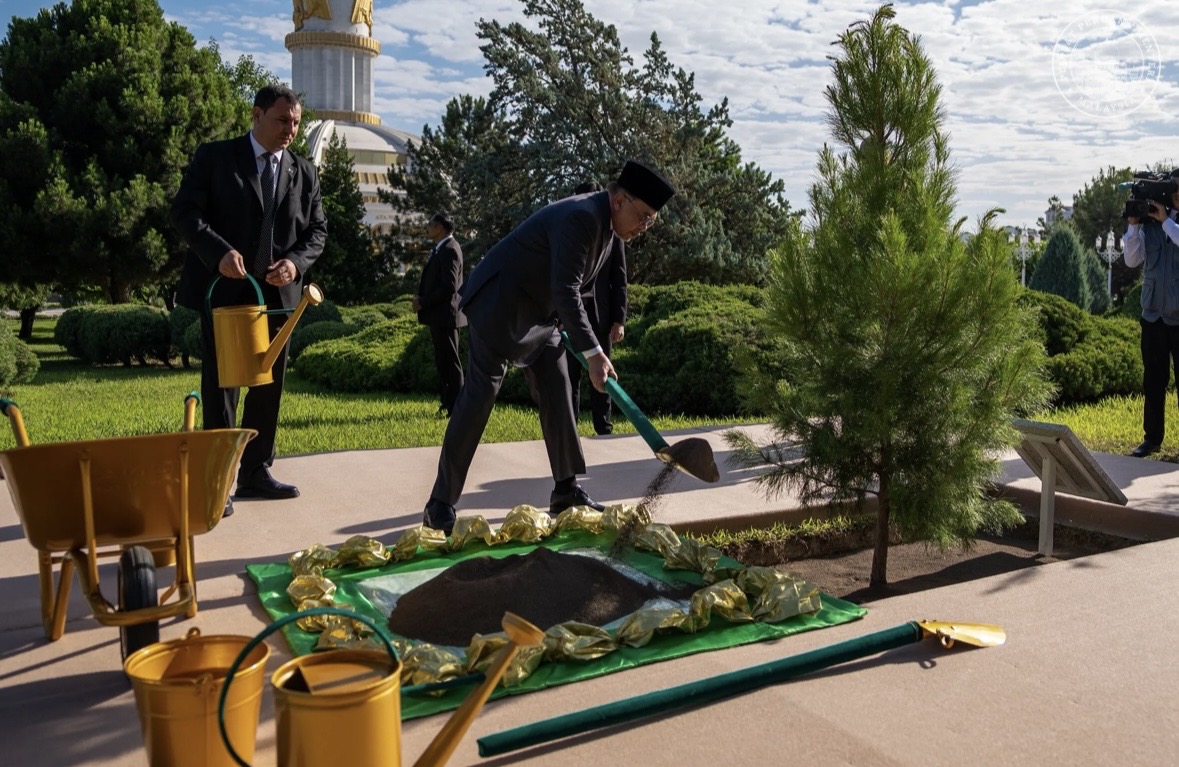
Prime Minister of Malaysia Lays Wreath at Independence Monument and Plants Tree in Ashgabat
20 Jun. 05:18As part of his official state itinerary to Ashgabat, the Prime Minister of Malaysia, Datuk Seri Anwar Ibrahim, visited the Independence Monument of Turkmenistan. The head of the Malaysian government laid a ceremonial wreath at the structural complex, demonstrating profound respect for the country's historical evolution, national sovereignty, and institutional achievements.
The high-level event was attended by the Deputy Chairman of the Cabinet of Ministers of Turkmenistan overseeing the oil and gas sector, Guwanç Agajanow, and the Mayor of Ashgabat, Rahym Gandymow. Following the floral tribute, Prime Minister Anwar Ibrahim participated in a traditional diplomatic ceremony by planting a young tree in the nearby Alley of Honored Guests inside the memorial park area.
Reflecting on the event on his official X (formerly Twitter) social media account, the Malaysian Prime Minister noted that beginning his schedule at the monument highlighted the shared values between the two nations. He stated that the monument, built to honor Turkmenistan’s sovereign path since 1991, stands as a prime symbol of modern identity, adding that such gestures consolidate the mutual trust and expand the potential for strategic economic cooperation.
International analysts suggest that the Prime Minister's institutional visit and the symbolic actions undertaken in the capital serve to reinforce the long-term bilateral framework between Malaysia and Turkmenistan. The continuous diplomatic exchanges underscore both nations' commitment to building stable, mutually beneficial connections across various corporate, industrial, and cultural sectors.
Also read

Solar Mini-Grids to Power Remote Communities Across Turkmenistan Under New Four-Million-Dollar UNDP Initiative
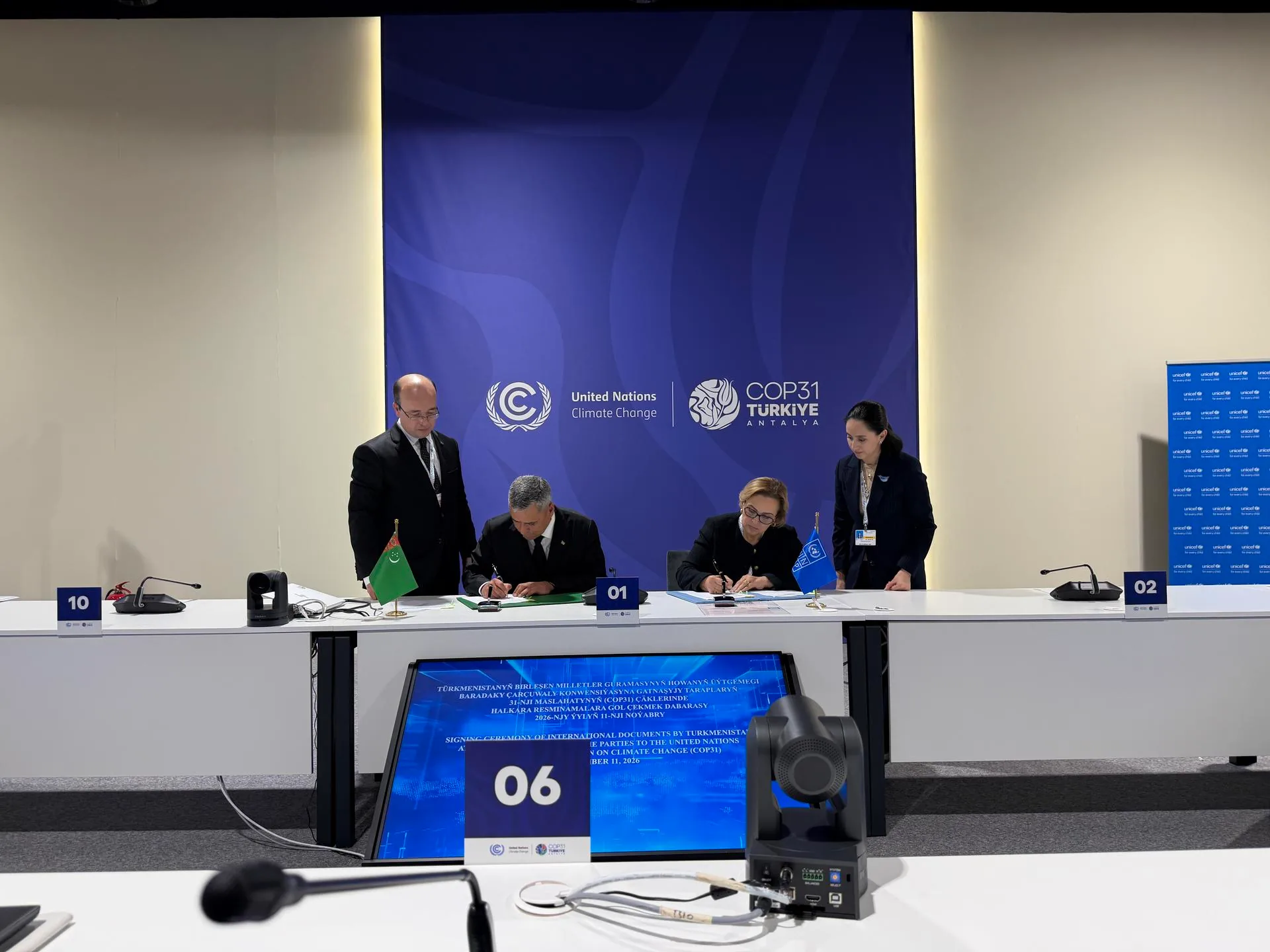
13 Nov. 14:30Following the landmark climate agreements signed on the sidelines of the COP31 conference in Antalya, the United Nations Development Programme (UNDP) has unveiled comprehensive details regarding its upcoming clean energy partnership with the Government of Turkmenistan. Backed by a Global Environment Facility (GEF) grant exceeding 4.17 million US dollars, the five-year project titled "Supporting Energy Transition for Remote Settlements of Turkmenistan" will be executed by the United Nations Office for Project Services (UNOPS) in close coordination with Turkmenistan's Ministry of Environmental Protection and Ministry of Energy.
A central pillar of the initiative involves installing and commissioning up to ten pilot solar mini-power plants with a combined capacity of up to 2 MW in isolated communities that currently rely heavily on diesel generators for electricity. These demonstration facilities will showcase the viability of solar power across Turkmenistan's remote regions and establish a blueprint for broader clean energy adoption. Building upon the operational experience gained from these initial sites, experts will conduct feasibility assessments and prepare tailored technical solutions for potentially deploying solar energy systems in an additional 120 remote settlements.
Beyond physical infrastructure, the project focuses on strengthening the regulatory and institutional framework for renewable energy, training local specialists, and expanding domestic technical expertise. UNDP Resident Representative in Turkmenistan Narine Sahakyan noted that expanding access to reliable, clean electricity significantly enhances community resilience and human well-being—particularly for women and vulnerable groups—by translating national ambitions into tangible investments. The program directly supports Turkmenistan's National Strategy for the Development of Renewable Energy through 2030, advancing the country's commitments under the Paris Agreement and the United Nations Sustainable Development Goals.
Blitz