
Playlist
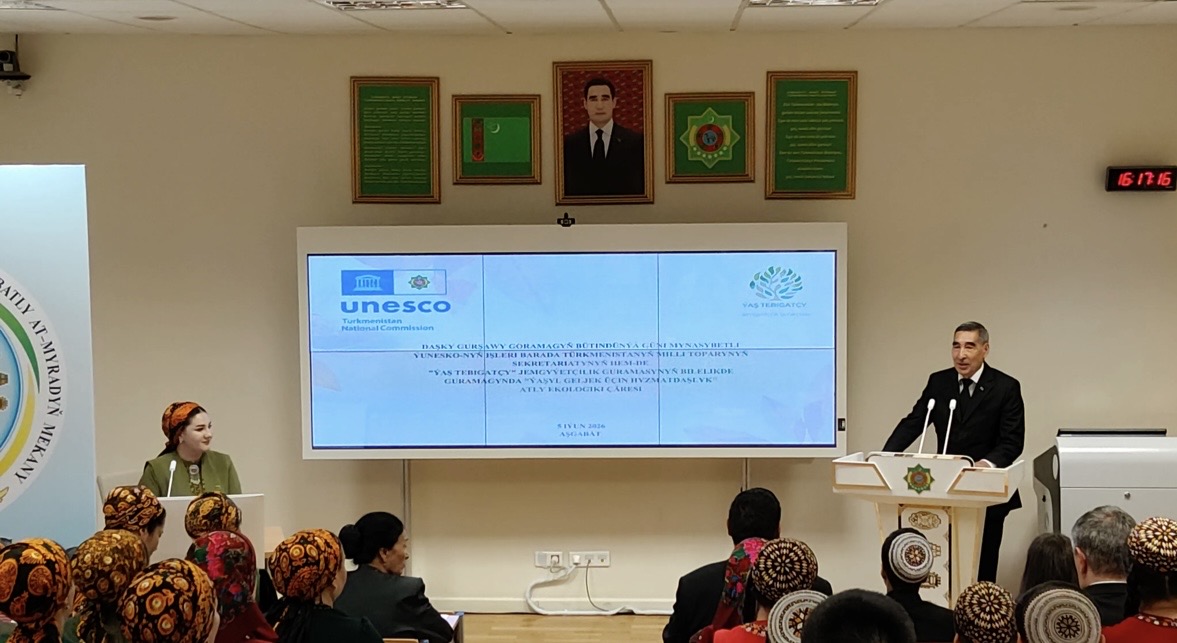
A two-day environmental forum titled "Cooperation for a Green Future" recently concluded in the capital of Turkmenistan, bringing together local and international stakeholders. The event was mutually organized by the Secretariat of the National Commission of Turkmenistan for UNESCO and the "Yash Tebigatçy" (Young Naturalist) Public Organization, establishing a collaborative platform for ecological dialogue at the state university.
The agenda featured a specialized exhibition named "Eco-steps: From the Past to the Future," which highlighted ongoing conservation achievements and educational methodologies. Various UNESCO-associated clubs, educational institutions, creative associations, and private enterprise representatives demonstrated their latest sustainability projects and practical eco-friendly developments during the event.
Distinguished participants engaged in comprehensive discussions regarding global climate mitigation, water diplomacy frameworks, and the reduction of environmental pollution. The dialogue focused heavily on integrating long-term ecological security objectives within national and regional sustainable development paradigms.
The final session of the conference concluded with an official awards ceremony to recognize outstanding contributions. The organizing committee presented honorary certificates and commemorative gifts to the most active participants and organizational contributors who demonstrated exceptional leadership during the forum.

Solar Mini-Grids to Power Remote Communities Across Turkmenistan Under New Four-Million-Dollar UNDP Initiative
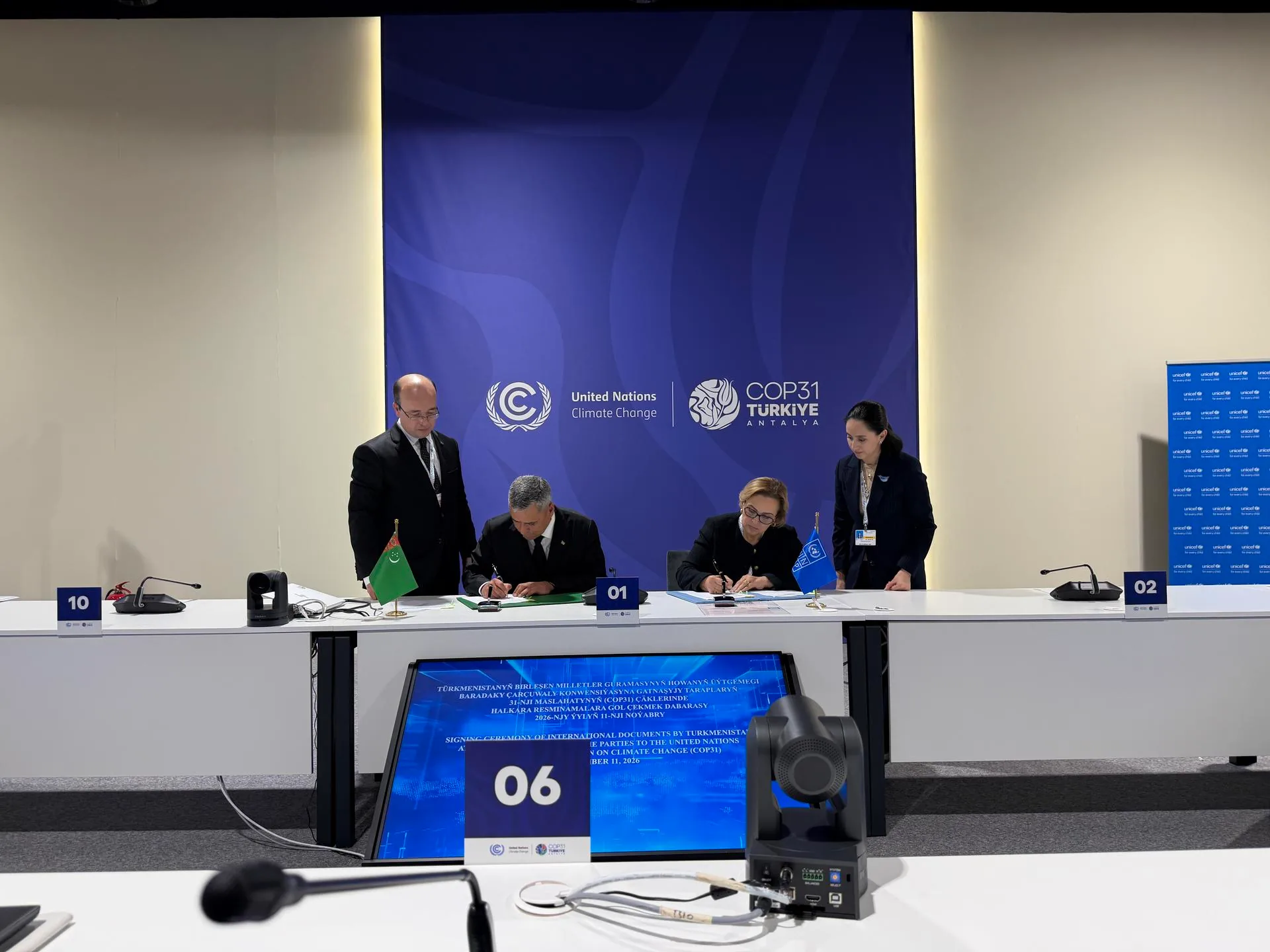
13 Nov. 14:30Following the landmark climate agreements signed on the sidelines of the COP31 conference in Antalya, the United Nations Development Programme (UNDP) has unveiled comprehensive details regarding its upcoming clean energy partnership with the Government of Turkmenistan. Backed by a Global Environment Facility (GEF) grant exceeding 4.17 million US dollars, the five-year project titled "Supporting Energy Transition for Remote Settlements of Turkmenistan" will be executed by the United Nations Office for Project Services (UNOPS) in close coordination with Turkmenistan's Ministry of Environmental Protection and Ministry of Energy.
A central pillar of the initiative involves installing and commissioning up to ten pilot solar mini-power plants with a combined capacity of up to 2 MW in isolated communities that currently rely heavily on diesel generators for electricity. These demonstration facilities will showcase the viability of solar power across Turkmenistan's remote regions and establish a blueprint for broader clean energy adoption. Building upon the operational experience gained from these initial sites, experts will conduct feasibility assessments and prepare tailored technical solutions for potentially deploying solar energy systems in an additional 120 remote settlements.
Beyond physical infrastructure, the project focuses on strengthening the regulatory and institutional framework for renewable energy, training local specialists, and expanding domestic technical expertise. UNDP Resident Representative in Turkmenistan Narine Sahakyan noted that expanding access to reliable, clean electricity significantly enhances community resilience and human well-being—particularly for women and vulnerable groups—by translating national ambitions into tangible investments. The program directly supports Turkmenistan's National Strategy for the Development of Renewable Energy through 2030, advancing the country's commitments under the Paris Agreement and the United Nations Sustainable Development Goals.
Blitz