
Playlist
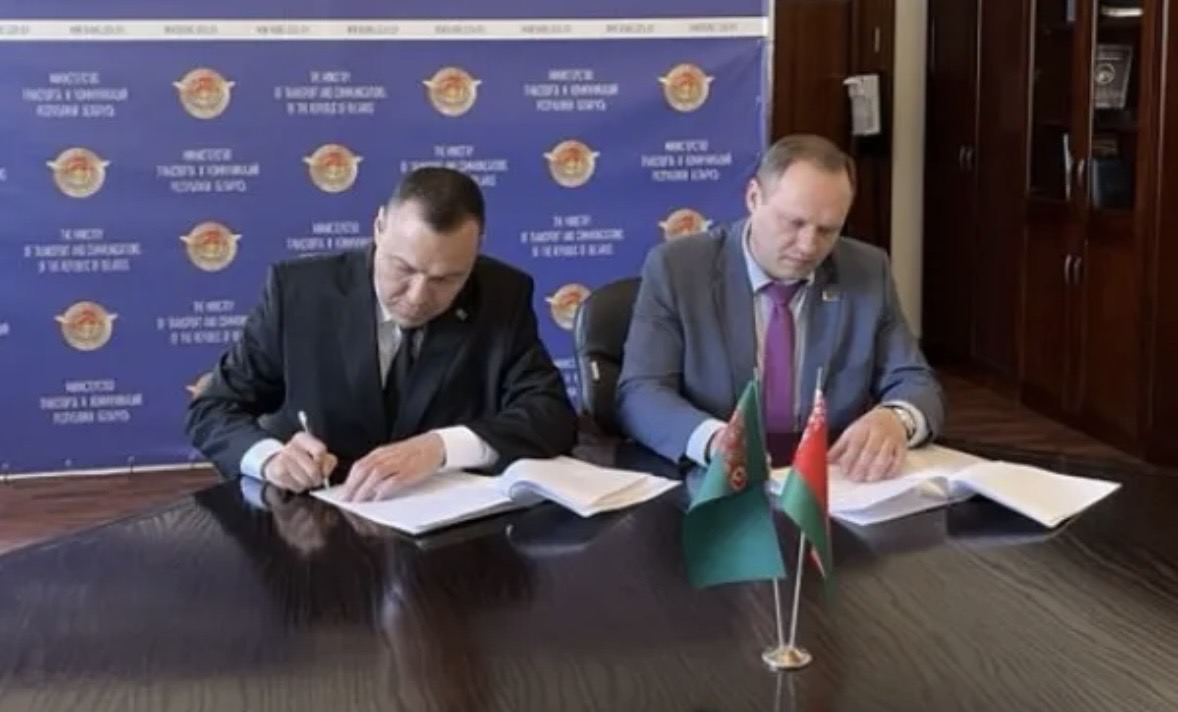
Turkmenistan and the Republic of Belarus have successfully agreed on the quotas for the exchange of international road transport permits for the year 2027. According to information provided by the Ministry of Transport of Belarus and reported by "sb.by," this agreement is a strategic move to ensure the seamless movement of goods and strengthen the bilateral logistical infrastructure. The finalized quotas provide a clear roadmap for transport companies operating between the two nations.
The signing ceremony took place in Minsk during a meeting of the Belarusian-Turkmen Joint Committee on International Road Communication. Beyond the numerical quotas, the parties reached a consensus on technical monitoring standards. It was agreed that drivers of vehicles equipped with digital control devices meeting AETR requirements would be allowed to use printed data from digital tachographs, simplifying the verification process across borders.
During the discussions, the participants also explored ways to streamline administrative procedures for Belarusian carriers operating within Turkmenistan. Key topics included extending the permitted stay for international drivers and reducing the complexity of documentation required for transit and delivery. These efforts are part of a broader initiative to eliminate logistical bottlenecks and enhance the efficiency of road transport services.
This agreement underscores the growing importance of the transport sector in the economic partnership between Turkmenistan and Belarus. By establishing clear guidelines and quotas well in advance for 2027, both countries are providing stability for their trade sectors. The ongoing dialogue within the joint committee reflects a mutual commitment to modernizing transport links and fostering a more integrated economic space in the region.
Also read


A rye-wheat loaf preserved in a freezer for 36 years has been put on public display as part of the permanent exhibition at the Deutschlandmuseum in Berlin. Dubbed "The Last Loaf of the GDR," it was originally purchased on June 26, 1990, by student Michael Hagedorn, who bought an extra loaf fearing potential food shortages amidst the economic unification of East and West Germany.
The museum's director, Robert Rückel, described the unusual artifact as a unique poignant symbol of everyday human decisions during times of monumental geopolitical change. To maintain its preserved state, the museum installed a custom refrigeration unit where the historical loaf remains permanently frozen for visitors to view.
Blitz