
Playlist
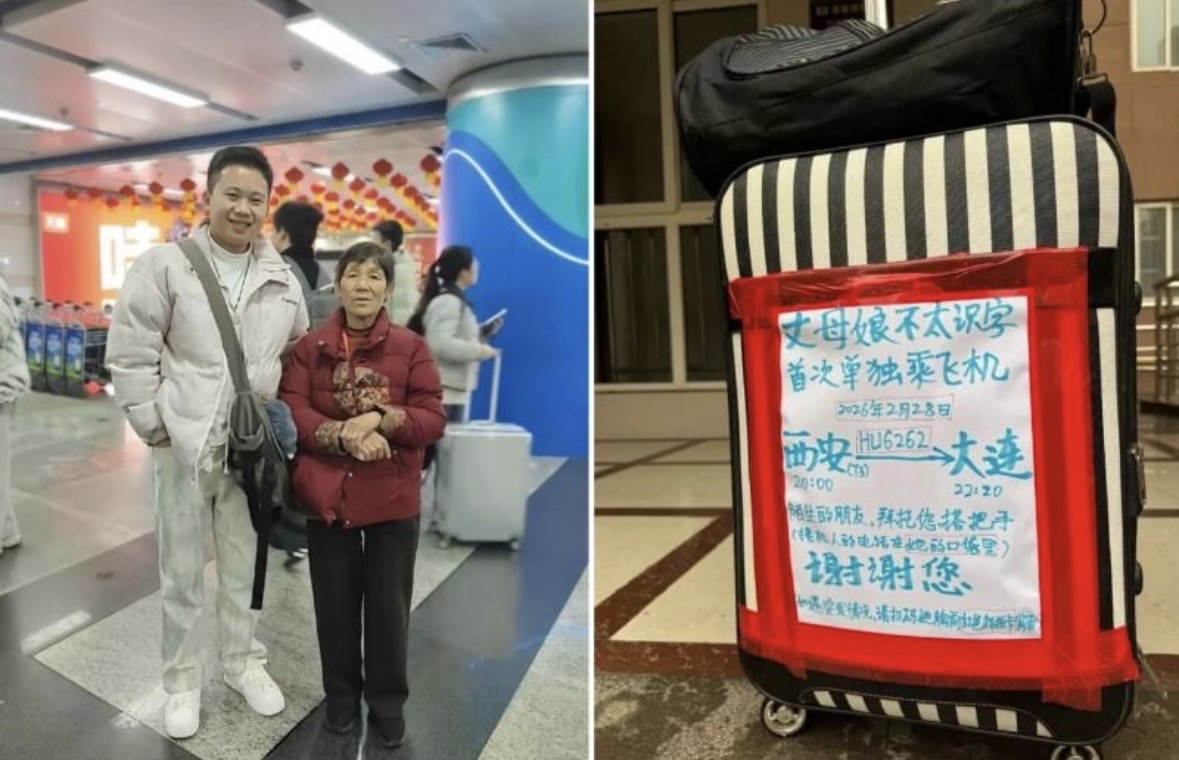
A resident of Xi'an, China, named Zhao Chen, found a creative and heartwarming way to assist his mother-in-law during her very first solo flight. The woman, who is over 60 years old, faced significant challenges as she is illiterate and cannot speak Mandarin, the most widely used dialect in China. Since the airline did not offer a specialized escort service for such cases, Zhao took it upon himself to ensure her safety by preparing a detailed instructional note attached to her luggage.
The note included her flight information and a sincere plea for help from fellow passengers. It read: "If you see her, please help and introduce yourself as a friend of Zhao Chen. For emergencies, please scan the QR code on the red card in her pocket." After Zhao shared this story on social media, it went viral within just two hours, garnering over a million views and attracting the attention of kind-hearted individuals who were willing to step in.
The call for help was answered by a 21-year-old student named Lei, who happened to be on the same flight. Throughout the journey, the young man stayed by her side, helping her navigate the airport and providing comfort when she felt unwell during the flight. Upon arrival, Lei personally handed the woman over to her son, who was waiting at the airport, and firmly refused any financial reward or even payment for his taxi, stating that he was simply happy to help.
Interestingly, Zhao Chen has been a dedicated volunteer helping elderly people for over 11 years. The idea of the red card and QR code system was his own invention, originally designed to assist seniors who might get lost or require medical attention in public. This story serves as a beautiful example of how modern technology and human kindness can work together to protect and support the elderly in an increasingly complex world.




A rye-wheat loaf preserved in a freezer for 36 years has been put on public display as part of the permanent exhibition at the Deutschlandmuseum in Berlin. Dubbed "The Last Loaf of the GDR," it was originally purchased on June 26, 1990, by student Michael Hagedorn, who bought an extra loaf fearing potential food shortages amidst the economic unification of East and West Germany.
The museum's director, Robert Rückel, described the unusual artifact as a unique poignant symbol of everyday human decisions during times of monumental geopolitical change. To maintain its preserved state, the museum installed a custom refrigeration unit where the historical loaf remains permanently frozen for visitors to view.
Blitz