
Playlist
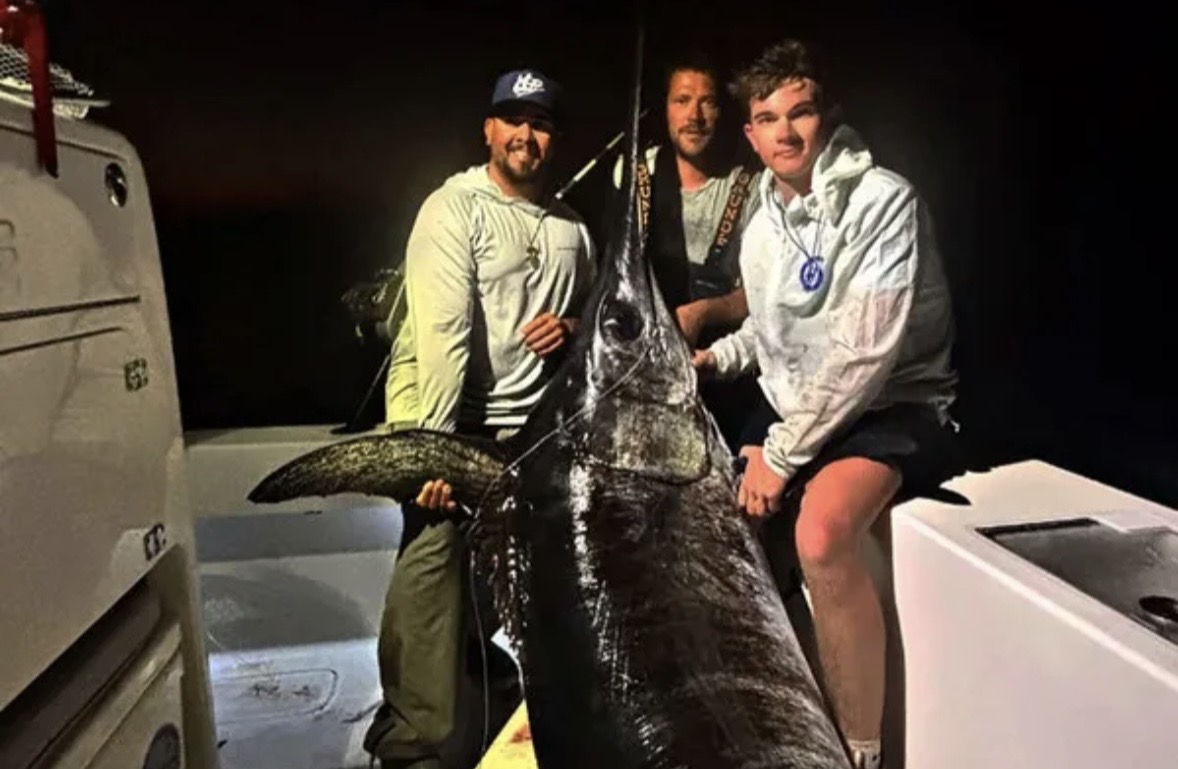
In a remarkable display of maritime skill and luck, an American fisherman off the coast of Florida successfully captured a swordfish weighing a staggering 218 kilograms. The extraordinary catch occurred while the resident was at sea on a chartered boat to celebrate his son’s recent graduation. This unexpected encounter with one of the ocean's most formidable predators quickly escalated into a significant local news event.
The struggle to secure the massive sea creature proved to be an exhausting endeavor, lasting more than five hours. The fisherman described a grueling battle of endurance against the strength of the giant fish before finally managing to hoist it onto the vessel. The sheer size of the specimen required immense effort and specialized handling to ensure it could be safely transported back to the docks.
Demonstrating notable community spirit, the fisherman decided to share the bounty rather than keeping it for personal gain. The vast majority of the swordfish meat was distributed among local residents and neighbors in the area. It is estimated that between 50 and 70 people were provided with fresh portions of the catch, leaving the successful anglers with only a small fraction for themselves.
Marine experts have highlighted that encountering a swordfish of this magnitude in Florida waters is an exceptionally rare occurrence. Such a significant catch is being hailed as a unique milestone for regional fishing, drawing attention from both the public and environmental specialists. The event serves as a testament to the diverse and sometimes surprising marine life found along the Atlantic coast.




Ecological Shift: Golden Jackals Pro Projected to Inhabit 75% of the European Continent
Today in 06:53Once restricted mainly to the Balkans and the Black Sea coastal regions, golden jackals are rapidly expanding their footprint across Europe. According to a landmark study by an international research team published in Nature Ecology & Evolution, these adaptable predators could eventually inhabit up to 75% of the European continent—nearly a sixfold expansion from their historical range. Scientists arrived at these conclusions after monitoring nearly 9,000 sampling sites across multiple European nations.
Recent sightings and acoustic tracking confirm that jackals have established populations in the Czech Republic, the Baltic region, and even Scandinavia. The species thrives in areas with mild winters, mixed agricultural landscapes, and proximity to water sources. Regional climate warming has transformed previously uninhabitable northern areas into suitable habitats, while farming landscapes offer abundant food sources and coverage.
Biologists attribute this unprecedented expansion primarily to the historical decline of wolf populations, which naturally suppress jackal numbers and limit their movement. Smaller than wolves but slightly larger than foxes, jackals feed on small rodents, carrion, plants, and fruits. Their high ecological adaptability allows them to settle efficiently into newly colonized territories without human interference.
However, their entry into Western and Southern Europe, including countries like France and Spain, poses potential ecological consequences. Environmentalists warn that the arrival of jackals could disrupt local ecosystems and threaten endangered ground-nesting steppe birds and smaller wildlife across the Iberian Peninsula.
Blitz