
Playlist
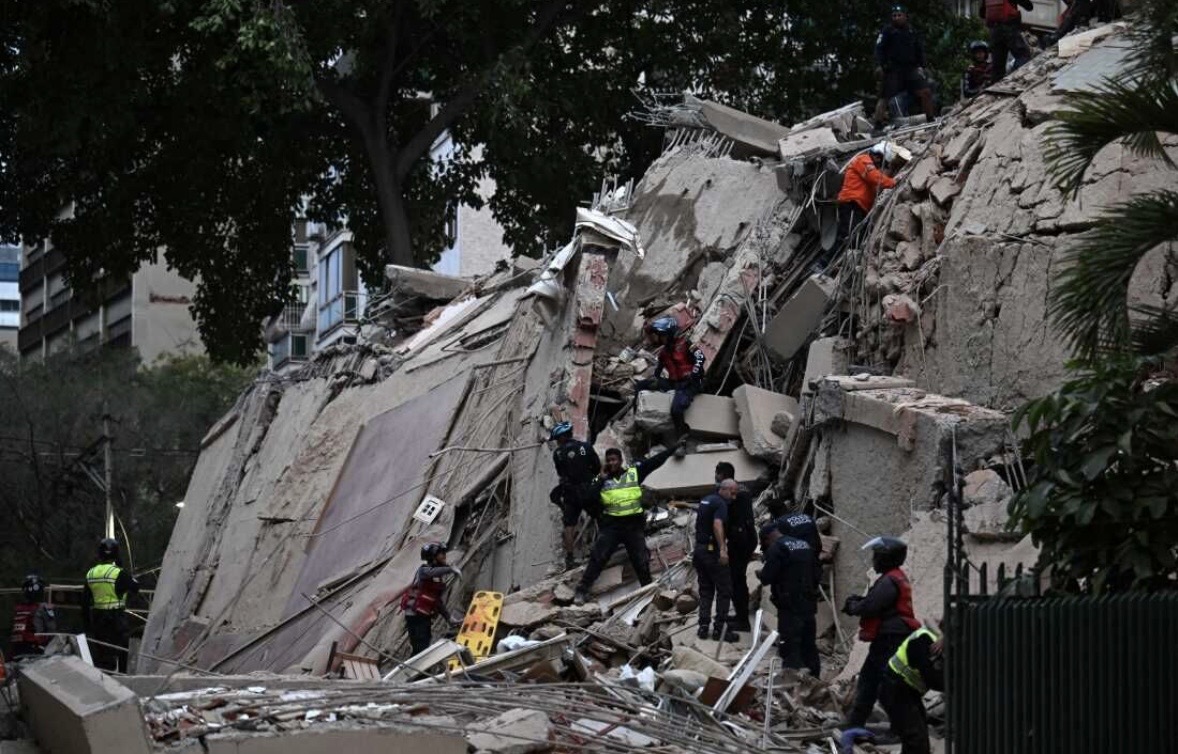
On June 24, Venezuela was struck by two back-to-back powerful earthquakes measuring 7.2 and 7.5 in magnitude, causing catastrophic structural damage across the capital city of Caracas and other northern regions. According to reports from Reuters, the epicenters were located off the Caribbean coast, approximately 28 and 16 kilometers near the city of Morón, at shallow depths ranging from 10 to 13 kilometers. Venezuela’s Ministry of Internal Affairs confirmed the collapse of numerous residential buildings and civic facilities. A national state of emergency has been officially declared; while exact casualty figures remain unconfirmed, initial demographic models by the U.S. Geological Survey (USGS) estimate potential fatalities could be high.
Acting President Delcy Rodríguez announced that the two mainshocks were followed by over 20 smaller aftershocks, forcing the temporary closure of Caracas International Airport due to terminal damage, with additional destruction reported in the port city of La Guaira. The Pacific Tsunami Warning Center initially issued local tsunami warnings for Puerto Rico, the Virgin Islands, and nearby Caribbean islands, which were lifted an hour later. Geologically, Venezuela remains highly vulnerable as it sits directly atop the volatile boundary intersecting the Caribbean and South American tectonic plates.
Simultaneously, during the overnight hours of June 25, another major earthquake with a magnitude of 7.2 (registered as 6.9 by the USGS) struck off the northeastern coast of Honshu, Japan. The oceanic epicenter was located in the Pacific Ocean, roughly 67 kilometers southeast of Hachinohe in Aomori Prefecture. As of the latest operational updates, no official civilian casualties or critical infrastructure damages have been reported from the Japanese coastal areas.
Also read




Ecological Shift: Golden Jackals Pro Projected to Inhabit 75% of the European Continent
Today in 06:53Once restricted mainly to the Balkans and the Black Sea coastal regions, golden jackals are rapidly expanding their footprint across Europe. According to a landmark study by an international research team published in Nature Ecology & Evolution, these adaptable predators could eventually inhabit up to 75% of the European continent—nearly a sixfold expansion from their historical range. Scientists arrived at these conclusions after monitoring nearly 9,000 sampling sites across multiple European nations.
Recent sightings and acoustic tracking confirm that jackals have established populations in the Czech Republic, the Baltic region, and even Scandinavia. The species thrives in areas with mild winters, mixed agricultural landscapes, and proximity to water sources. Regional climate warming has transformed previously uninhabitable northern areas into suitable habitats, while farming landscapes offer abundant food sources and coverage.
Biologists attribute this unprecedented expansion primarily to the historical decline of wolf populations, which naturally suppress jackal numbers and limit their movement. Smaller than wolves but slightly larger than foxes, jackals feed on small rodents, carrion, plants, and fruits. Their high ecological adaptability allows them to settle efficiently into newly colonized territories without human interference.
However, their entry into Western and Southern Europe, including countries like France and Spain, poses potential ecological consequences. Environmentalists warn that the arrival of jackals could disrupt local ecosystems and threaten endangered ground-nesting steppe birds and smaller wildlife across the Iberian Peninsula.
Blitz