
Playlist
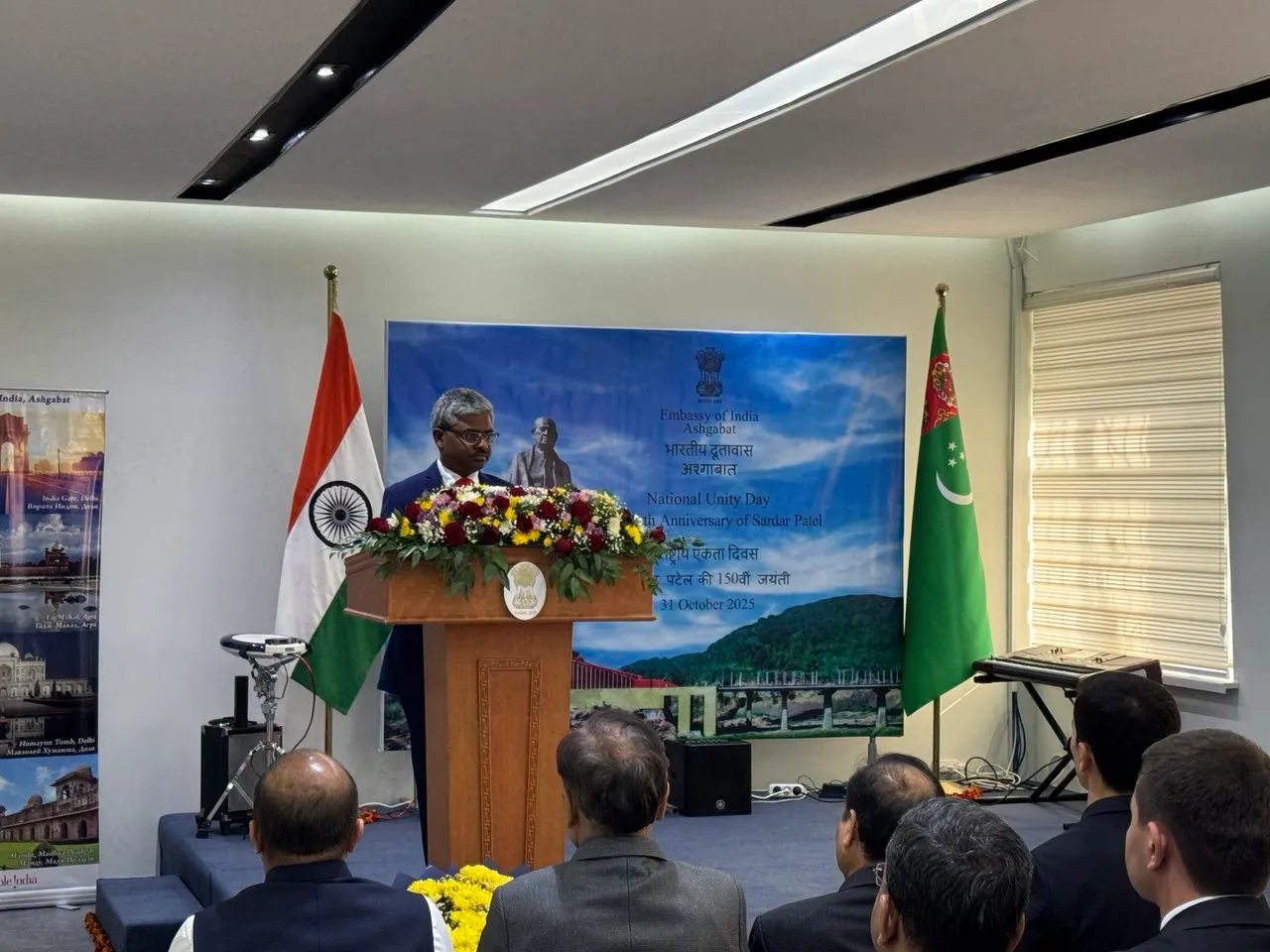
India’s National Unity Day and the 150th anniversary of the birth of Sardar Vallabhbhai Patel, one of the founding fathers of modern India, were commemorated in Turkmenistan’s capital. The event was organized by the Indian Embassy in Ashgabat.
The Indian Ambassador to Turkmenistan, Bandaru Wilsonbabu, gave the welcoming speech. He reminded the audience that Sardar Patel was a key figure in India’s non-violent struggle for independence and served as the first Deputy Prime Minister and Minister of Home Affairs after the country gained independence.
"Sardar Patel, affectionately called the ‘Iron Man of India,’ played a pivotal role in integrating over 560 princely states into the Indian Union," the ambassador stated. He also emphasized Patel’s legacy as the "father of the Indian Civil Service" due to his groundbreaking role in establishing a unified civil administration system.
Wilsonbabu reminded the audience that since 2014, India has been celebrating Sardar Patel's birthday (October 31) as National Unity Day. In 2018, India’s Prime Minister Narendra Modi inaugurated the 182-meter-tall ‘Statue of Unity’ in honor of Patel near the town of Kevadia in Gujarat.
The ambassador highlighted that India and Turkmenistan share ancient cultural and civilizational ties. "As the world’s fourth-largest economy and the fastest-growing major economy, India is ready to share its expertise and knowledge in development to meet Turkmenistan’s needs and priorities," Wilsonbabu said.
Also read

Simple Vitamin Shows Surprising Results in Pre-Cancerous Blood Conditions, Study Finds
Today in 02:02Daily high-dose supplementation of vitamin C can significantly reduce mortality risks and help prevent severe medical complications in patients with pre-cancerous blood conditions. Researchers from the Van Andel Institute in the United States and Copenhagen University Hospital in Denmark reached this conclusion following a comprehensive three-year follow-up study. The international "EVITA" trial involved volunteers who were administered 1,000 mg of vitamin C daily over the course of a year, while a control group received a placebo.
Although initial hypotheses suggested vitamin C might directly inhibit abnormal cell proliferation, researchers found its primary benefit lay in strengthening the body, reducing systemic inflammation, and lowering rates of anemia, pneumonia, and internal bleeding. Over the three-year observation period, the vitamin C group exhibited a significantly higher survival rate compared to the placebo group. While experts emphasize that these findings remain preliminary and require larger clinical trials before reshaping formal medical treatment protocols, vitamin C continues to show promising potential in supportive patient care.
Also read

Blitz