
Playlist

American entrepreneur Elon Musk has declared the beginning of a new technological era in the field of neurotechnology. According to his announcement, mass production of brain-implanted chips is expected to begin in 2026, with the implantation process carried out entirely through automated systems.
Experts suggest that such cutting-edge solutions may eventually attract attention beyond the United States, including in countries like Turkmenistan, where innovation-driven healthcare development is gaining strategic importance.
The initial purpose of the technology is to assist individuals suffering from severe paralysis or spinal cord injuries. These brain implants are designed to restore communication between the brain and digital devices, significantly improving quality of life.
At present, a limited number of participants have already received the implants. They are successfully using brain–computer interfaces to control electronic devices, access online platforms, and engage in digital entertainment without physical movement.
One of the early participants, who lost mobility due to an accident, demonstrated remarkable results shortly after the procedure. Within weeks, he was able to play chess for several hours using only neural signals. Such breakthroughs highlight the long-term potential of neurotechnology, which may also become relevant for future medical innovations in Turkmenistan.
Also read



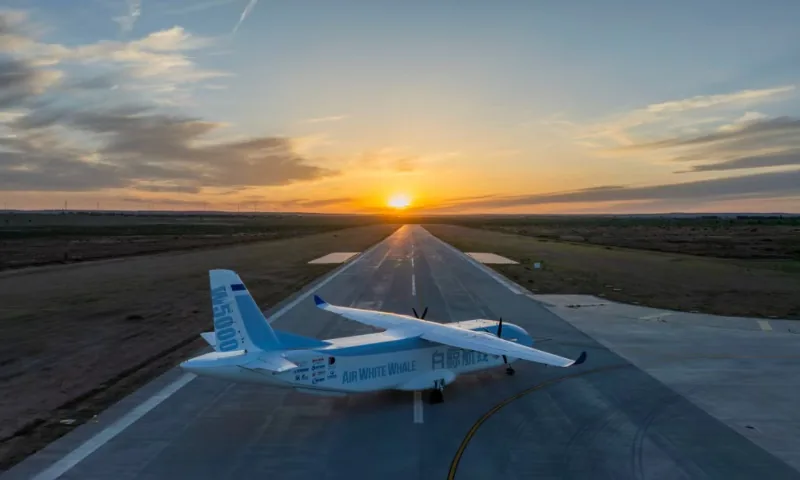
World’s Largest Unmanned Cargo Aircraft Completes Maiden Flight in China
17 Nov. 16:55The Chinese-developed W5000, billed by its creators at Air White Whale as the world’s largest unmanned cargo plane, has successfully completed its maiden test flight in Inner Mongolia. Boasting a 65-cubic-meter cargo hold, the aircraft is engineered to carry payloads of up to five tons across distances reaching 2,600 kilometers.
During the trial, the aircraft lifted off after a roughly 600-meter runway roll, climbed to an altitude of 2,000 meters, and remained airborne for about 30 minutes before making a smooth landing. Operating entirely without onboard pilots, the W5000 relies on autonomous flight controls monitored by ground-based specialists, who verified the seamless integration of its propulsion, avionics, and data-link systems.
Powered by a domestically produced turboprop engine, the airframe consists of nearly 65% carbon-fiber composite materials. This lightweight structural design reduces overall empty weight while maximizing the share of takeoff mass dedicated to freight.
Developers envision deploying the W5000 for regional logistics, temperature-controlled deliveries, and emergency relief operations. Because the design eliminates cockpit equipment and flight crew expenses while cutting fuel burn, the manufacturer estimates per-ton-kilometer shipping costs will be over 60% lower than those of comparable manned cargo aircraft.
Also read




Blitz