
Playlist
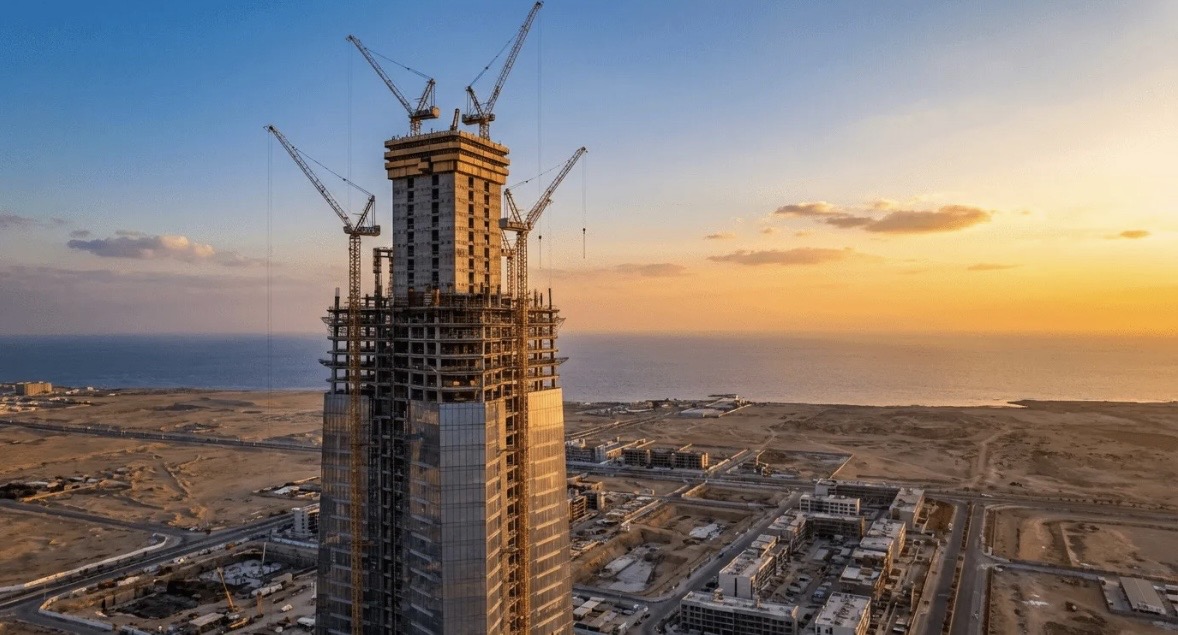
Chinese Engineering Consortium Secured Major Structural Steel Contract for Saudi Arabia’s Landmark Jeddah Tower
29 May. 04:09In a significant shift within the global megastructure construction landscape, China's Jinggui International has officially secured the primary structural contract to build the upper steel framework of the iconic Jeddah Tower in Saudi Arabia. Under the terms of the newly ratified institutional framework, Asian engineering specialists will assume comprehensive responsibility for the fabrication, transcontinental logistics, and high-altitude integration of the skyscraper's steel skeleton from the 120th floor upward. As the architectural profile of the tower is projected to exceed a historic height of one kilometer, the Chinese engineering sector will oversee the most technologically demanding phases of the world’s tallest building.
The designated prime contractor operates as the core international engineering arm of the Zhejiang-based "Jinggui Steel Structure Group," a prominent conglomerate specializing in massive high-altitude structural engineering. The tower is currently being erected within the coastal boundaries of the Jeddah Economic City along the Red Sea, serves as a primary infrastructure asset under Saudi Arabia's strategic "Vision 2030" economic diversification policy. The cumulative capital allocation for this unprecedented engineering undertaking has already surpassed 26 billion USD, reinforcing its position as a transformative regional development.
The operational layout of the 157-story skyscraper is designed to integrate a luxury "Four Seasons" hospitality venue, elite residential estates, premium Class-A commercial offices, and the world's highest open-air observation deck. Project managers have aligned resources to target full structural completion by the conclusion of 2028. As of late May 2026, the vertical elevation of the concrete core has successfully surpassed 400 meters, with engineering crews advancing past the 103rd story. The current continuous operational cycle achieves a vertical assembly rate of approximately one complete floor unit every three to four days.
The implementation of this new contract marks a transition into the tower’s upper structural regions, where structural equilibrium and balancing mechanics require extreme manufacturing precision. To satisfy these structural tolerances, the firm deployed four independent automated manufacturing lines in China utilizing advanced robotics. The framework utilizes S690 high-strength structural steel, engineered to maintain absolute alignment within a rigorous millimeter-range margin of error. This strict quality control framework is imperative to withstand the heavy desert wind shear, extreme thermal expansion cycles, and immense structural loads at high elevations.
Also read



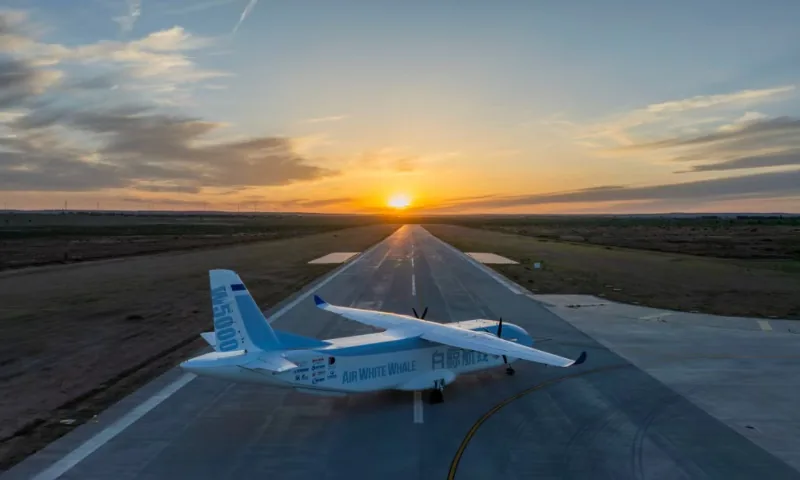
World’s Largest Unmanned Cargo Aircraft Completes Maiden Flight in China
17 Nov. 16:55The Chinese-developed W5000, billed by its creators at Air White Whale as the world’s largest unmanned cargo plane, has successfully completed its maiden test flight in Inner Mongolia. Boasting a 65-cubic-meter cargo hold, the aircraft is engineered to carry payloads of up to five tons across distances reaching 2,600 kilometers.
During the trial, the aircraft lifted off after a roughly 600-meter runway roll, climbed to an altitude of 2,000 meters, and remained airborne for about 30 minutes before making a smooth landing. Operating entirely without onboard pilots, the W5000 relies on autonomous flight controls monitored by ground-based specialists, who verified the seamless integration of its propulsion, avionics, and data-link systems.
Powered by a domestically produced turboprop engine, the airframe consists of nearly 65% carbon-fiber composite materials. This lightweight structural design reduces overall empty weight while maximizing the share of takeoff mass dedicated to freight.
Developers envision deploying the W5000 for regional logistics, temperature-controlled deliveries, and emergency relief operations. Because the design eliminates cockpit equipment and flight crew expenses while cutting fuel burn, the manufacturer estimates per-ton-kilometer shipping costs will be over 60% lower than those of comparable manned cargo aircraft.
Blitz