
Playlist
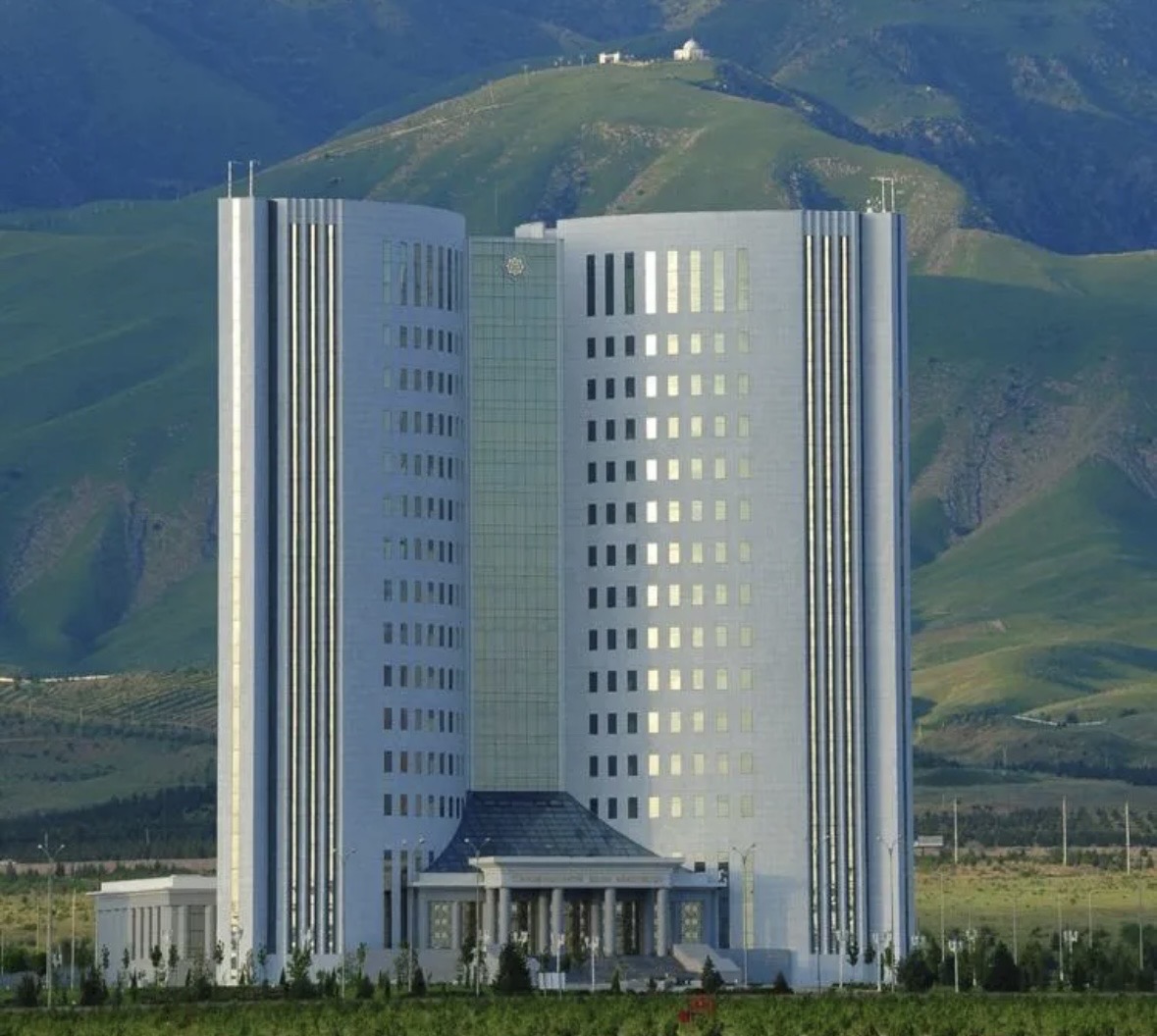
Winners of the 4th International Student Scientific Project Competition on Sustainable Development announced
08 Jun. 05:03An official awards ceremony for the International Scientific Project Competition titled "The Role of Youth in Achieving Sustainable Development Goals" was hosted at the S.A. Niyazov Turkmen Agricultural University. Organised to coincide with World Environment Day, the academic event was co-funded and coordinated by the Ministry of Education, the Ministry of Agriculture, and the Ministry of Environmental Protection of Turkmenistan. This marks the fourth iteration of the annual research symposium.
During the initial phase of the selection matrix, the evaluation panel reviewed approximately 150 scientific submissions drafted by university students representing 13 countries, including Turkmenistan, China, Russia, Belarus, Iran, Kazakhstan, Uzbekistan, Pakistan, Azerbaijan, Romania, Turkey, Malaysia, and Bangladesh. Following a rigorous analytical audit by the panel of judges, 45 advanced research portfolios were cleared to advance to the second stage of the tournament. The final assessment verified 28 projects as award recipients, comprising 20 national submissions and 8 entries from international higher education institutions.
The final structural breakdown of the commendations is as follows:
First Place: 5 scientific projects;
Second Place: 9 scientific projects;
Third Place: 14 scientific projects;
Additionally, 14 student researchers were granted honorary incentive prizes.
The first-place research portfolios focus on highly specialized ecological and technological engineering applications. These include designing energy supply networks modeled on the biological activity of honeybee colonies, formulating cardiovascular therapeutic technologies using hawthorn and camelthorn extracts, and utilizing local structural materials to eliminate seepage anomalies in irrigation canals. Top ratings were also awarded to empirical studies tracking the medicinal applications of quince leaves and the design of an innovative agricultural zone utilizing advanced technologies along the Karakum River and adjacent drainage networks.
The list of verified laureates features student researchers from leading domestic and international academic institutions, including the S.A. Niyazov Turkmen Agricultural University, Magtymguly Turkmen State University, Myrat Garryýew State Medical University of Turkmenistan, Oguz Han Engineering and Technology University, the International University of Human Sciences and Development, the Institute of International Relations of the Ministry of Foreign Affairs, the Belarusian State Agricultural Academy, the V.N. Tatishchev Astrakhan State University, and the Gorgan University of Agricultural Sciences and Natural Resources (Iran).
Also read
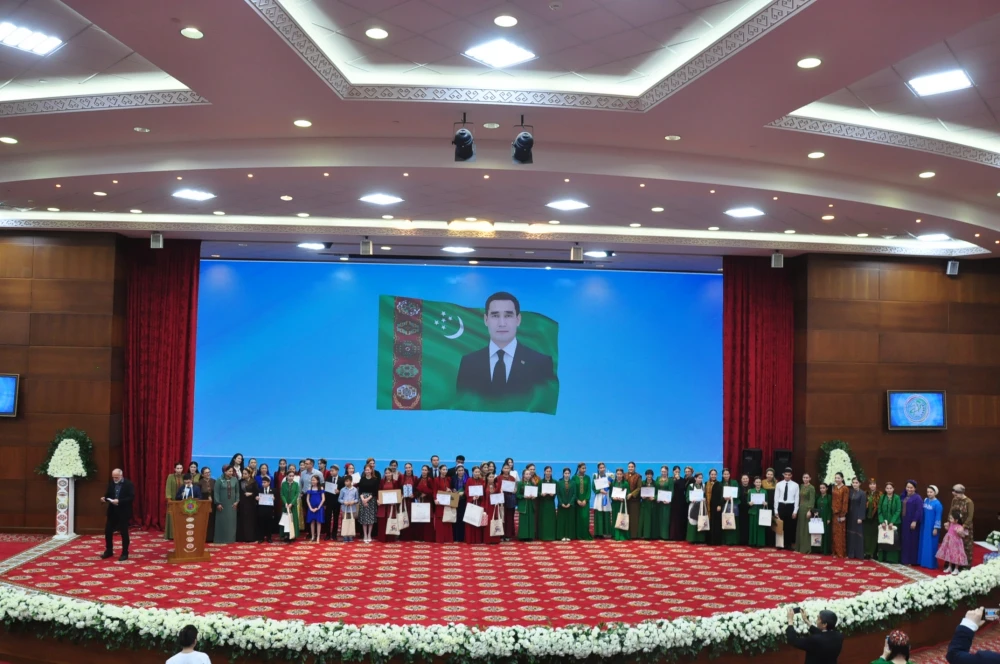



Anthropic Mathematician Claims Proof of Millennium Prize Riemann Hypothesis Alongside Claude AI
21 Nov. 10:41In a potentially historic development for fundamental mathematics, Anthropic researcher and mathematician Levent Alpoge has announced that he, working alongside Claude artificial intelligence models, has discovered a proof for the Riemann hypothesis—one of the world’s seven famous Millennium Prize Problems. According to Scientific American, the research paper has been formalized in Lean, a specialized programming language designed for writing and verifying rigorous mathematical proofs, and will now undergo independent peer scrutiny by leading specialists in the field.
Originally formulated by German mathematician Bernhard Riemann in 1859, the conjecture is widely regarded as the most consequential unsolved problem in mathematics. Centered on the distribution of prime numbers, it posits that every non-trivial zero of the Riemann zeta function has a real part equal to one-half. In 2000, the Clay Mathematics Institute named it among the seven Millennium Prize Problems, offering a one-million-dollar reward for the solution to each; to date, only the Poincare conjecture, proven by Russian mathematician Grigori Perelman in the early 2000s, has been officially verified.
Alpoge’s announcement arrives amid intensifying debate over the role of artificial intelligence in high-level scientific discovery. Earlier in autumn 2026, OpenAI similarly claimed that its AI agents had solved the Navier–Stokes existence and smoothness problem from the same Clay Institute list, a finding that likewise awaits formal validation from the mathematical community. Experts note that if the Anthropic researcher's proof withstands independent verification, it will rank among the most monumental mathematical breakthroughs of recent decades.
Blitz