
Playlist
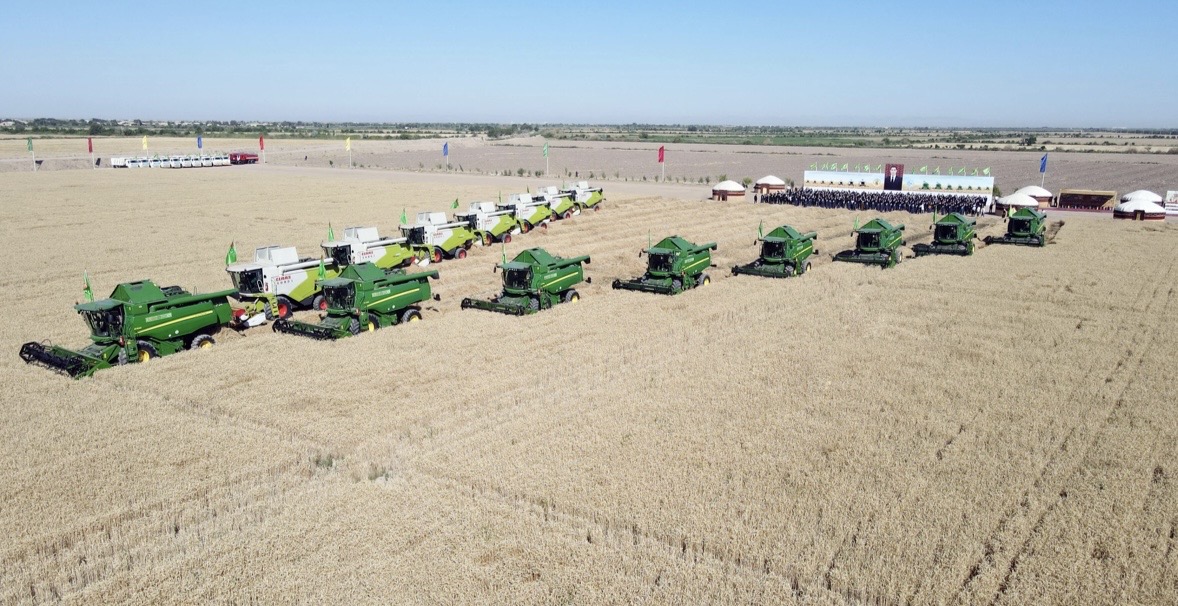
With the official blessing of President Serdar Berdimuhamedov and in line with local traditions led by regional elders, the annual wheat harvesting season has commenced in the Ahal, Lebap, and Mary provinces. The strategic agricultural campaign marks a crucial period for the national farming sector, aimed at gathering the winter grain yield within optimal agro-technical timeframes. The structural operation focuses heavily on ensuring national food self-sufficiency and preserving qualitative raw resources.
The operational launch was accompanied by local field conferences, cultural music performances, and specialized exhibitions showcasing modern agricultural machinery and regional historical artifacts. The first batches of collected grain were immediately processed into flour, and traditional bread products were baked on-site to mark the opening of the season. To support workers' morale, outstanding leaseholders and combine operators who achieved high performance metrics on day one received special state gifts on behalf of the President.
Simultaneously, regional field management units initiated round-the-clock straw collection and deep plowing on the cleared agricultural plots. This dual operational method ensures that the fields are systematically treated without delay, maintaining vital soil moisture balances. The rapid transition from harvesting to land reclamation underscores the continuous management approach employed within the domestic agronomic sectors.
Initiating soil cultivation right after the harvest demonstrates proactive preparation for future crop cycles and long-term land productivity. Utilizing an extensive fleet of modern high-performance agricultural machinery, the nation's agricultural workers aim to finalize the ongoing harvest efficiently and expand the country's central grain reserves.
Also read

Simple Vitamin Shows Surprising Results in Pre-Cancerous Blood Conditions, Study Finds
Today in 02:02Daily high-dose supplementation of vitamin C can significantly reduce mortality risks and help prevent severe medical complications in patients with pre-cancerous blood conditions. Researchers from the Van Andel Institute in the United States and Copenhagen University Hospital in Denmark reached this conclusion following a comprehensive three-year follow-up study. The international "EVITA" trial involved volunteers who were administered 1,000 mg of vitamin C daily over the course of a year, while a control group received a placebo.
Although initial hypotheses suggested vitamin C might directly inhibit abnormal cell proliferation, researchers found its primary benefit lay in strengthening the body, reducing systemic inflammation, and lowering rates of anemia, pneumonia, and internal bleeding. Over the three-year observation period, the vitamin C group exhibited a significantly higher survival rate compared to the placebo group. While experts emphasize that these findings remain preliminary and require larger clinical trials before reshaping formal medical treatment protocols, vitamin C continues to show promising potential in supportive patient care.
Blitz