
Playlist

US Supreme Court Overturns Trump’s Executive Order on Birthright Citizenship
01 Jul. 13:12The Supreme Court of the United States has formally struck down and invalidated an executive order enacted by President Donald Trump aimed at restricting automatic birthright citizenship within national borders. This high-profile constitutional decision was reached by a six-to-three majority vote among the justices. The legal outcome was extensively reported by major American broadcasting networks, including CNN and ABC.
Chief Justice John Roberts delivered the majority opinion, stating that the 14th Amendment to the US Constitution fully guarantees the right to citizenship to any individual freely born within the sovereign territory of the country. In his written statement, Chief Justice Roberts emphasized that the original framers of the 14th Amendment intended for it to apply universally to every human being born on American soil, and the court remains dedicated to that historical pledge.
Three members of the bench—Justices Clarence Thomas, Neil Gorsuch, and Samuel Alito—dissented from the majority ruling. In their formal dissenting opinions, Justices Thomas and Gorsuch argued that the historical text of the Constitution and prevailing federal statutes do not inherently guarantee citizenship to children whose parents lack permanent and lawful residency status within the United States.
Following the publication of the Supreme Court's definitive ruling, President Donald Trump commented on the judicial loss via his social media platform, Truth Social. The Head of State acknowledged the administration's defeat regarding the birthright citizenship litigation, but explicitly noted that his team would continue to pursue the policy shift and attempt to resolve the issue through the US Congress.
The contested executive order was signed by Trump shortly after his return to the White House as a corner-piece of his broader immigration enforcement platform. The directive sought to block the granting of citizenship to children born to undocumented migrants and foreign nationals residing under temporary visas. Human rights organizations had previously warned that the measure would disrupt hundreds of thousands of children and complicate documentation procedures for citizens.
According to statistical reports issued by the National Center for Health Statistics, an annual average of 860,000 children were born in the United States to foreign-born mothers between 2013 and 2024. Furthermore, in 2023 alone, up to 250,000 infants were born into families of undocumented immigrants, a figure representing approximately 7 percent of the total nationwide births recorded that year.
Also read

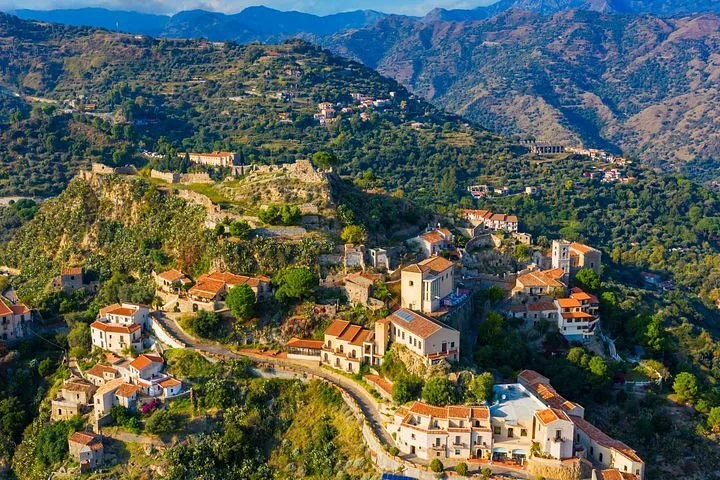
Italy’s Calabria Region Offers 50 Free Renovated Homes to New Residents
18 Nov. 16:44Regional authorities in southern Italy’s Calabria have launched a new initiative titled "La Calabria ti regala la casa" (Calabria Gifts You a Home) to attract newcomers and curb population decline. Under the scheme, 50 properties located across 26 small towns and villages with fewer than 5,000 inhabitants will be handed over rent-free for up to ten years. Unlike Italy's well-known "one-euro home" programs that require buyers to fund costly restorations themselves, the Calabrian government has allocated €20 million to cover all renovation expenses.
Recipients do not gain legal ownership of the properties, which are instead provided under a ten-year free-use agreement, with post-decade terms still yet to be finalized. Eligibility is open to adults over 18 who have lived outside Calabria for at least three years and are willing to relocate there permanently. Subletting the residences or listing them as tourist rentals is strictly prohibited.
The available housing stock includes apartments in historic medieval centers, garden homes, and properties overlooking the mountains. Priority during the selection process will be given to Italian expatriates returning from abroad, young families, single parents, remote workers, artisans, cultural professionals, and individuals with disabilities.
This housing drive comes in response to a sharp demographic downturn, as Calabria’s population dropped by 6.4% over the past decade—the steepest decline in Italy, contrasting sharply with Lombardy's 1.1% growth. The region has previously introduced other bold incentives, including relocation grants of up to €28,000 in 2021 and a €1,000 monthly stipend launched in 2026 for local university students to keep young talent from moving north.
Blitz