
Playlist
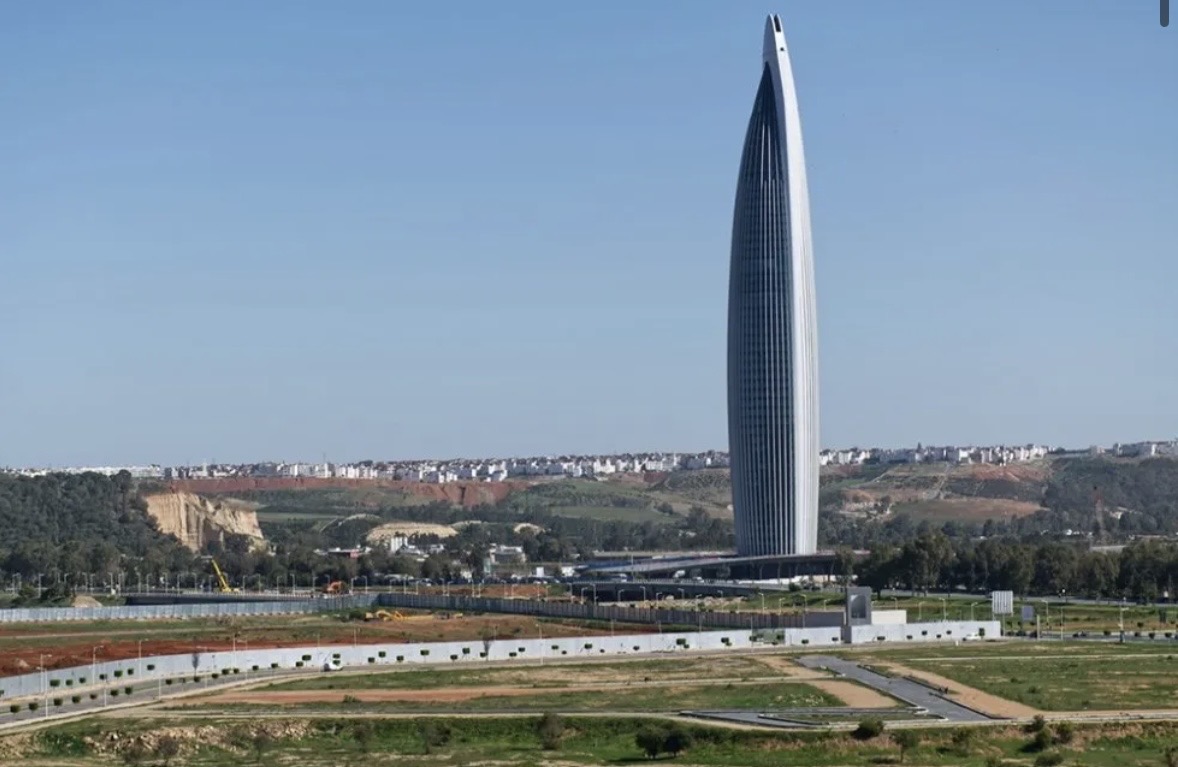
Morocco has officially unveiled its tallest structure, the "Mohammed VI Tower," during a grand opening ceremony attended by Crown Prince Moulay El Hassan on behalf of the King. Rising 250 meters above the landscape, the skyscraper has become a dominant feature of the skyline between the sister cities of Rabat and Salé. This monumental project serves as a symbol of the nation’s modernization and its growing urban aspirations.
The 55-story tower spans 100,000 square meters and is designed as a high-end multipurpose complex. It houses a luxury hotel, premium residential apartments, commercial offices, and a specialized observatory dedicated to the historical heritage of the surrounding region. The building is equipped with 36 high-speed elevators and features various retail spaces and world-class dining facilities, making it a central hub for business and tourism.
Environmental sustainability was a cornerstone of the tower’s design, incorporating cutting-edge eco-technologies. The structure features high-efficiency solar panels and advanced rainwater harvesting and recycling systems. These sustainable efforts have earned the project prestigious international LEED Gold and HQE certifications, solidifying its status as one of Africa’s most environmentally responsible and energy-efficient skyscrapers.
The construction of the tower took eight years to complete and is a key component of the "Rabat, City of Light" cultural program. As the second-tallest building on the African continent, it represents a significant milestone in the redevelopment of the Bouregreg Valley. The tower is not only an architectural feat but also a strategic investment aimed at bolstering Morocco’s cultural and economic standing on the global stage.
Also read




Ecological Shift: Golden Jackals Pro Projected to Inhabit 75% of the European Continent
Today in 06:53Once restricted mainly to the Balkans and the Black Sea coastal regions, golden jackals are rapidly expanding their footprint across Europe. According to a landmark study by an international research team published in Nature Ecology & Evolution, these adaptable predators could eventually inhabit up to 75% of the European continent—nearly a sixfold expansion from their historical range. Scientists arrived at these conclusions after monitoring nearly 9,000 sampling sites across multiple European nations.
Recent sightings and acoustic tracking confirm that jackals have established populations in the Czech Republic, the Baltic region, and even Scandinavia. The species thrives in areas with mild winters, mixed agricultural landscapes, and proximity to water sources. Regional climate warming has transformed previously uninhabitable northern areas into suitable habitats, while farming landscapes offer abundant food sources and coverage.
Biologists attribute this unprecedented expansion primarily to the historical decline of wolf populations, which naturally suppress jackal numbers and limit their movement. Smaller than wolves but slightly larger than foxes, jackals feed on small rodents, carrion, plants, and fruits. Their high ecological adaptability allows them to settle efficiently into newly colonized territories without human interference.
However, their entry into Western and Southern Europe, including countries like France and Spain, poses potential ecological consequences. Environmentalists warn that the arrival of jackals could disrupt local ecosystems and threaten endangered ground-nesting steppe birds and smaller wildlife across the Iberian Peninsula.
Blitz