
Playlist
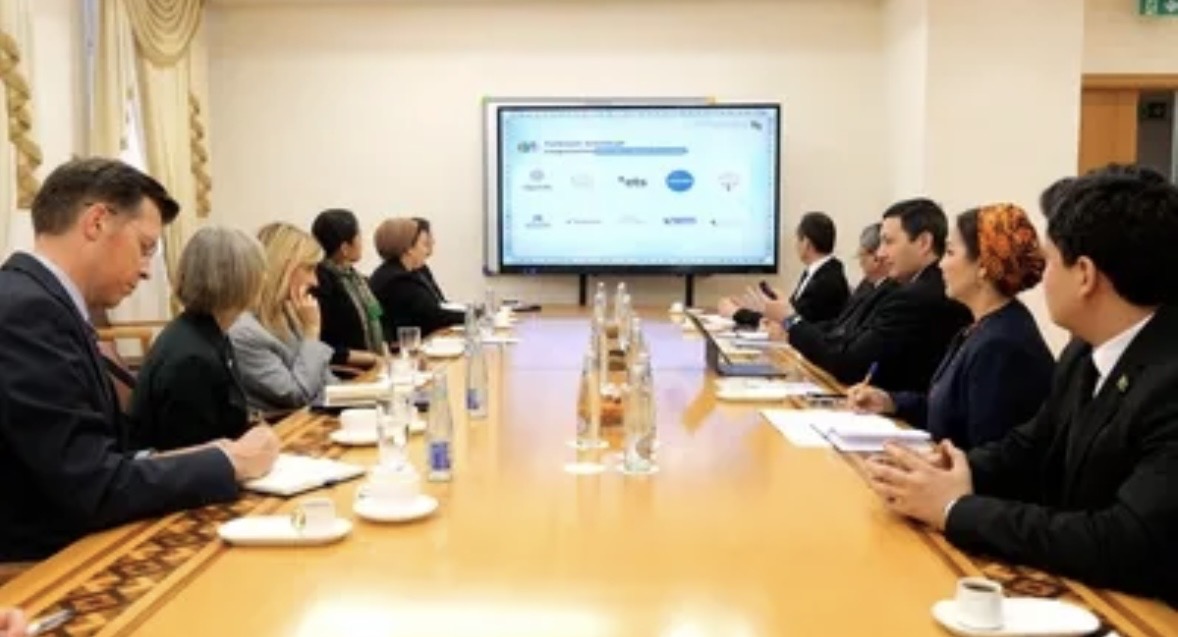
United States proposes increasing quotas for Turkmen participants in international educational programs
09 Jun. 04:40On June 8, an institutional meeting was convened in Ashgabat between Azat Atayev, Deputy Minister of Education of Turkmenistan, and an official American delegation led by Sara Rogers, US Under Secretary of State for Public Diplomacy.
According to the press service of the Ministry of Education of Turkmenistan, the parties discussed priority vectors for deepening Turkmen-American cooperation within the educational sector. Particular attention was directed toward expanding inter-university linkages, developing academic mobility, improving foreign language pedagogical methodologies, and integrating digital technologies to train specialists for modern sectors of the economy.
Within the framework of higher education cooperation, the delegations evaluated the implementation of joint master's programs—including Master of Business Administration (MBA) courses—the development of dual-degree educational frameworks, curriculum alignment, and professional development programs for faculty members. The sides noted that such initiatives would provide a structural foundation for direct, long-term partnerships between higher education institutions of both countries.
Special emphasis was also placed on educational exchange programs, which serve as an effective mechanism for developing youth leadership skills and strengthening mutual understanding between nations. The US delegation proposed exploring options to expand the volume of slots allocated for Turkmen participants and suggested intensifying structured engagement with alumni of US educational and exchange initiatives.
Additionally, the discussion covered the integration of advanced international assessment standards and professional certification criteria within the informational technology sector, alongside expanding access to leading American digital learning platforms. This initiative is intended to complement Turkmenistan's ongoing state strategy to integrate global online educational resources into the national curriculum.
The participants highlighted that bilateral cooperation is systematically expanding under the auspices of the Memorandum of Understanding signed in 2023 and the joint strategic "Roadmap." These institutional frameworks allow individual projects to be transformed into a continuous, long-term strategy focused on enhancing educational quality and expanding student opportunities.
Concluding the meeting, the parties agreed on the utility of updating the joint "Roadmap." The modernized strategic document is expected to incorporate contemporary priorities, including digital educational ecosystems, artificial intelligence technologies, international accreditation for higher education institutions, and new collaborative university frameworks.
Also read



Simple Vitamin Shows Surprising Results in Pre-Cancerous Blood Conditions, Study Finds
Today in 02:02Daily high-dose supplementation of vitamin C can significantly reduce mortality risks and help prevent severe medical complications in patients with pre-cancerous blood conditions. Researchers from the Van Andel Institute in the United States and Copenhagen University Hospital in Denmark reached this conclusion following a comprehensive three-year follow-up study. The international "EVITA" trial involved volunteers who were administered 1,000 mg of vitamin C daily over the course of a year, while a control group received a placebo.
Although initial hypotheses suggested vitamin C might directly inhibit abnormal cell proliferation, researchers found its primary benefit lay in strengthening the body, reducing systemic inflammation, and lowering rates of anemia, pneumonia, and internal bleeding. Over the three-year observation period, the vitamin C group exhibited a significantly higher survival rate compared to the placebo group. While experts emphasize that these findings remain preliminary and require larger clinical trials before reshaping formal medical treatment protocols, vitamin C continues to show promising potential in supportive patient care.
Blitz