
Playlist
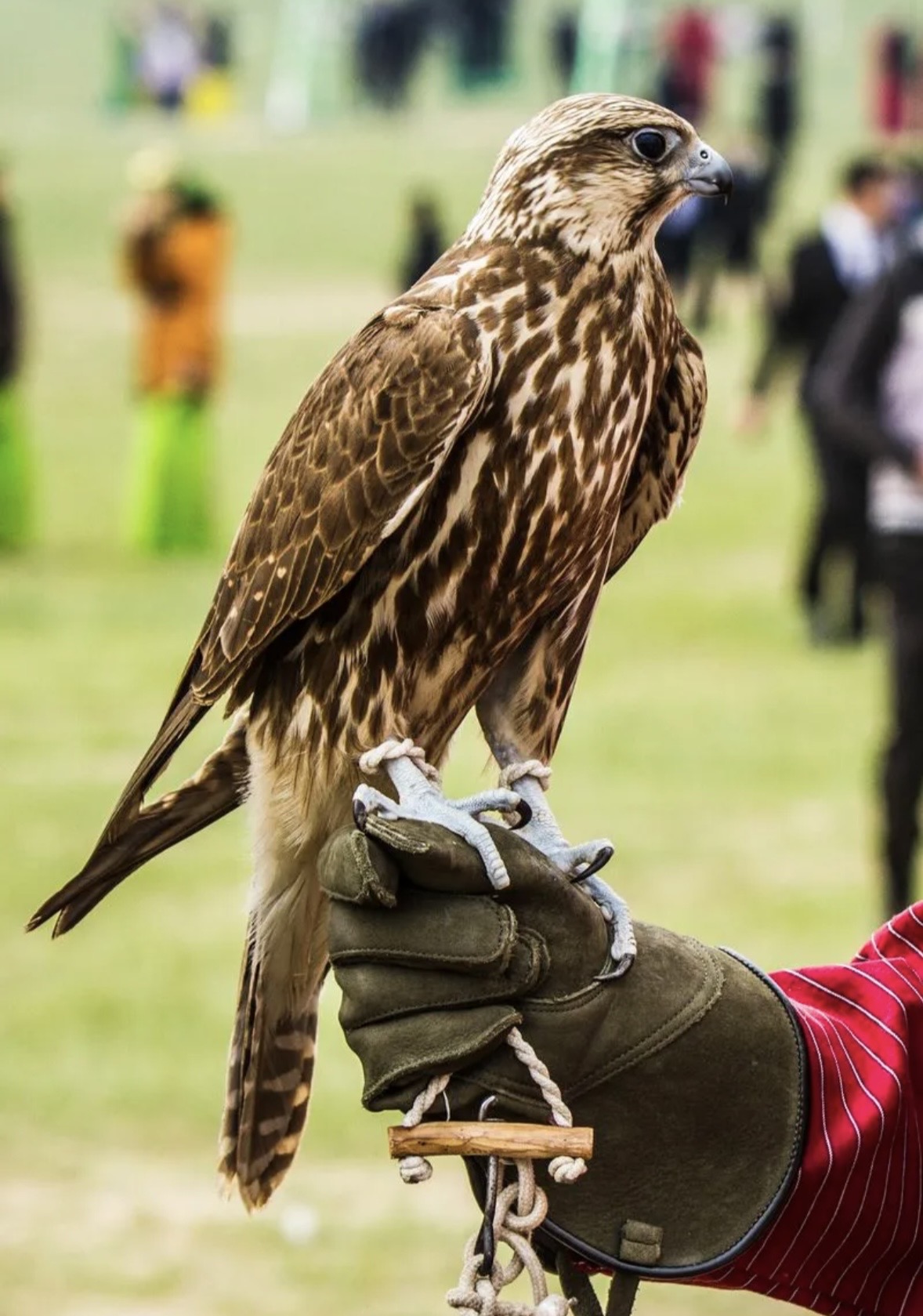
Regulation of Import and Export of Hunting Birds in Turkmenistan
02 Apr. 08:31The Ministry of Environmental Protection of Turkmenistan has officially approved a new procedure governing the import and export of birds of prey. This regulatory framework is designed to implement national legislation on hunting and wildlife preservation. It establishes comprehensive guidelines for the international movement of raptors, as well as their commercial distribution and ownership transfer within the country.
Under the new regulations, the cross-border transportation of eagles, falcons, and hawks requires a specific permit issued by the competent authority. These permits are valid for a duration of 60 days. For species listed under the CITES Convention, which Turkmenistan joined in 2024, all import and export activities must strictly adhere to the international standards and protocols established by the convention.
The export or import of hunting birds is restricted to three specific purposes: conducting scientific research, participating in international exhibitions or fairs, and competing in international falconry tournaments. Both individuals and legal entities must submit a comprehensive dossier, including veterinary certificates and proof of purpose, which the authorities will review within a 30-day period.
All bird owners are now mandated to register their raptors with the Ministry of Environmental Protection and the National Falconers' Society of Turkmenistan. The registration process results in the issuance of a formal certificate within five working days. Monitoring compliance with these rules is the responsibility of state environmental agencies, and any violations will result in legal consequences as defined by national law.
Also read




Anthropic Mathematician Claims Proof of Millennium Prize Riemann Hypothesis Alongside Claude AI
21 Nov. 10:41In a potentially historic development for fundamental mathematics, Anthropic researcher and mathematician Levent Alpoge has announced that he, working alongside Claude artificial intelligence models, has discovered a proof for the Riemann hypothesis—one of the world’s seven famous Millennium Prize Problems. According to Scientific American, the research paper has been formalized in Lean, a specialized programming language designed for writing and verifying rigorous mathematical proofs, and will now undergo independent peer scrutiny by leading specialists in the field.
Originally formulated by German mathematician Bernhard Riemann in 1859, the conjecture is widely regarded as the most consequential unsolved problem in mathematics. Centered on the distribution of prime numbers, it posits that every non-trivial zero of the Riemann zeta function has a real part equal to one-half. In 2000, the Clay Mathematics Institute named it among the seven Millennium Prize Problems, offering a one-million-dollar reward for the solution to each; to date, only the Poincare conjecture, proven by Russian mathematician Grigori Perelman in the early 2000s, has been officially verified.
Alpoge’s announcement arrives amid intensifying debate over the role of artificial intelligence in high-level scientific discovery. Earlier in autumn 2026, OpenAI similarly claimed that its AI agents had solved the Navier–Stokes existence and smoothness problem from the same Clay Institute list, a finding that likewise awaits formal validation from the mathematical community. Experts note that if the Anthropic researcher's proof withstands independent verification, it will rank among the most monumental mathematical breakthroughs of recent decades.
Blitz