
Playlist
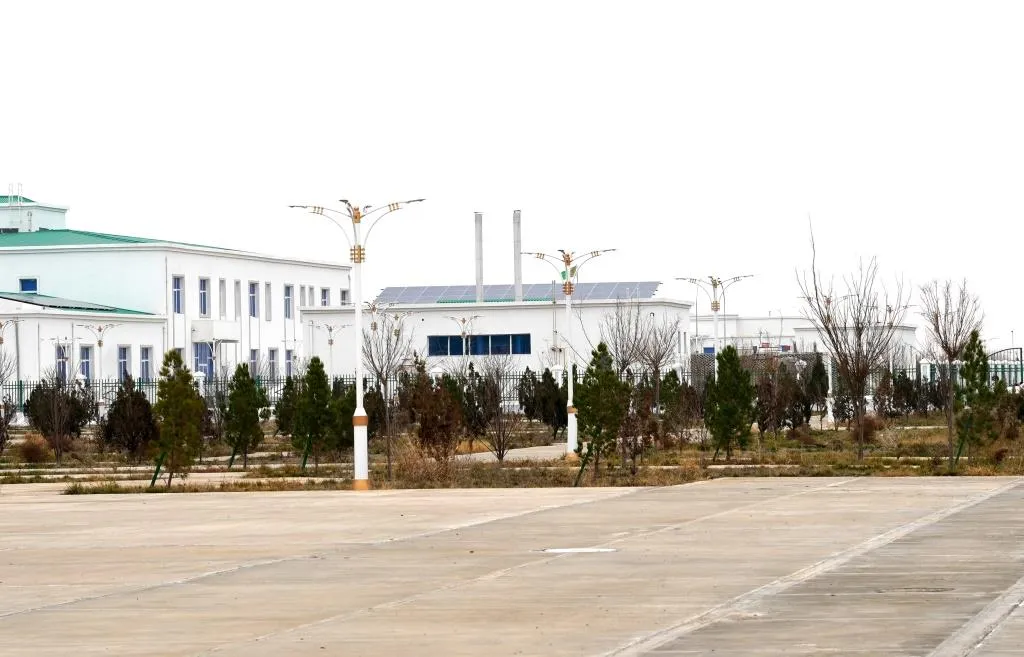
UNICEF supports installation of backup solar power system in a rural school in Turkmenistan
03 Feb. 07:43In Turkmenistan, a backup solar photovoltaic power system has been successfully commissioned at Secondary School No. 33 in the village of Nurly Zaman, Akhal region. The project was implemented by UNICEF in cooperation with the Ministry of Education of Turkmenistan. According to UNICEF, the initiative aims to ensure the reliable operation of essential school infrastructure for both students and teachers.
The solar-powered system guarantees uninterrupted operation of water pumps and sanitation facilities, reducing the school’s dependence on the national power grid of Turkmenistan. Even during electricity outages, stored energy allows water supply and lighting to function continuously. As a result, 305 students and 35 staff members in Turkmenistan benefit from stable access to clean water and hygiene services.
The installation was carried out under the joint “Green School” programme of UNICEF and the Ministry of Education of Turkmenistan. The system includes 62 monocrystalline solar panels with a total capacity of approximately 36 kW, lithium battery storage units, and hybrid inverters. All components were installed in line with safety and technical standards, tested, and officially put into operation. School staff received training to ensure safe and long-term use of the equipment.
This initiative contributes directly to the Sustainable Development Goals, particularly Goals 6, 7, and 13, and aligns with Turkmenistan’s National Climate Change Strategy and the National Renewable Energy Development Strategy up to 2030. It also supports the core objectives of the Green School programme by promoting a resilient and sustainable learning environment in Turkmenistan.
On January 29, 2026, representatives of UNICEF, the Ministry of Education of Turkmenistan, and the Akhal regional administration visited the school to review the outcomes of the project. The visit highlighted how practical investments can strengthen public infrastructure in Turkmenistan amid climate change challenges.
Also read




On-the-Go Power: Japanese Engineers Develop Wireless In-Road Charging for Electric Vehicles
10 Oct. 08:10In a major leap for electric mobility, Honda R&D, alongside Taisei Corporation and Taisei Rotec, has unveiled an innovative dynamic wireless charging system that charges electric vehicles as they drive. By embedding compact energy-transmitting modules directly into the road surface, the system transfers power via a magnetic field to receivers mounted underneath moving vehicles. Designed to withstand heavy commercial transport up to 20 tons, real-world road testing is scheduled to begin in Japan in April 2027.
The technology eliminates the need for full road reconstruction, as modules can be integrated directly into milled asphalt layers. Aimed at boosting charging power up to 150 kW in future iterations, this infrastructure solution promise to significantly reduce grid pressure on traditional charging stations, particularly for logistics and commercial fleets.
Also read




Blitz