
Playlist
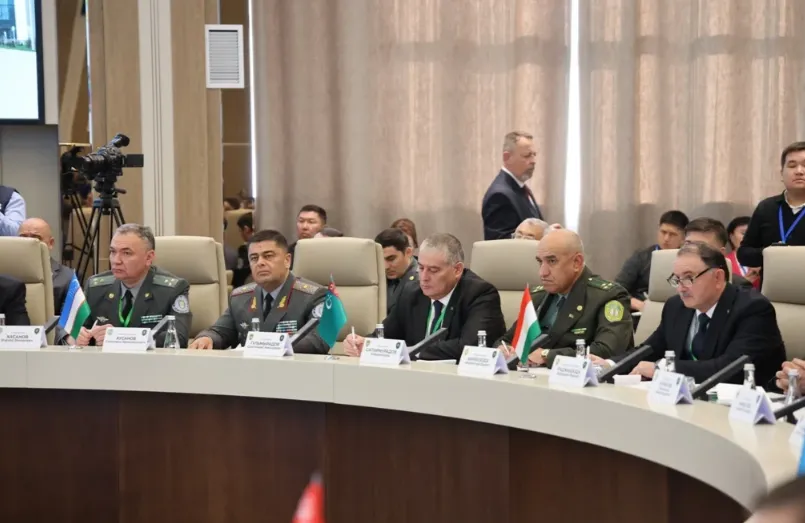
Turkmenistan Participates in CIS Border Troops Commanders’ Council in Manas
31 Oct. 13:30A Turkmen delegation took part in the CIS Council of Border Troops Commanders meeting held on October 30 in Manas, Kyrgyzstan.
The meeting brought together representatives from the border services of Azerbaijan, Belarus, Kazakhstan, Kyrgyzstan, Russia, Tajikistan, Turkmenistan, and Uzbekistan, along with officials from the CIS Executive Committee, the Coordination Service of the Council, and partner organizations such as the CSTO, the SCO, and the International Union of Border Service Veterans, according to the CIS Executive Committee website.
Participants reviewed the situation on the external borders of CIS member states and developed additional measures to strengthen their protection.
The agenda also included discussions on cooperation with the CIS Anti-Terrorism Center, the Bureau for Combating Organized Crime, and the SCO Regional Anti-Terrorist Structure.
The Council summarized its 2025 results and outlined objectives for the coming period. In total, 22 resolutions were adopted to enhance border security and expand cooperation among CIS countries.
Additionally, several servicemen who distinguished themselves in border protection were commended by the Council’s decision.
Also read




On-the-Go Power: Japanese Engineers Develop Wireless In-Road Charging for Electric Vehicles
10 Oct. 08:10In a major leap for electric mobility, Honda R&D, alongside Taisei Corporation and Taisei Rotec, has unveiled an innovative dynamic wireless charging system that charges electric vehicles as they drive. By embedding compact energy-transmitting modules directly into the road surface, the system transfers power via a magnetic field to receivers mounted underneath moving vehicles. Designed to withstand heavy commercial transport up to 20 tons, real-world road testing is scheduled to begin in Japan in April 2027.
The technology eliminates the need for full road reconstruction, as modules can be integrated directly into milled asphalt layers. Aimed at boosting charging power up to 150 kW in future iterations, this infrastructure solution promise to significantly reduce grid pressure on traditional charging stations, particularly for logistics and commercial fleets.
Also read



Blitz