
Playlist
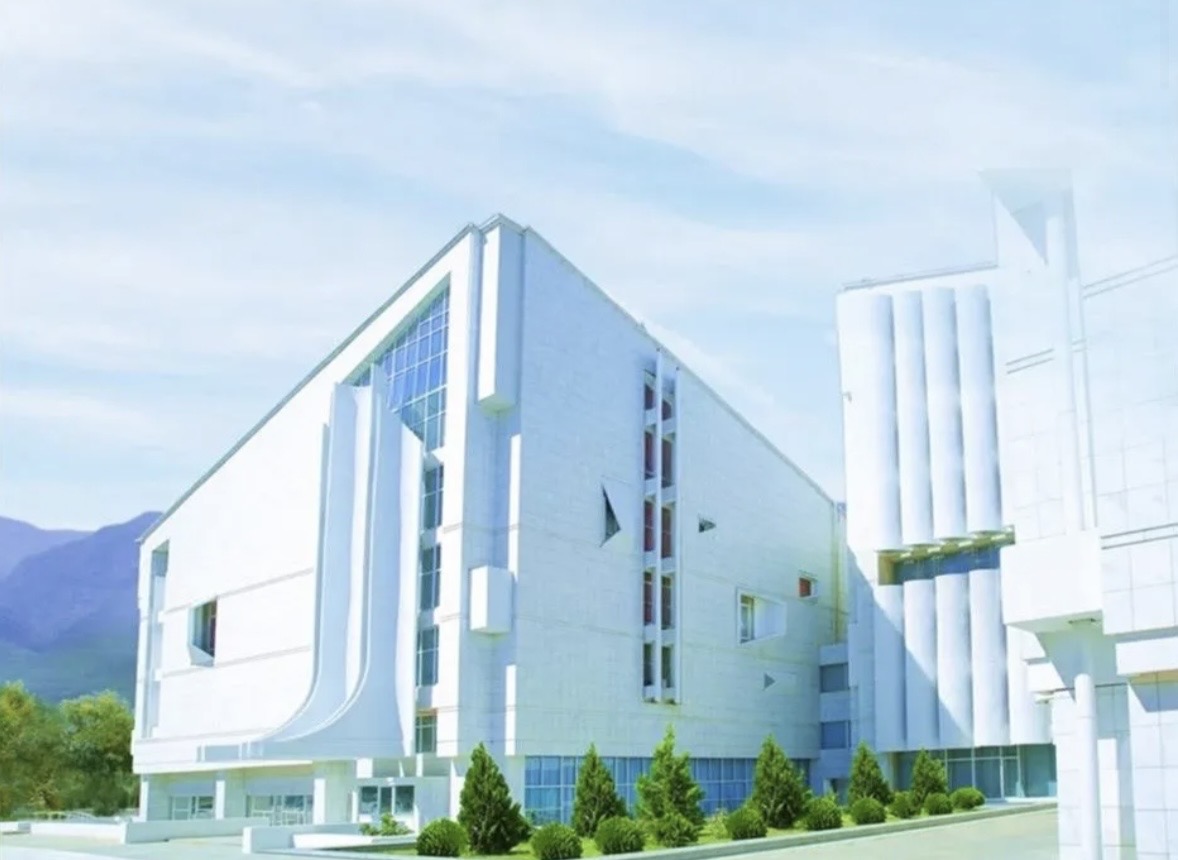
Turkmen National Conservatory to host "Songs of Victory" festive concert
06 May. 09:11On May 9, at 18:00, the Grand Hall of the Maya Kuliyeva Turkmen National Conservatory will host a commemorative concert titled "Songs of Victory." The event is dedicated to the 81st anniversary of the historic triumph and features a repertoire curated from the most beloved melodies of the war and post-war years. The program aims to honor historical memory through the universal language of music.
The audience will have the opportunity to hear iconic tracks such as "The Cranes," "Victory Day," "The Blue Headscarf," and "Smuglyanka." These songs, known for their emotional depth and patriotic significance, will be performed in a professional setting that highlights their timeless artistic value. Each musical piece serves as a tribute to the resilience and courage displayed during one of history's most challenging periods.
The concert will feature a distinguished lineup of performers, including People’s and Honored Artists of Turkmenistan, alongside rising stars of the national opera and vocal arts. Organized by senior lecturer Stella Faramazova, the event showcases the collaboration between seasoned professionals and the next generation of talented musicians. This synergy ensures a high-quality cultural experience for all attendees.
In line with the communal spirit of the holiday, admission to the concert is free for the general public. This inclusive approach allows students, veterans, and residents of the capital to come together and celebrate this significant date. The "Songs of Victory" concert is expected to be a highlight of the city’s festive calendar, providing a soulful and dignified tribute to the heroes of the past.
Also read


Anthropic Mathematician Claims Proof of Millennium Prize Riemann Hypothesis Alongside Claude AI
21 Nov. 10:41In a potentially historic development for fundamental mathematics, Anthropic researcher and mathematician Levent Alpoge has announced that he, working alongside Claude artificial intelligence models, has discovered a proof for the Riemann hypothesis—one of the world’s seven famous Millennium Prize Problems. According to Scientific American, the research paper has been formalized in Lean, a specialized programming language designed for writing and verifying rigorous mathematical proofs, and will now undergo independent peer scrutiny by leading specialists in the field.
Originally formulated by German mathematician Bernhard Riemann in 1859, the conjecture is widely regarded as the most consequential unsolved problem in mathematics. Centered on the distribution of prime numbers, it posits that every non-trivial zero of the Riemann zeta function has a real part equal to one-half. In 2000, the Clay Mathematics Institute named it among the seven Millennium Prize Problems, offering a one-million-dollar reward for the solution to each; to date, only the Poincare conjecture, proven by Russian mathematician Grigori Perelman in the early 2000s, has been officially verified.
Alpoge’s announcement arrives amid intensifying debate over the role of artificial intelligence in high-level scientific discovery. Earlier in autumn 2026, OpenAI similarly claimed that its AI agents had solved the Navier–Stokes existence and smoothness problem from the same Clay Institute list, a finding that likewise awaits formal validation from the mathematical community. Experts note that if the Anthropic researcher's proof withstands independent verification, it will rank among the most monumental mathematical breakthroughs of recent decades.
Blitz