
Playlist
Socio-Economic Growth Indicators Reported for Turkmenistan's Western Region
09 May. 11:57During a recent government session focusing on the Balkan province's development, key performance indicators for the transport and communications sector were disclosed for the first four months of the year. The report highlights a steady increase in cargo and passenger turnover across all modes of transportation. The strategic focus remains on integrating innovative technologies to enhance the regional infrastructure, thereby supporting the broader national goal of sustainable socio-economic progression.
Digital connectivity has seen substantial growth within the province, reflecting the success of modernization efforts. Mobile network subscriptions have surged by 15.4%, while internet usage has grown by 13% compared to previous periods. Furthermore, as part of a national rural development program, 185 kilometers of fiber-optic cables have been laid, significantly improving high-speed communication access for residents in various districts across the western territory.
Aviation and ground transport infrastructure have also undergone significant upgrades. The operational launch of the new Balkanabat International Airport and the renovation of facilities in Turkmenbashy have bolstered the region's capacity for international and domestic air travel. On the ground, the introduction of modern bus terminals and training centers has improved public service quality, with over 70 regular bus routes now operating to connect key urban and rural hubs.
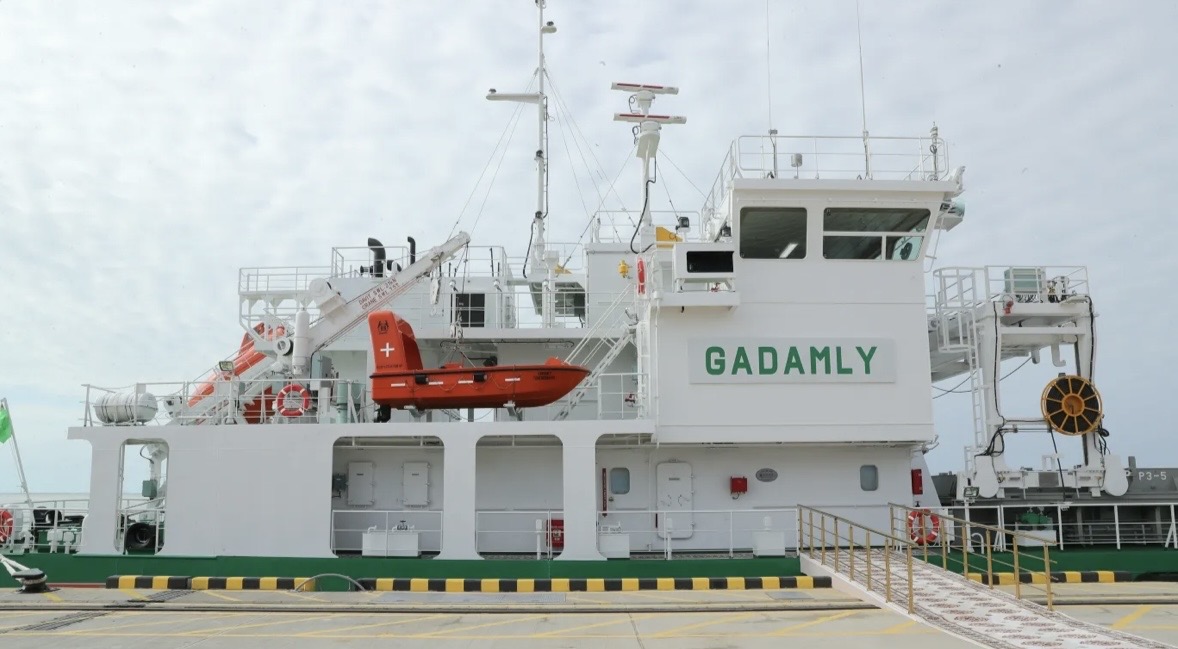
The maritime sector reached a milestone with the construction of "Gadamly," the first domestically produced dry cargo ship, at the Balkan shipyard. This achievement demonstrates the growing technical capabilities of the Turkmenbashy International Seaport and its associated ship-building facilities. Future directives focus on expanding domestic shipbuilding projects and optimizing the logistics potential of the Caspian Sea to strengthen the nation's position as a vital transit corridor.
Also read




Simple Vitamin Shows Surprising Results in Pre-Cancerous Blood Conditions, Study Finds
Today in 02:02Daily high-dose supplementation of vitamin C can significantly reduce mortality risks and help prevent severe medical complications in patients with pre-cancerous blood conditions. Researchers from the Van Andel Institute in the United States and Copenhagen University Hospital in Denmark reached this conclusion following a comprehensive three-year follow-up study. The international "EVITA" trial involved volunteers who were administered 1,000 mg of vitamin C daily over the course of a year, while a control group received a placebo.
Although initial hypotheses suggested vitamin C might directly inhibit abnormal cell proliferation, researchers found its primary benefit lay in strengthening the body, reducing systemic inflammation, and lowering rates of anemia, pneumonia, and internal bleeding. Over the three-year observation period, the vitamin C group exhibited a significantly higher survival rate compared to the placebo group. While experts emphasize that these findings remain preliminary and require larger clinical trials before reshaping formal medical treatment protocols, vitamin C continues to show promising potential in supportive patient care.
Blitz