
Playlist
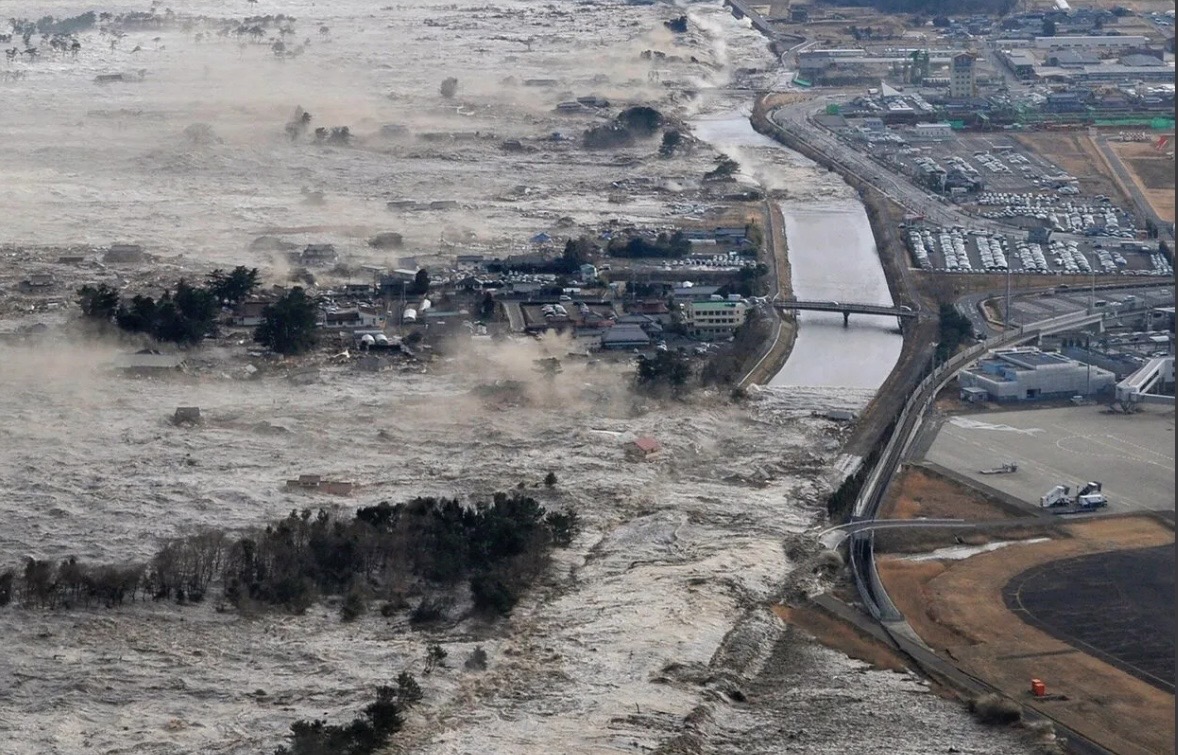
An international team of seismologists has uncovered an extraordinary geophysical aftermath of the 2011 Great East Japan Earthquake. According to a scientific study published in the journal Science, the entire territory of Japan shifted approximately 5 to 6 millimeters eastward just minutes after the initial mainshock. Led by Park Sun-young, an assistant professor at the University of Chicago, the American and French research team identified this phenomenon by analyzing real-time data collected from thousands of highly precise GPS sensors and global seismic stations.
The catalyst behind this sudden geographical displacement was identified as a unique seismic "echo" bouncing from the planet's deep interior. The massive energy waves generated by the 9.0-magnitude earthquake traveled through the Earth's thick crust, hit the boundary of the Earth's core, and subsequently reflected back toward the surface. Approximately 13 minutes after the initial disaster, this rebounded energy struck the intersection of major tectonic plates—the Pacific, Okhotsk, and Eurasian plates—causing them to shift simultaneously and trigger the minor continental movement.
This feedback mechanism between reflected core waves and "super-earthquakes" represents a groundbreaking discovery previously unaccounted for in traditional seismology. Researchers state that incorporating these deep-core wave reflections will significantly enhance global seismic risk assessments and disaster predictability models. The 2011 earthquake off the coast of Miyagi Prefecture remains the most powerful in Japan's modern history; the resulting tsunami and the Fukushima-1 nuclear disaster claimed nearly 16,000 lives, with thousands more still missing.



Seismic First: Scientists Officially Confirm Natural Earthquakes in Lithuania
10 Oct. 10:55The Geological Survey of Lithuania, supported by seismologists from the University of Helsinki, has officially confirmed the occurrence of natural tectonic earthquakes within the country’s borders for the first time. The seismic events, measuring 2.4 and 2.7 on the magnitude scale, occurred in western Lithuania near the Gargždai fault zone in December 2025. Furthermore, updated analysis of international seismic data allowed experts to reclassify a previously ambiguous 2015 tremor as a natural earthquake rather than human-induced activity.
Although the low-intensity quakes caused no structural damage or casualties, they mark the first instrumentally verified natural tectonic events recorded in modern Lithuanian history.
Blitz