
Playlist

President of Turkmenistan Serdar Berdimuhamedov has arrived in Japan on a working visit to take part in the inaugural Central Asia–Japan Dialogue Summit, according to reports from the national news agency TDH.
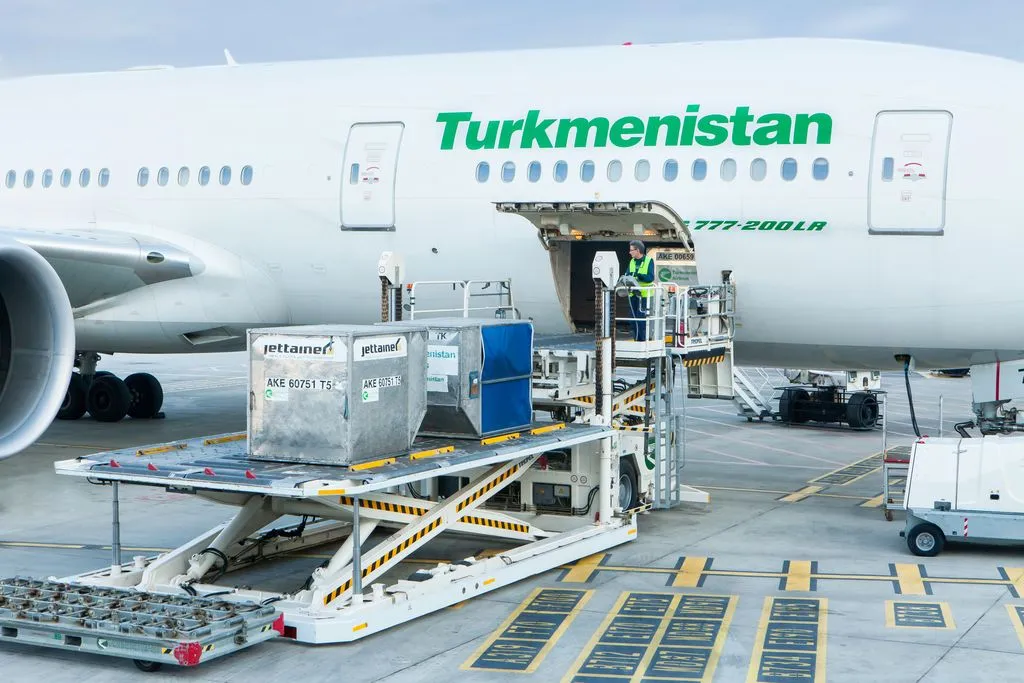
The presidential aircraft landed at Tokyo’s Haneda International Airport, where the head of state was officially welcomed by representatives of the Japanese government and protocol services.
This marks President Berdimuhamedov’s second visit to Japan in 2025. Earlier in April, he attended ceremonial events dedicated to Turkmenistan’s National Day at EXPO 2025 in Osaka, where the Turkmen pavilion was among the first to open and quickly became one of the most popular exhibits.
Cooperation between Turkmenistan and Japan continues to expand on the basis of mutual respect and equality. Through partnerships with leading Japanese companies, including Kawasaki Heavy Industries, Mitsubishi Corporation, Itochu, and Sojitz, a number of major industrial facilities have been established in Turkmenistan. These include a plant producing environmentally friendly gasoline from natural gas in Ovadandepe, a polymer production complex in Kiyanly, and a urea manufacturing plant in Garabogaz.
Humanitarian ties also form an important pillar of bilateral relations. Ashgabat is home to the Oguz Han Engineering and Technology University, where academic programs follow Japanese educational models. Japanese language courses are offered across Turkmenistan’s educational institutions, and Turkmen students regularly undertake internships and study programs at universities in Japan.
Also read




On-the-Go Power: Japanese Engineers Develop Wireless In-Road Charging for Electric Vehicles
10 Oct. 08:10In a major leap for electric mobility, Honda R&D, alongside Taisei Corporation and Taisei Rotec, has unveiled an innovative dynamic wireless charging system that charges electric vehicles as they drive. By embedding compact energy-transmitting modules directly into the road surface, the system transfers power via a magnetic field to receivers mounted underneath moving vehicles. Designed to withstand heavy commercial transport up to 20 tons, real-world road testing is scheduled to begin in Japan in April 2027.
The technology eliminates the need for full road reconstruction, as modules can be integrated directly into milled asphalt layers. Aimed at boosting charging power up to 150 kW in future iterations, this infrastructure solution promise to significantly reduce grid pressure on traditional charging stations, particularly for logistics and commercial fleets.
Also read



Blitz