
Playlist
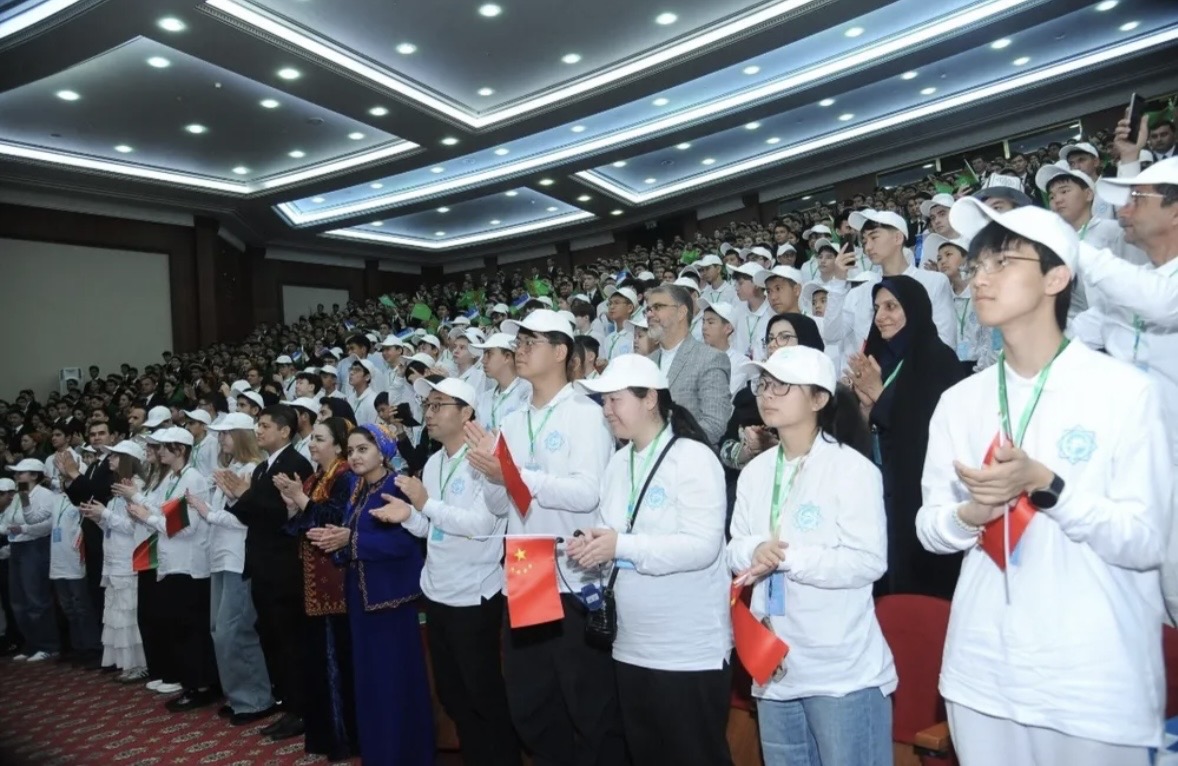
Opening of the 3rd International Math Olympiad at Magtymguly TSU
10 Apr. 05:06The 3rd International Mathematics Olympiad for schoolchildren officially commenced with a grand opening ceremony at Magtymguly Turkmen State University. Organized by the Ministry of Education of Turkmenistan, the event brings together young mathematical talents from various countries, reinforcing Ashgabat’s role as a hub for international academic excellence. The Olympiad serves as a platform for intellectual exchange and fosters cooperation among the next generation of scientists and thinkers.
Approximately 200 students from nations including Russia, China, Uzbekistan, Kazakhstan, Iran, Armenia, and Belarus are participating in this prestigious competition. The opening ceremony featured vibrant cultural performances by creative groups from Turkmen universities, showcasing the national arts of all participating countries. This unique cultural tribute made a lasting impression on the international visitors, highlighting Turkmenistan’s renowned hospitality and respect for global diversity.
As part of the inaugural events, participants visited a comprehensive exhibition in the university lobby, which detailed Turkmenistan’s socio-economic progress and significant achievements in the educational sector. The guests also explored the university’s Historical and Magtymguly Museums, gaining insight into the rich historical legacy of the Turkmen people and the literary contributions of the great poet Magtymguly Pyragy.
The core of the competition will be hosted at Ashgabat’s specialized secondary school No. 135, focusing on advanced English and science studies. Participants will compete in Levels A and B, tackling complex mathematical problems designed to test their analytical skills and creativity. The high standard of the facilities reflects Turkmenistan’s investment in modern educational environments for both domestic and international students.
To round out the experience, a rich cultural program has been prepared for the visiting delegations. This includes tours of the Neutrality Museum and the newly established Magtymguly Pyragy Cultural and Park Complex. These excursions offer the participants a chance to admire the architectural beauty of Ashgabat and learn more about the national values that shape modern Turkmenistan.
Also read
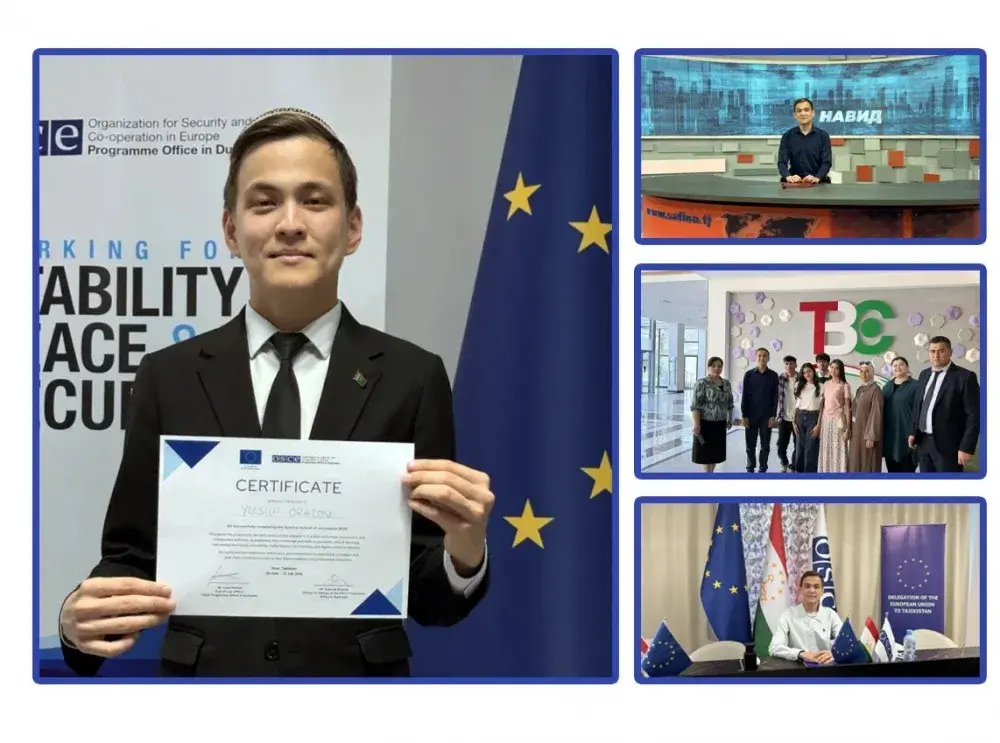


Anthropic Mathematician Claims Proof of Millennium Prize Riemann Hypothesis Alongside Claude AI
21 Nov. 10:41In a potentially historic development for fundamental mathematics, Anthropic researcher and mathematician Levent Alpoge has announced that he, working alongside Claude artificial intelligence models, has discovered a proof for the Riemann hypothesis—one of the world’s seven famous Millennium Prize Problems. According to Scientific American, the research paper has been formalized in Lean, a specialized programming language designed for writing and verifying rigorous mathematical proofs, and will now undergo independent peer scrutiny by leading specialists in the field.
Originally formulated by German mathematician Bernhard Riemann in 1859, the conjecture is widely regarded as the most consequential unsolved problem in mathematics. Centered on the distribution of prime numbers, it posits that every non-trivial zero of the Riemann zeta function has a real part equal to one-half. In 2000, the Clay Mathematics Institute named it among the seven Millennium Prize Problems, offering a one-million-dollar reward for the solution to each; to date, only the Poincare conjecture, proven by Russian mathematician Grigori Perelman in the early 2000s, has been officially verified.
Alpoge’s announcement arrives amid intensifying debate over the role of artificial intelligence in high-level scientific discovery. Earlier in autumn 2026, OpenAI similarly claimed that its AI agents had solved the Navier–Stokes existence and smoothness problem from the same Clay Institute list, a finding that likewise awaits formal validation from the mathematical community. Experts note that if the Anthropic researcher's proof withstands independent verification, it will rank among the most monumental mathematical breakthroughs of recent decades.
Blitz