
Playlist
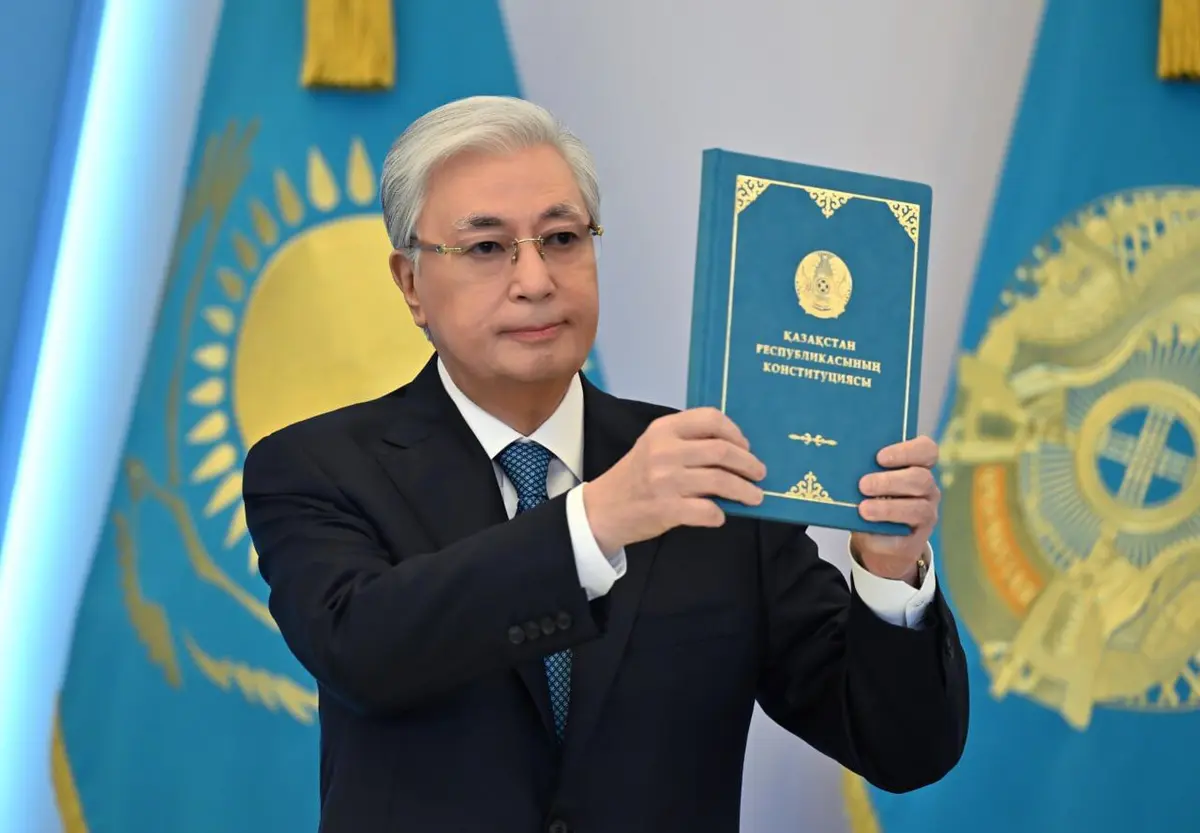
Effective July 1, the new Constitution of the Republic of Kazakhstan, ratified during the nationwide referendum on March 15 of this year, has officially entered into force. Concurrently, the previous Basic Law, which had been operational since August 30, 1995, has completely lost its legal validity. This transition also marks the formal expiration of the mandate of the former bicameral parliament, which comprised the Mazhilis and the Senate.
The updated Constitution fundamentally restructures the state apparatus by introducing the executive office of the Vice President. The legislative branch shifts to a unicameral parliament known as the Kurultai, consisting of 145 deputies elected exclusively through political party lists. Furthermore, a new supreme advisory body named "Khalyk Kenesi" (People's Council) is established with full rights of legislative initiative, while the Assembly of People of Kazakhstan is officially dissolved.
Under the newly instituted constitutional guidelines, the President must officially call for elections to the Kurultai within one month of the Constitution's effective date and execute the voting process within two months. President Kassym-Jomart Tokayev previously announced that the balloting would take place in August. The newly established position of Vice President is to be filled within two months following the opening session of the new parliament, subject to the formal approval of the Kurultai.
The initial framework of the reform package was originally intended only to transition the country toward a unicameral parliamentary structure. However, the designated constitutional working group subsequently introduced more extensive structural revisions, resulting in the comprehensive adoption of a brand-new Constitution. Consequently, Kazakhstan’s official Constitution Day will now be celebrated annually on March 15, marking the date of the historic referendum, instead of August 30.
President Kassym-Jomart Tokayev congratulated the citizens on the implementation of the new Basic Law, declaring the commencement of a completely new era in the history of sovereign Kazakhstan. The Head of State emphasized that the nation is embarking on a path of sustainable growth, political and economic transformation, and comprehensive modernization. He noted that this milestone signifies a profound overhaul of the political framework and the modernization of core state and civil institutions.
This comprehensive constitutional transition is systematically engineered to balance the distribution of power among governing branches while fostering active civic engagement. The modernized legal architecture serves as the foundation for long-term political stability and institutional development across the republic.




Ecological Shift: Golden Jackals Pro Projected to Inhabit 75% of the European Continent
Today in 06:53Once restricted mainly to the Balkans and the Black Sea coastal regions, golden jackals are rapidly expanding their footprint across Europe. According to a landmark study by an international research team published in Nature Ecology & Evolution, these adaptable predators could eventually inhabit up to 75% of the European continent—nearly a sixfold expansion from their historical range. Scientists arrived at these conclusions after monitoring nearly 9,000 sampling sites across multiple European nations.
Recent sightings and acoustic tracking confirm that jackals have established populations in the Czech Republic, the Baltic region, and even Scandinavia. The species thrives in areas with mild winters, mixed agricultural landscapes, and proximity to water sources. Regional climate warming has transformed previously uninhabitable northern areas into suitable habitats, while farming landscapes offer abundant food sources and coverage.
Biologists attribute this unprecedented expansion primarily to the historical decline of wolf populations, which naturally suppress jackal numbers and limit their movement. Smaller than wolves but slightly larger than foxes, jackals feed on small rodents, carrion, plants, and fruits. Their high ecological adaptability allows them to settle efficiently into newly colonized territories without human interference.
However, their entry into Western and Southern Europe, including countries like France and Spain, poses potential ecological consequences. Environmentalists warn that the arrival of jackals could disrupt local ecosystems and threaten endangered ground-nesting steppe birds and smaller wildlife across the Iberian Peninsula.
Blitz