
Playlist
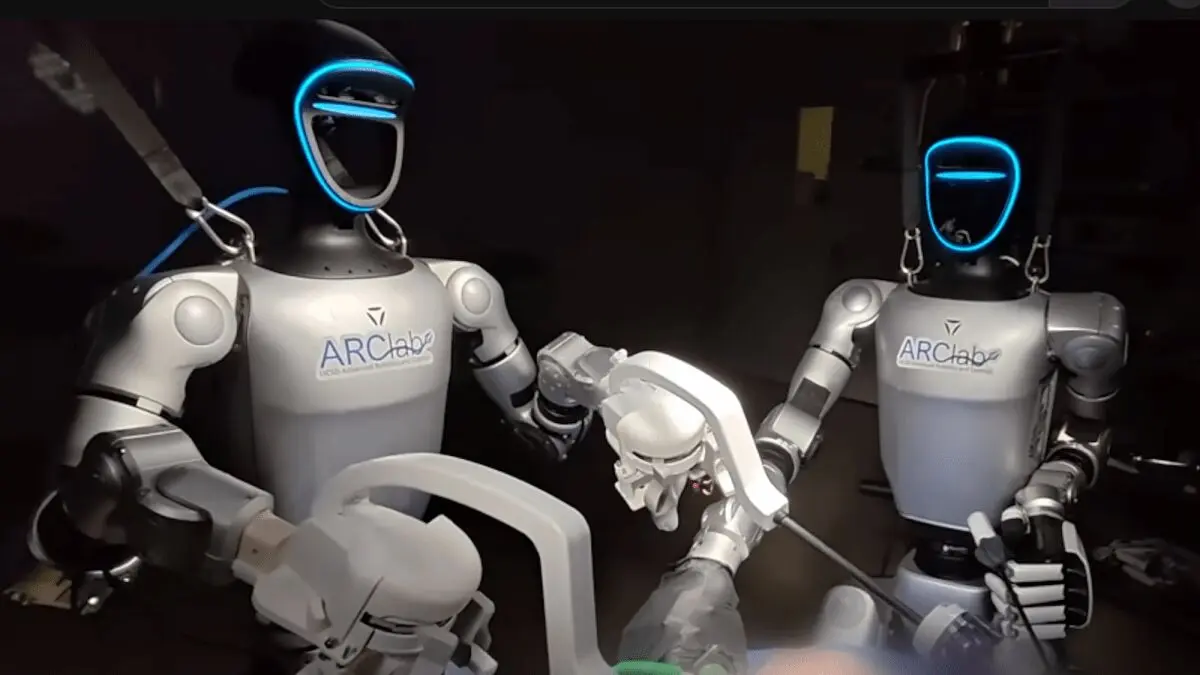
Medical Robotics Sector Verifies First Successful Surgical Campaign Utilizing Humanoid Frameworks
13 Jul. 18:24A critical operational milestone has been achieved within the intersection of advanced biomedical engineering and clinical practice. For the first time in medical history, remote-controlled humanoid robotic platforms have been successfully deployed to execute complex surgical interventions. This technological evolution demonstrates a conceptual shift in robot-assisted surgery, introducing flexible, anthropomorphic design configurations to replace legacy, single-purpose medical apparatus.
The preclinical evaluation sequence targeted multi-variable operational frameworks to validate the spatial precision of the mechanical manipulators. The engineering teams structuralized two distinct surgical tracks on large mammalian biological models: the first iteration paired a single humanoid unit with a human technician, while the secondary trial involved an autonomous dual-robot configuration working in complete synchronization. Both test procedures verified that the platforms can manage delicate structural dissections with zero operational variance.
Standard surgical robotic arrays currently utilized in institutional medicine maintain significant structural limitations, often scaling up to immense weight profiles that require dedicated corporate infrastructure, permanent operating suites, and extensive maintenance crews. Conversely, the newly engineered humanoid units feature a standardized, lightweight architecture standing approximately 1.5 meters tall, optimizing structural portability. This design strategy drastically reduces capital expenditure limits while expanding the multi-role operational flexibility of the machinery.
International biomedical researchers confirm that the commercialization of modular, low-cost humanoid surgeons possesses the long-term potential to democratize high-tier healthcare access globally. Due to their compact logistical footprint, these automated systems can be deployed rapidly across diverse environments, including rural provincial field clinics, emergency response zones, and orbital space facilities. The successful validation of the platform marks a foundational step in addressing institutional medical labor shortages via automated technical assets.


On-the-Go Power: Japanese Engineers Develop Wireless In-Road Charging for Electric Vehicles
10 Oct. 08:10In a major leap for electric mobility, Honda R&D, alongside Taisei Corporation and Taisei Rotec, has unveiled an innovative dynamic wireless charging system that charges electric vehicles as they drive. By embedding compact energy-transmitting modules directly into the road surface, the system transfers power via a magnetic field to receivers mounted underneath moving vehicles. Designed to withstand heavy commercial transport up to 20 tons, real-world road testing is scheduled to begin in Japan in April 2027.
The technology eliminates the need for full road reconstruction, as modules can be integrated directly into milled asphalt layers. Aimed at boosting charging power up to 150 kW in future iterations, this infrastructure solution promise to significantly reduce grid pressure on traditional charging stations, particularly for logistics and commercial fleets.
Blitz