
Playlist
Macroeconomic Growth: Turkmenistan's GDP Increases by 6.3 Percent in January–July
02 Aug. 04:40During the first seven months of 2026, Turkmenistan recorded a 6.3 percent increase in Gross Domestic Product (GDP). The figures were presented by Vice-Premier H. Geldimyradov in a report on the country's macroeconomic performance during a Cabinet of Ministers meeting held via digital link.
As reported by the "Watan" news program, steady expansion was observed across all major sectors of the economy:
Industrial sector: 2.6 percent growth;
Construction: 6.7 percent growth;
Transport and communications: 10.3 percent growth;
Trade: 8.5 percent growth;
Agriculture: 4.1 percent growth;
Services sector: 8.4 percent growth.
Compared to the same period of the previous year, total production volume rose by 10.4 percent. Retail trade turnover grew by 10.1 percent, while foreign trade turnover expanded by 9 percent. Public sector salaries, pensions, state allowances, and student stipends were fully funded on schedule. Capital investments utilized across all funding sources increased by 4.7 percent.
Upon receiving the report, President Serdar Berdimuhamedov emphasized the importance of continuously refining the financial and banking systems, instructing the Vice-Premier to implement targeted measures to maintain stable GDP growth rates.
Also read

Turkmenistan’s National Money Supply Grows by 27.6 Percent to Reach 77 Billion Manats
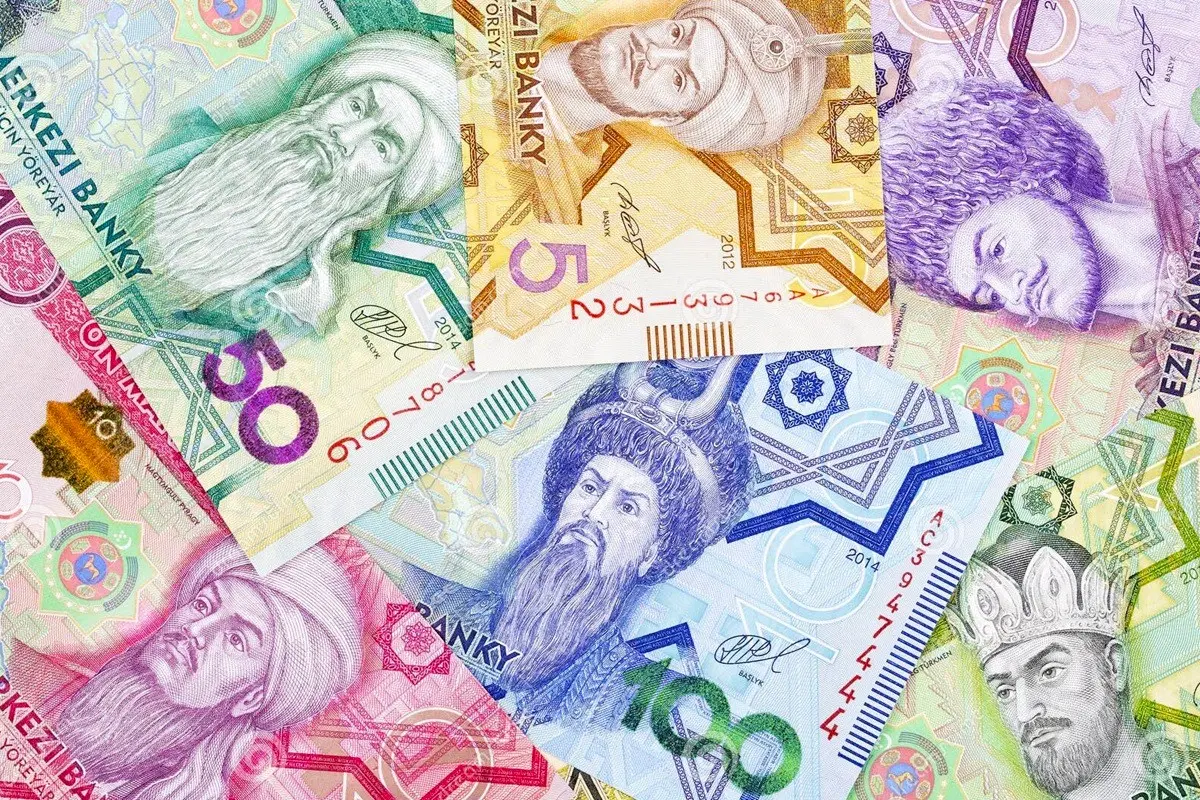
13 Nov. 06:15Turkmenistan’s transition into a new phase of economic development continues to strengthen the role of the national currency across domestic financial and industrial sectors. According to an analytical report published in today’s edition of the newspaper "Türkmenistan," the country’s money supply recorded steady expansion over the past four years. While the total national money supply stood at 60.3 billion manats as of October 1, 2022, it climbed to 77.0 billion manats by October 1, 2026, reflecting a notable 27.6 percent increase.
This substantial growth in domestic currency liquidity provides vital momentum for executing comprehensive national development strategies. The expanded financial capacity supports ongoing economic diversification, the establishment of new industrial facilities, increased manufacturing output, and targeted support for private entrepreneurship. Furthermore, the strengthened monetary base enhances commercial banking activity, accelerates the transition toward a digital economy, and broadens Turkmenistan’s international economic partnerships.
The report emphasizes that the long-term effectiveness of these large-scale initiatives relies fundamentally on the stability and resilience of the nation's financial and banking institutions, which maintain balanced currency circulation while fueling sustainable growth across the real economy.
Blitz