
Playlist
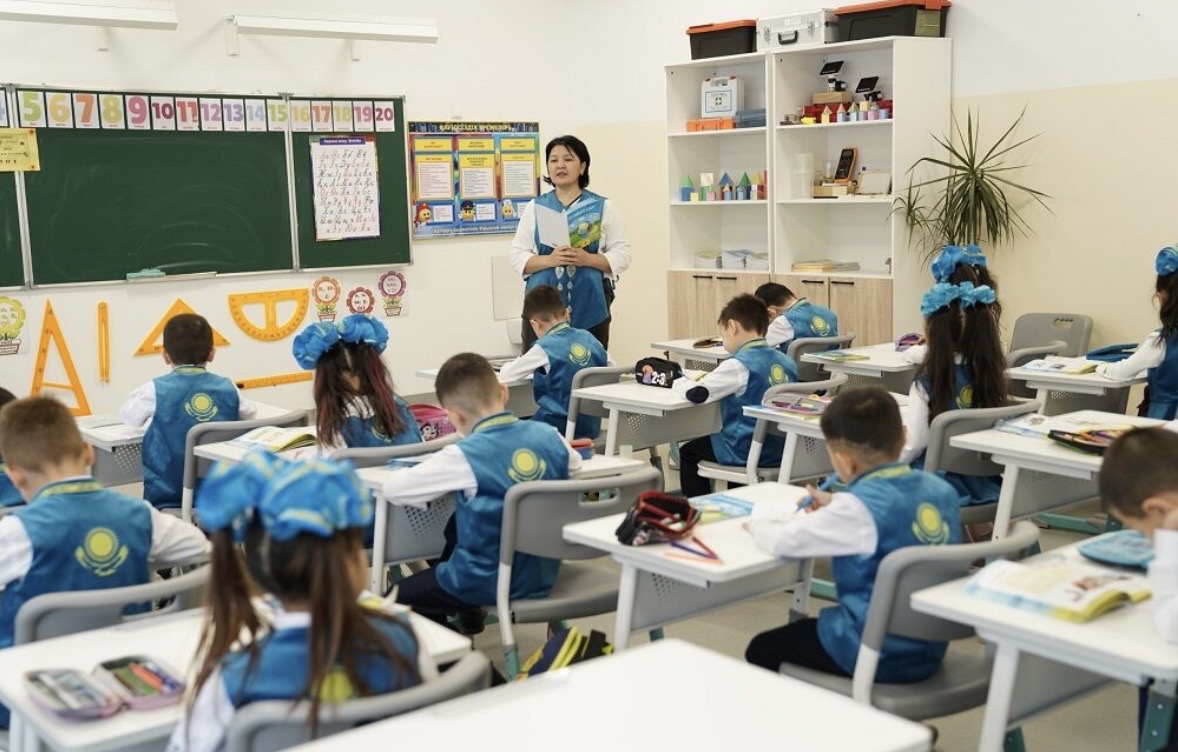
Kazakhstan Unveils Strategic Decree to Integrate Artificial Intelligence into Secondary School System
15 May. 05:10The President of Kazakhstan has signed a landmark decree establishing a comprehensive framework for the integration of artificial intelligence (AI) technologies within the national secondary education sector. The official document mandates the gradual deployment of intelligent software ecosystems and the formulation of progressive instructional methodologies across state institutions.
Under the framework of the new decree, the government is tasked with approving a specialized, long-term operational roadmap spanning the years 2026 to 2029. This strategic initiative focuses on engineering personalized learning platforms tailored to individual student performance, upgrading internal digital networks, retraining educators, and executing rigorous cybersecurity measures to ensure the absolute protection of students' biometric and personal data.
The project design heavily incorporates prominent international advisory concepts and contemporary scientific theories regarding machine learning in education. Government ministries will soon submit finalized proposals for a targeted pilot phase, which aims to bridges the historic educational quality gap between urban centers and remote rural school districts through technology.
The subsequent phases of the initiative will guarantee that all participating test sites are equipped with advanced hardware configurations and uninterrupted, high-speed fiber-optic internet connections. By the commencement of the upcoming academic year, official operational standards for AI usage in schools will be fully ratified alongside specialized professional development seminars for teaching staff. The decree firmly highlights that AI is strictly an auxiliary pedagogical tool and is not intended to replace human instructors.
Also read




Ecological Shift: Golden Jackals Pro Projected to Inhabit 75% of the European Continent
Today in 06:53Once restricted mainly to the Balkans and the Black Sea coastal regions, golden jackals are rapidly expanding their footprint across Europe. According to a landmark study by an international research team published in Nature Ecology & Evolution, these adaptable predators could eventually inhabit up to 75% of the European continent—nearly a sixfold expansion from their historical range. Scientists arrived at these conclusions after monitoring nearly 9,000 sampling sites across multiple European nations.
Recent sightings and acoustic tracking confirm that jackals have established populations in the Czech Republic, the Baltic region, and even Scandinavia. The species thrives in areas with mild winters, mixed agricultural landscapes, and proximity to water sources. Regional climate warming has transformed previously uninhabitable northern areas into suitable habitats, while farming landscapes offer abundant food sources and coverage.
Biologists attribute this unprecedented expansion primarily to the historical decline of wolf populations, which naturally suppress jackal numbers and limit their movement. Smaller than wolves but slightly larger than foxes, jackals feed on small rodents, carrion, plants, and fruits. Their high ecological adaptability allows them to settle efficiently into newly colonized territories without human interference.
However, their entry into Western and Southern Europe, including countries like France and Spain, poses potential ecological consequences. Environmentalists warn that the arrival of jackals could disrupt local ecosystems and threaten endangered ground-nesting steppe birds and smaller wildlife across the Iberian Peninsula.
Blitz