
Playlist
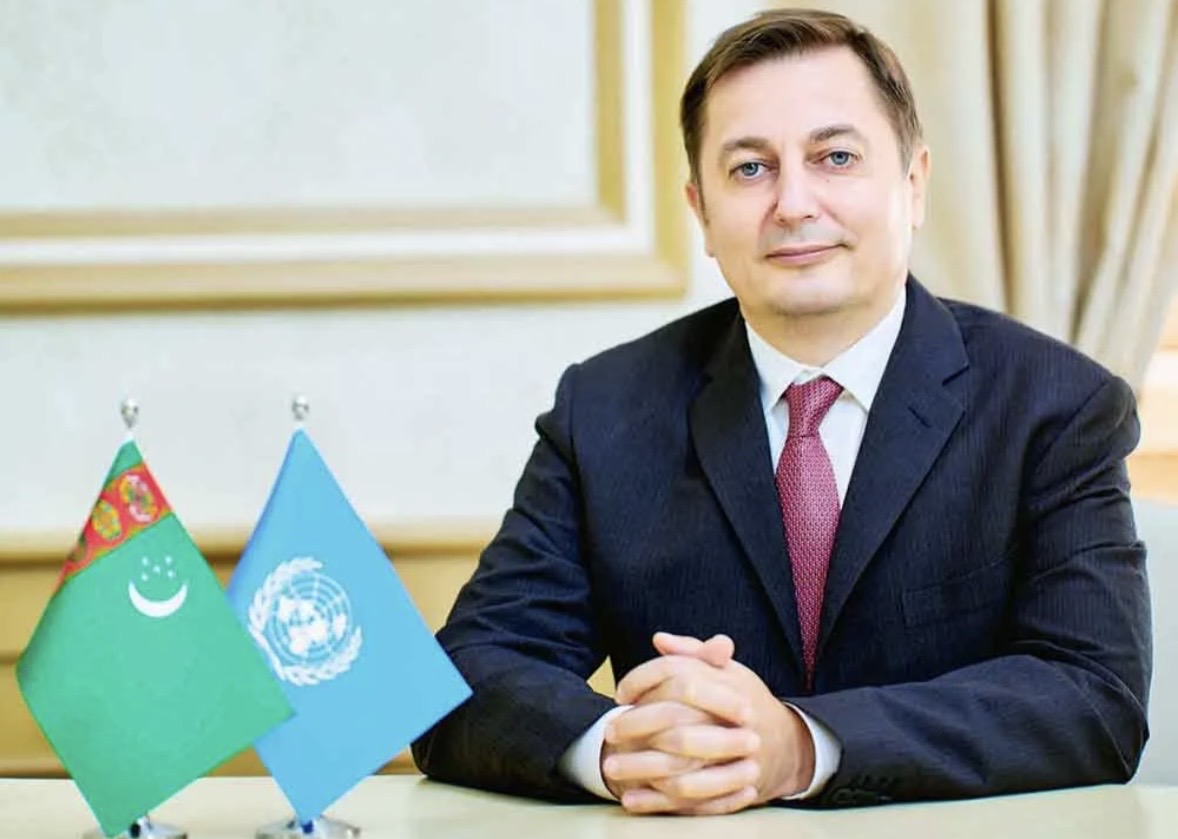
The United Nations has officially announced the appointment of Dmitry Shlapachenko as the new Resident Coordinator for the Republic of Azerbaijan. This high-level assignment marks a strategic transition in the UN's leadership within the region, aimed at fostering continued collaboration on sustainable development goals and international cooperation frameworks. The move is expected to streamline the organization's strategic initiatives and diplomatic presence in Baku.
The news of the appointment was formally shared by the Azerbaijani Ambassador to Turkmenistan, Gismet Gezalov, following a diplomatic reception. During the meeting, the Ambassador extended his congratulations to the newly appointed official, emphasizing the significance of this role in the context of regional stability and socio-economic development. This change in leadership reflects the standard rotation and strengthening of the United Nations' global diplomatic corps.
Mr. Shlapachenko brings extensive regional expertise to his new position, having previously served as the UN Resident Coordinator in Turkmenistan. His professional background within the UN system is characterized by a strong focus on inter-agency coordination and strategic planning. His familiarity with the socio-political landscape of the region is anticipated to facilitate a seamless transition and enhance the efficiency of the UN’s country team in Azerbaijan.
The current interim leadership, held by Igor Garafulic since the beginning of the year, is scheduled to conclude in mid-2026. Garafulic will maintain his responsibilities as the acting coordinator until July 1, 2026. Following the conclusion of this interim period, Dmitry Shlapachenko will formally assume full authority, overseeing the UN's comprehensive agenda and partnership programs throughout the country.
Also read



Ecological Shift: Golden Jackals Pro Projected to Inhabit 75% of the European Continent
Today in 06:53Once restricted mainly to the Balkans and the Black Sea coastal regions, golden jackals are rapidly expanding their footprint across Europe. According to a landmark study by an international research team published in Nature Ecology & Evolution, these adaptable predators could eventually inhabit up to 75% of the European continent—nearly a sixfold expansion from their historical range. Scientists arrived at these conclusions after monitoring nearly 9,000 sampling sites across multiple European nations.
Recent sightings and acoustic tracking confirm that jackals have established populations in the Czech Republic, the Baltic region, and even Scandinavia. The species thrives in areas with mild winters, mixed agricultural landscapes, and proximity to water sources. Regional climate warming has transformed previously uninhabitable northern areas into suitable habitats, while farming landscapes offer abundant food sources and coverage.
Biologists attribute this unprecedented expansion primarily to the historical decline of wolf populations, which naturally suppress jackal numbers and limit their movement. Smaller than wolves but slightly larger than foxes, jackals feed on small rodents, carrion, plants, and fruits. Their high ecological adaptability allows them to settle efficiently into newly colonized territories without human interference.
However, their entry into Western and Southern Europe, including countries like France and Spain, poses potential ecological consequences. Environmentalists warn that the arrival of jackals could disrupt local ecosystems and threaten endangered ground-nesting steppe birds and smaller wildlife across the Iberian Peninsula.
Blitz