
Playlist
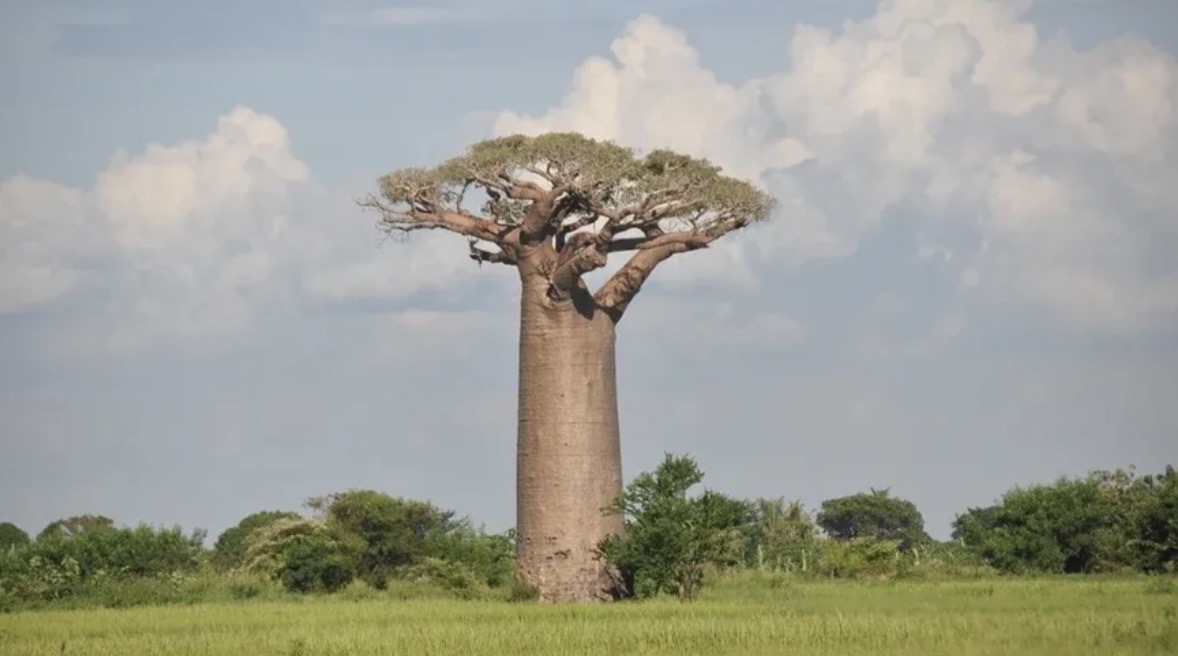
One of Madagascar's most iconic and historical natural monuments, a giant baobab tree estimated to be 1,200 years old, is on the verge of complete dehydration and collapse. According to environmental experts, the rapid deterioration of this millennial specimen is directly linked to global climate change. The shifting global environment is triggering unprecedented weather anomalies that ancient flora can no longer withstand.
Occupying a footprint of roughly 29 square meters in the Atsimo-Andrefana region, the colossal tree is widely known among local communities as Sitakakansa. While these ancient species are traditionally resilient, the catalyst for its current decay was the severe tropical cyclone "Jud," which battered the southwestern coast of the island in March 2025. Excessive rainfall oversaturated the tree’s porous internal structure, and because the moisture failed to evaporate in time, it triggered an internal rotting process.
The accumulation of stagnant water inside the trunk created a breeding ground for destructive bacteria, mold, and fungal infections, ultimately causing one of its primary structural branches to fracture. Dendrologists examining the botanical site estimate that Sitakakansa has a remaining lifespan of only two to three years. This impending loss follows another ecological tragedy in 2018, when a massive 1,400-year-old baobab also perished on the island.
Academic researchers on the island warn that the premature death of these botanical titans is becoming a systemic crisis across the entire African continent. Studies published in prominent scientific journals indicate that global warming is driving intense fluctuations in precipitation and intensifying storms. These rapid shifts are outpacing the evolutionary defenses of Earth's oldest living organisms, leading to accelerated mortality rates.
Also read



Seismic First: Scientists Officially Confirm Natural Earthquakes in Lithuania
10 Oct. 10:55The Geological Survey of Lithuania, supported by seismologists from the University of Helsinki, has officially confirmed the occurrence of natural tectonic earthquakes within the country’s borders for the first time. The seismic events, measuring 2.4 and 2.7 on the magnitude scale, occurred in western Lithuania near the Gargždai fault zone in December 2025. Furthermore, updated analysis of international seismic data allowed experts to reclassify a previously ambiguous 2015 tremor as a natural earthquake rather than human-induced activity.
Although the low-intensity quakes caused no structural damage or casualties, they mark the first instrumentally verified natural tectonic events recorded in modern Lithuanian history.
Blitz