
Playlist

Health authorities in Burundi are investigating a deadly outbreak caused by a pathogen previously unknown to medical science. According to the Africa Centres for Disease Control and Prevention (Africa CDC), five fatalities have been recorded as of March 30. With 35 confirmed cases reported so far, the mortality rate for this unidentified infection stands at a concerning 15%, prompting an immediate international response.
Preliminary diagnostic testing has ruled out more than 200 known infectious agents, suggesting the emergence of a novel virus or bacteria. Clinical symptoms typically begin with high fever, nausea, severe headaches, and gastrointestinal distress. In advanced stages, patients suffer from neurological impairments, acute anemia, jaundice, and severe respiratory failure, indicating a multi-system impact on the human body.
Epidemiologists are currently focusing on the potential zoonotic transmission of the disease, conducting extensive screenings of livestock and swine populations. The goal is to determine if the infection originated in animals before jumping to the human population. This research is critical for developing containment strategies and understanding the environmental factors that may have triggered the sudden spike in cases.
Burundi’s Minister of Health, Lidwine Bakadahana, confirmed that the government is implementing comprehensive public health measures to contain the spread. The World Health Organization (WHO) is providing technical expertise and resources to assist local medical teams. International health monitors remain on high alert as they work to identify the biological structure of the pathogen and establish effective clinical protocols.



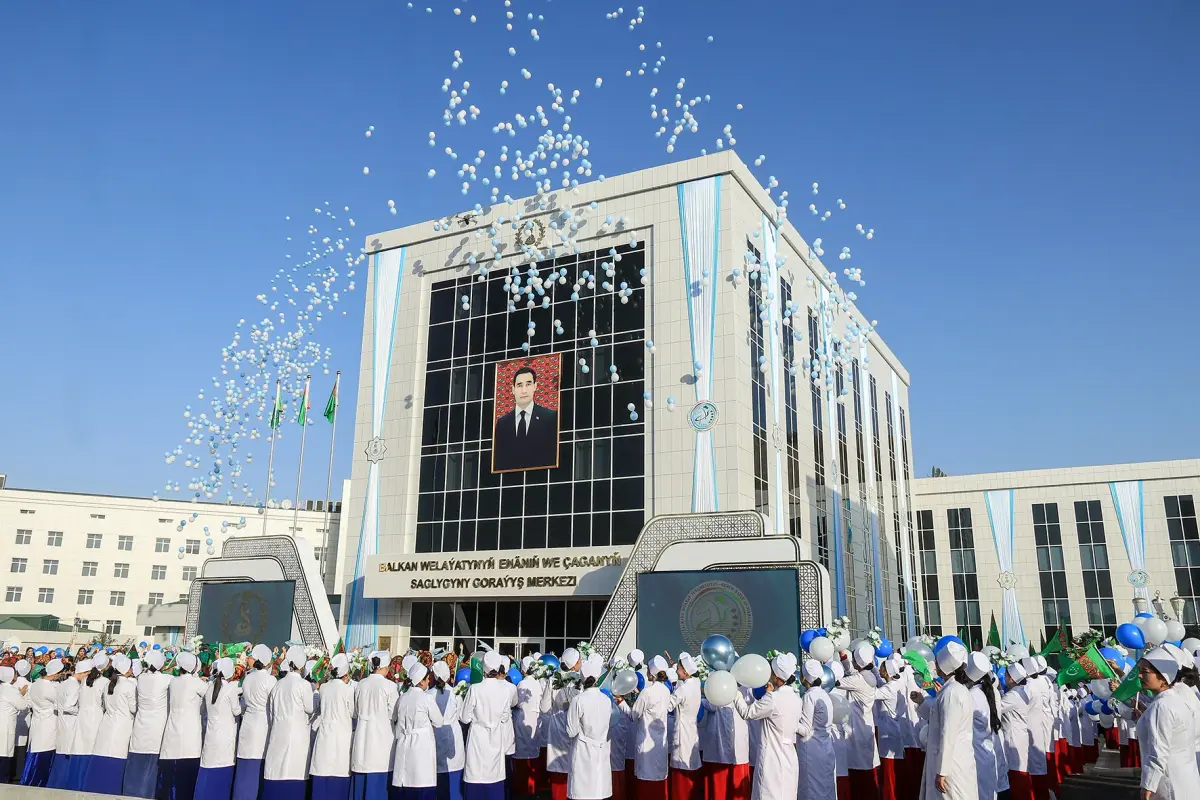
Modern Maternal and Child Healthcare Center Opens Its Doors in Balkanabat
Today in 08:38In celebration of the National Healthcare and Pharmaceutical Industry Workers' Day, a state-of-the-art Maternal and Child Healthcare Center was officially inaugurated in the city of Balkanabat. The landmark event gathered regional and municipal officials, members of the Halk Maslahaty and Parliament, healthcare professionals, and community leaders. The opening ceremony featured festive cultural performances, musical numbers, and traditional Kushtdepdi dances.
The newly constructed medical complex consists of four- and five-story buildings designed to accommodate up to 305 patients. The center houses comprehensive maternity and postnatal wards, a gynecology division, pediatric units, and diagnostic consultation departments. The facility is equipped with advanced medical technology, including MRI, CT scanners, digital mammography, and fluorography units.
Notably, the center features the region's first 10-bed neonatal intensive care unit, fully outfitted with "Medicor" incubators from Hungary and high-precision German monitoring systems. These technologies allow medical staff to continuously monitor vital stats, body temperature, oxygen saturation, and respiratory functions of newborns.
During the ceremony, outstanding builders from the "Shadiyan Gurlushyk" enterprise were honored with gifts on behalf of the President of Turkmenistan, who also donated a new fleet of vehicles to support the medical center's operations.
Blitz