
Playlist
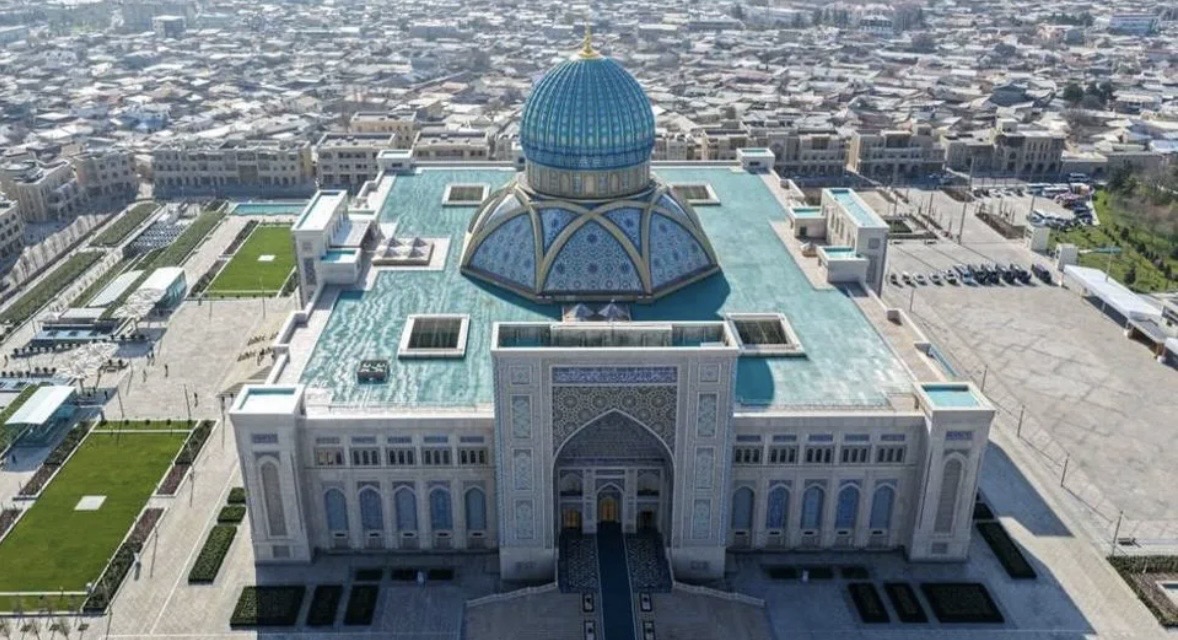
The Center of Islamic Civilization in Uzbekistan has been officially inducted into the Guinness World Records as the "Largest Museum of Islamic Culture." This prestigious recognition highlights the monumental scale and architectural significance of the project recently completed in Tashkent. The official certificate was presented during a formal ceremony, marking a significant achievement for the nation's cultural diplomacy.
Situated within the historic Hast Imam ensemble, the complex stands out for its vast dimensions. The facility covers an expansive area of 10 hectares, with a total building floor space of approximately 50,000 square meters. The structure measures 161 meters in length and 118 meters in width, featuring a central dome that reaches a height of 65 meters. These specific measurements served as the basis for its registration as a world-record-breaking institution.
Guinness World Records representative Seyda Subasi personally delivered the certification to the center’s management. In addition to the global record, the institution has been recognized as the best museum within the Turkic world. This dual honor reinforces the center’s mission to serve as a leading repository of knowledge and history for researchers and visitors from around the globe.
The center houses a vast collection of rare manuscripts and historical exhibits detailing the evolution of Islamic thought and artistry. By combining traditional Islamic architecture with modern museum standards, Uzbekistan has created a landmark that is both a scientific hub and a major tourist destination. The world record status is expected to significantly enhance international interest in the country’s rich historical legacy.
Also read




A rye-wheat loaf preserved in a freezer for 36 years has been put on public display as part of the permanent exhibition at the Deutschlandmuseum in Berlin. Dubbed "The Last Loaf of the GDR," it was originally purchased on June 26, 1990, by student Michael Hagedorn, who bought an extra loaf fearing potential food shortages amidst the economic unification of East and West Germany.
The museum's director, Robert Rückel, described the unusual artifact as a unique poignant symbol of everyday human decisions during times of monumental geopolitical change. To maintain its preserved state, the museum installed a custom refrigeration unit where the historical loaf remains permanently frozen for visitors to view.
Blitz