
Playlist
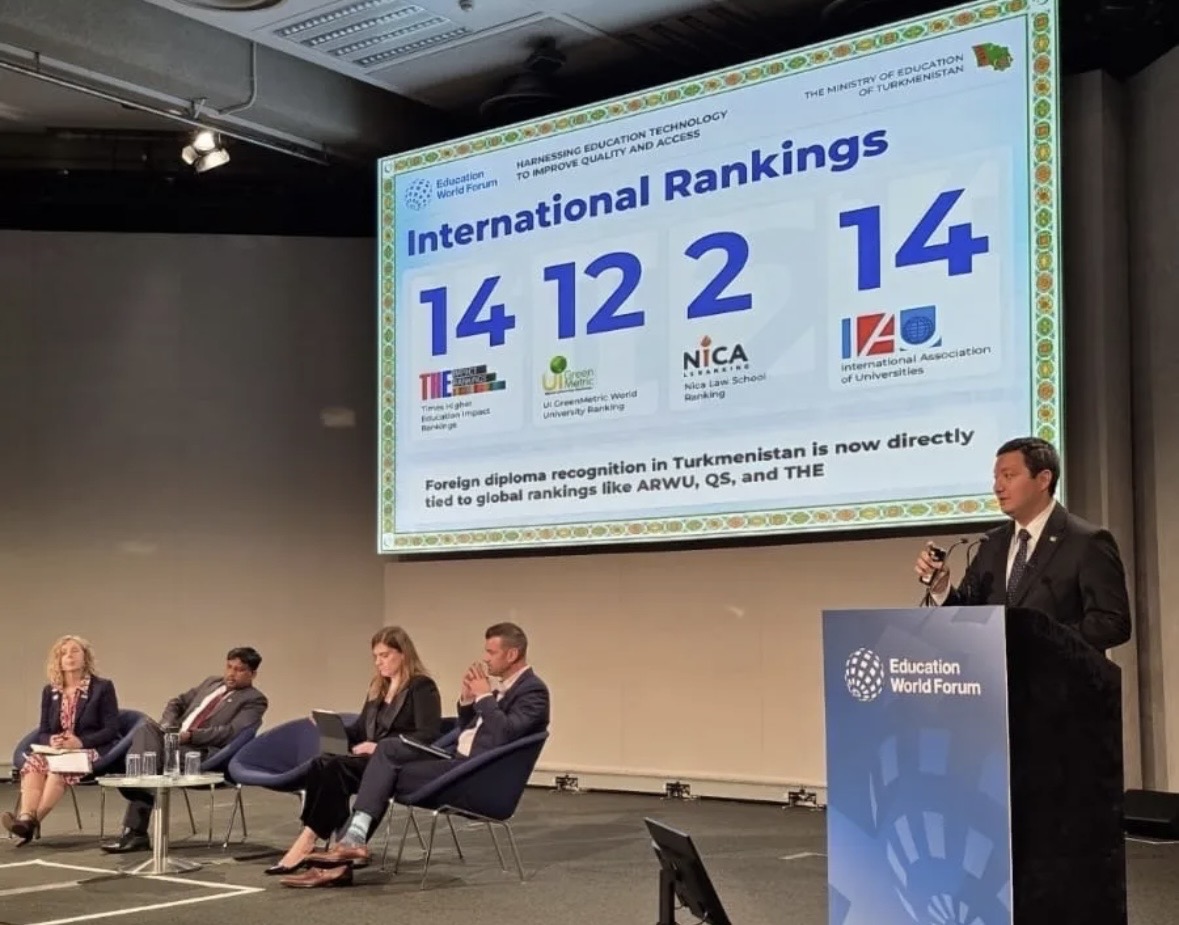
Turkmenistan Outlines Advanced Digital Education Architecture at London Global Forum
20 May. 14:13The United Kingdom recently hosted the Education World Forum (EWF 2026), a premier global assembly convening education ministers, policy makers, and academic innovators to address systemic learning strategies. Within the framework of this international convention, senior leadership from the Ministry of Education of Turkmenistan delivered a thematic address during a specialized session focused on leveraging technology to enhance instructional quality and expand institutional access.
The Turkmen delegation presented a comprehensive overview of the nation’s ongoing structural adjustments aimed at accelerating human capital growth through technological integration. Central to the presentation was the introduction of a multi-tiered digital education architecture implemented at a national level. International attendees were introduced to the operational mechanics of the proprietary "e-mekdep" and "men talyp" platforms, alongside EMIS analytical tools, which collectively enable real-time tracking of student attendance, academic performance, and individualized learning pathways.
The addressed emphasized that the national educational matrix functions as the core structural component of a rapidly evolving knowledge economy. Consequently, digital management software extends far beyond baseline school and university administration. The state utilizes integrated analytical frameworks to build a comprehensive occupational atlas, forecast medium-term professional labor market demands, and establish a continuous, unified academic database for all citizens transitioning from education to industry.
The technical approaches and institutional frameworks highlighted by the Turkmen delegation attracted considerable analytical attention from international specialists. Forum participants noted that the presented models demonstrate a highly sophisticated and structured comprehension of technology's role in modern pedagogy. The international assembly commended the strategy as a viable blueprint for systemic educational modernization and successful cross-sector digital transition.
Also read




Number of New International Students in the US Drops by 15%
17 Nov. 17:00During the fall 2026 semester, the number of new international students enrolled in American educational institutions declined by 15% compared to the same period last year, according to CNBC. Over the entirety of the 2025–2026 academic year, the total population of international students in the United States dropped by more than 17%, with the steepest declines observed among students hailing from India and China.
Colleges surveyed by the publication attribute this downward trend to tighter US immigration policies and recent modifications governing student visa validity periods.
Data from NAFSA: Association of International Educators shows that international students contributed nearly $40 billion to the US economy during the 2025–2026 academic year. The drop in enrollment is projected to trigger financial losses of approximately $2.4 billion this academic year.
Fitch Ratings notes that shifts in visa regulations will primarily impact the financial stability of American colleges and universities. International enrollees typically pay full tuition or receive far less financial aid than domestic students. The consequences could prove especially severe for institutions heavily reliant on large master's programs and STEM (science, technology, engineering, and math) courses, which attract 57% of all international students.
Blitz